Our uniqueness lies in the innovative design and system methodology we use differently
A subsidiary of Lee Kim Tah - Woh Hup from Singapore, L&W Construction commenced operations in India in 2006. ´We spent the first three years understanding the market,´ says Manickam Asaithambi, Managing Director. Having started with project management and construction activities, the company has taken on building contracting works for projects in Chennai, Bengaluru, Pune, Hyderabad, Gurgaon, Mumbai and Madurai. Asaithambi shares the company´s 10-year journey in India and more, in conversation with SERAPHINA D´SOUZA.
Tell us about the work you have done. At what stage of a project do you step in?
We are involved from the concept design stage of a project. Design is our main focus. The Indian construction industry needs someone who can provide complete solutions, which is what we do, and we take accountability for what we are a part of. We directly build for corporates and have worked on Design and Build (D&B) and General Contract models with them. We have worked with Ascendas, Qualcomm and with MapleTree from Singapore. We are also working with RMZ and have recently secured projects from Capgemini and Honeywell. We are looking at corporate clients and developments regarding D&B requirements are in the pipeline.
The company is in the process of establishing a subsidiary to carry out property development projects...
Yes. We started this initiative in 2013 when we invested Rs 100 crore in a 25-acre plot in Bengaluru. Besides, our parent company Lee Kim Tah from Singapore has invested in 104 acre in Chennai. In India, we have largely been involved in building contracting works for commercial buildings. However, in Singapore, we are experts in home building, which at present, we are doing at a much smaller scale in India. With these developments and future investments in the pipeline, we are looking to expand further. We expect this vertical to contribute about 20 per cent to our business in India. Our Bengaluru development project is currently in the master-planning stage. We expect the necessary approvals to be in place by mid-next year and launch by end of the next year.

What kind of technologies do you bring to India from international practices?
Constructability! Anyone can build, but how we build is what matters. As we are currently doing more projects in the commercial, hospitality and industrial sectors, we use flat-slab system with table formwork. We use different kinds of formwork such as jump form, table form, aluminium form work, among others, which are better and faster than conventional methods. In one of our projects, we used pre-cast technology along with structural steel composite construction for faster delivery.
The technologies and materials are available in India.
But we believe our uniqueness lies in how we use the resources differently from others - with innovation in design and system methodology. Also, drawing from our Singapore experience, we do not compromise on the construction equipment required for our projects. For example, if the cranes we require for our projects are not available, we transfer them from our Singapore sites through our existing partners. This helps increase our efficiency, thereby helping us meet the time, cost and safety requirements.
Of the total project cost, what are the major investment areas?
Our major investment is basically in construction equipment, especially formwork. We have our equipment bank that allows us to construct better and faster. If required, we work with our partners on the buy and sell back model. So far, we have invested over Rs 100 crore on equipment.
So what is the purchase or procurement decision-making process for your projects?
We have three categories of materials for procurement.
The first is materials of Type A, for which we have suppliers and subcontractors who are provided with yearly forecast orders, which are regularised with monthly demands. The second category (Type C) are the consumables needed for a project - materials such as scaffolds, plywood, etc, which are required on an intermittent basis. In this category, we follow a simple strategy of selecting the right supplier and giving them long-term contractors so that they supply the material when required. The third category (Type B) consists of major specialist subcontracts that go up to Rs 20-30 crore. For such contracts, we do due diligence and decide the partners or subcontractors, for which we have procurement specialists in-house.
What kind of materials do you use to build?
There is a myth that importing construction materials is expensive. In fact, it is cost-effective. We import formwork, waterproofing, materials for interior finishes, for better quality and cost-effectiveness.
In India, a lot of timber is used in most projects, which eventually generates timber waste on site. Hence, we have eliminated 95 per cent timber in our projects and use more steel sections, despite the difficulties in resourcing the same.
We also use fly-ash and GGBS in concrete, which makes it eco-friendly. Eco-friendly concrete is not well accepted in India, but we use it in the maximum possible way in our works - around 40-50 per cent. Further, all our projects are green buildings and almost all of them are either LEED Gold or Platinum rated.
The company is known to have an efficient methodology for EPC-sequenced activities that are planned with logistical support...
We do the initial planning before designing. We understand the concept of what the customer wants and we design for that, taking into consideration the build-ability, methodology to adopt and the safety measures required on site. This is the EPC advantage, the opportunity to set things right in the design stage itself, so that when the design is complete, the methodology and materials are available. After that, all we need to do is adopt and follow. Site decisions, many a times, take longer. We predict this early in our projects, which increases our efficiency. Also, our partners û fatade and M&E contractors - are chosen and are on board at an early stage of the project. The collaboration with them at an early stage minimises errors. The use of Building Information Modeling (BIM) helps us detect errors early, and once the design package is issued, the construction becomes completely error-free.
What is the importance given to safety and labour training?
Safety is our first priority. Without completing the safety induction, passing the medical screening and other formalities, no one is allowed on site. We equip ourselves well by having a fully equipped store at site. We have internal labour training, which we find to be more effective. As we are growing, we have an understanding with CID and BCA in Singapore for enhanced training. We send our employees to Singapore for two to three week courses to get exposure and training. We aim to have 100 per cent skill-trained staff by 2017.
How did the company perform last fiscal?
Last year, our turnover was about Rs 700 crore. Currently, our order book is about Rs 1,600 crore. Besides, we have also started a subsidiary for our interior business. We are aiming for a turnover of more than Rs 1,000 crore by 2017.
As our business grows, there are a lot of opportunities coming up in other segments. We are hoping to see good prospects over the year.
FACT SHEET
Year of Establishment: 2006
Top Management: Asaithambi Manickam, Managing Director; Edmund Cheah, Director; Kim Yong, Chairman -India Operations
Areas of operation: Bengaluru, Chennai, Pune, Hyderabad, Gurgaon, Mumbai, Madurai
No of Employees: Over 650
Centre of Operation: Bengaluru
Ongoing projects: 14
Upcoming Projects: 15
Completed Projects: 13
turnover: Rs.660 crore
For suggestions on leading contractors in India, write in at feedback@ConstructionWorld.in

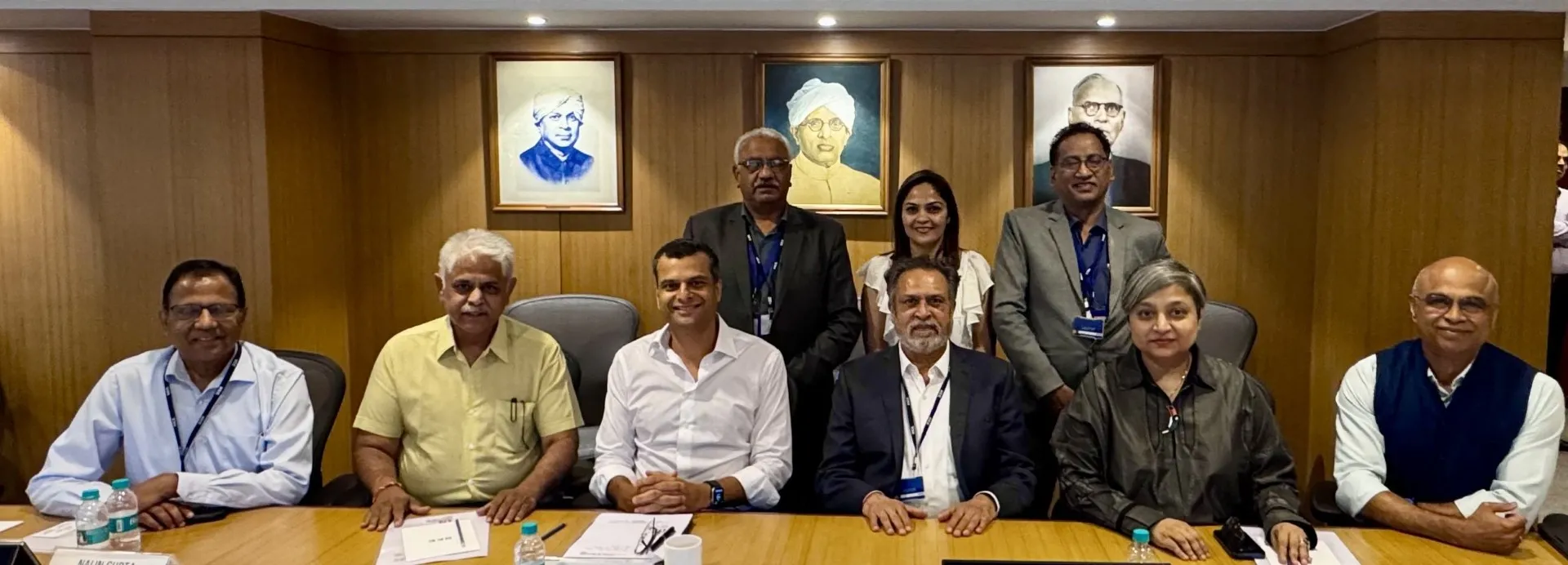
CFI Appoints New National Council for FY27 and FY28
The Construction Federation of India (CFI) has announced its newly elected National Council and office bearers for a two-year term covering FY27 and FY28. M. V. Satish, Advisor to CMD and Lead Ambassador for Middle East, L&T, has been elected President; Priti Patel, Chief Strategy & Growth Officer, Tata Projects, has been appointed Vice President; and Ajit Bhate, Managing Director, Precast India Infrastructures, has taken charge as Treasurer.The newly formed National Council brings together senior leaders from major EPC and infrastructure companies, reflecting CFI’s continued focus o..
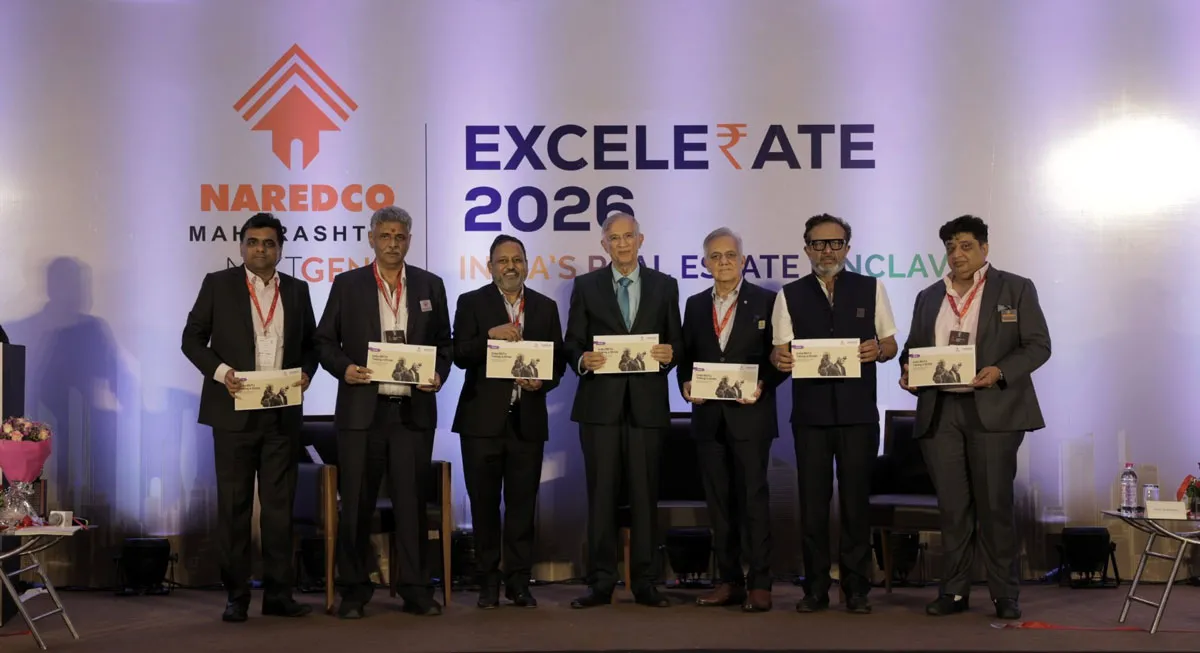
India REIT Market Gains Momentum with Strong Returns
India’s Real Estate Investment Trust (REIT) market is witnessing strong growth, emerging as a competitive investment avenue both domestically and across Asia. According to a recent ANAROCK report released at EXCELERATE 2026 by NAREDCO Maharashtra NextGen, the sector is evolving into a mature asset class driven by solid fundamentals, regulatory backing and rising investor confidence.The introduction of Small and Medium REITs (SM REITs) in 2025 has further widened access through fractional ownership, unlocking a potential monetisation opportunity of Rs 670–710 billion. Indian REITs have deli..
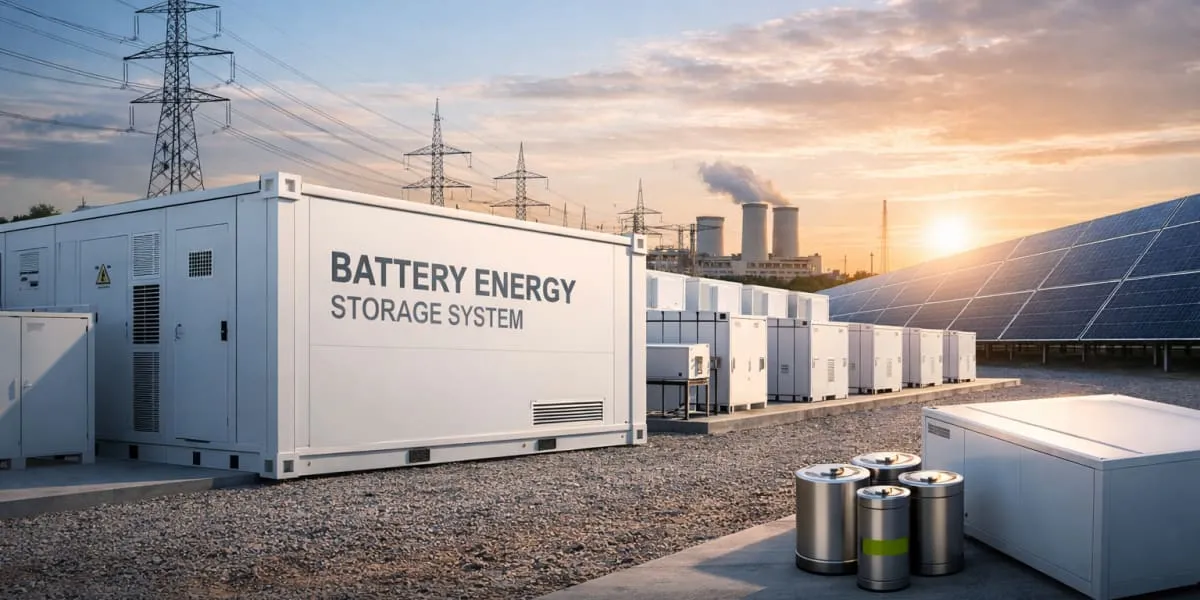
G R Infraprojects Secures Rs 4,130 Million BESS Contract From NTPC
G R Infraprojects said it has secured a contract from NTPC to supply and implement a battery energy storage system (BESS) valued at Rs 4,130 million (mn). The company reported the order was awarded as part of NTPC's ongoing efforts to enhance grid flexibility and energy storage capacity. The contract represents a notable addition to the firm's project pipeline and underscores demand for utility scale storage solutions. The award is expected to strengthen G R Infraprojects' presence in the energy infrastructure sector and to contribute to the firm's order book and future revenues, subject to st..
Latest Updates