Carbon-negative and ultra-low carbon are not just claims!
ECONOMY & POLICY

Carbon-negative and ultra-low carbon are not just claims!

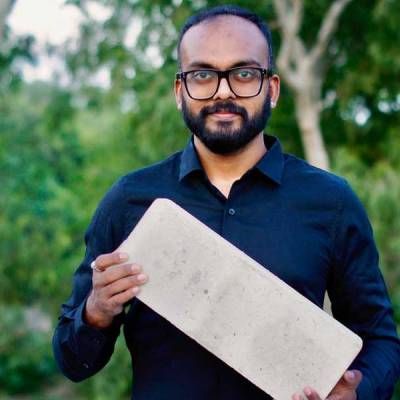
In an interaction with Construction World, Tarun Jami, Founder, GreenJams, explains how the company is cutting cement’s carbon footprint by 80 per cent through Binder, while scaling innovations such as Agrocrete® and Novastone to make buildings lighter, faster and carbon-negative....

"Join industry leaders at RAHSTA Expo, India's premier platform for roads, highways and traffic infrastructure. Register now to explore innovations, network with experts and shape the future of mobility."

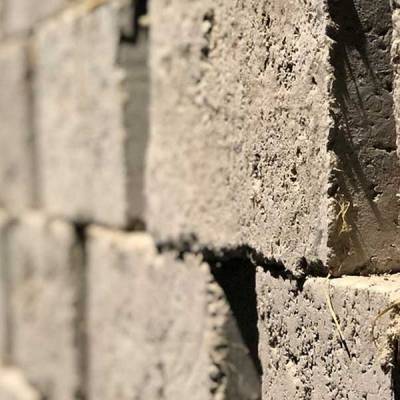
In an interaction with Construction World, Tarun Jami, Founder, GreenJams, explains how the company is cutting cement’s carbon footprint by 80 per cent through Binder, while scaling innovations such as Agrocrete® and Novastone to make buildings lighter, faster and carbon-negative.Agrocrete® is positioned as a carbon-negative material. What does this mean for developers?For developers, Agrocrete® offers a practical way to reduce embodied carbon at the material level. Since walling forms a significant part of a building’s material footprint, using carbon-negative blocks can bring the net embodied carbon of walls down to zero and also help offset emissions from high-carbon elements such as RCC, aluminium façades and other construction materials.From GreenJams’ experience with clients such as ITC, the value is twofold: it helps developers meet ambitious embodied-carbon targets and supports environmentally conscious projects, which are increasingly commanding a premium among buyers.How do Agrocrete® and Novastone reduce carbon while improving project outcomes?Agrocrete® and Novastone reduce cement dependence and lower embodied carbon, helping structures cut total embodied carbon by up to 50–80 per cent.GreenJams has completed 26 projects across India and delivered nearly 200,000 sq ft. In one mixed-use project operational for three years, the building recorded a 50 per cent reduction in electricity consumption. In another case study for a 39 lakh sq ft, 28-storey development in Delhi, replacing walling material with Agrocrete® showed a potential reduction of around 1,500 tonnes of CO₂, nearly 30 per cent of the superstructure’s embodied carbon, along with about 18 per cent cost reduction.How do you help developers meet IGBC, GRIHA or other green building requirements?When we say carbon-negative or ultra-low carbon, these are not just claims. They are backed by third-party verification and certifications. Our products come with EPDs for environmental performance, while quality, durability, strength and performance are tested through third-party NABL-accredited labs.This documentation makes it easier for large developers and institutional clients to claim points under rating systems such as IGBC and GRIHA. For clients needing deeper sustainability reporting, we also offer a service layer where we work with teams to create detailed embodied-carbon statements, material passports and project passports.What concerns do contractors usually have, and how do you address them?Contractor adoption is challenging mainly because they may not have prior experience with our materials. There is natural resistance to switching. We usually first secure buy-in from the end client. Once the material is specified, adoption becomes easier. After supply begins, our teams hand-hold contractor teams, help solve challenges, improve quality perception and ensure they succeed while using the material.The most difficult concern is supply. Contractors often worry whether a newer company has enough capacity to avoid delays. To address this, we work through contract manufacturing. We partner with existing product manufacturers, empower them to use our product, and administer quality, SOPs and delivery.Since Agrocrete® uses agro-waste, how do you manage sourcing and consistency?India offers an advantage because crop residues are widely available. We are crop-agnostic and can use fibres such as paddy straw, bagasse, cotton stalks and corn stalks. We undertake detailed planning and also take procurement risks to ensure we can fulfil sudden increases in orders. The challenge is that crop residue sourcing is seasonal, so we need to store agricultural fibres for at least three months. Our manufacturing partners generally have sufficient storage space for this.Which sectors are driving demand for GreenJams?While we cannot reveal names of ongoing clients, we are currently executing an order book of almost ₹300 crore. Most demand is coming from Bengaluru, with projects also in Goa, Rajasthan and Bombay.-PRANJAL PATIL

Next Story
Real Estate

The Workplace Reset

If the past few years have seen sustainability emerge as a buzzword in the design of commercial spaces, the next few years will see the focus shift to ‘experience’. Workplaces that prioritise superior employee experiences consistently report stronger talent attraction and higher retention rates and productivity, while using resources sustainably.First things first; what sort of experiences are expected from a workplace?As Vandana Dhawan Saxena, Founder and Design Principal, Studio IV Designs, explains, “Offices have grown into environments that need to support various kinds of experience..

Next Story
Infrastructure Urban

Designing Human-Centric High-Rises

The Institution of Engineers (India) (IEI), Navi Mumbai Local Centre, under the aegis of the Architectural Engineering Division Board, organised a one-day national seminar, ‘Reaching New Heights – Overcoming High-Rise Construction Challenges’, at CBD Belapur, Navi Mumbai.The seminar brought together architects, engineers, planners, developers, academicians and industry professionals to deliberate on the design, construction, operation and sustainability of tall buildings in rapidly urbanising cities...To read the full article Click Here ..

Next Story
Infrastructure Urban

Carbon-negative and ultra-low carbon are not just claims!

In an interaction with Construction World, Tarun Jami, Founder, GreenJams, explains how the company is cutting cement’s carbon footprint by 80 per cent through Binder, while scaling innovations such as Agrocrete® and Novastone to make buildings lighter, faster and carbon-negative.Agrocrete® is positioned as a carbon-negative material. What does this mean for developers?For developers, Agrocrete® offers a practical way to reduce embodied carbon at the material level. Since walling forms a significant part of a building’s material footprint, using carbon-negative blocks can bring the net ..

Advertisement

Subscribe to Our Newsletter

Get daily newsletters around different themes from Construction world.

STAY CONNECTED

Advertisement

Advertisement

Advertisement