On the 76th year of independence, our Hon’ble PM exhorted the nation from the ramparts of the Red Fort to focus on a Viksit Bharat (Developed India). India is today a US$ 3.2 trillion economy and is on a growth path to become a US$ 5 trillion economy within this decade. No one can stop an Idea whose time has come. The time for India to take its rightful place in the new world order has arrived. India is marching ahead to seize the opportunity and take the initiatives which will propel it to the global high table of great nations.
However to make this a reality, world class infrastructure will be the key to unlocking India’s true potential and opportunities. Steel as a core sector, will play a pivotal role in this regard. Steel is the driver of every economy and is widely regarded as an indicator of progress. The steel industry defines the trajectory of a country’s growth and can be viewed as the backbone of a nation.
India is the second largest steel producer in the world after China, and we are working with utmost grit to achieve 300 million tons of production capacity by 2030. Due to such massive growth figures but a relatively smaller per capita consumption of 74.7 kg against the world average of 229 kg as per the World Steel Association, a natural question is why India needs such a high production capacity.
The answer lies in India’s economic expansion. India, presently, is the fastest growing major economy and is constantly evolving and growing in terms of infrastructure to align the aspirations of 1.3 billion people, for which steel is a critical driver. Post-independence, our leadership focused on the growth of the steel & power sector to empower primary and secondary sectors. It led to the birth of the tertiary sector, which now has matured into the most significant share of the National GDP. Further, with India’s population projections of being ranked as the number one populated country in the world by 2050, there is a need for a faster pace of growth.
With the vision of a Viksit Bharat, our Prime Minister launched PM Gati Shakti - National Master Plan for Multi-modal Connectivity on 13th October 2021 to address this urgent concern. The Master Plan brings a digital platform to get 16 Ministries together for integrated planning and coordinated implementation of infrastructure connectivity projects. It will address the wide gap between macro planning and micro implementation, lack of coordination, and advanced information and encourage working in silos for infrastructure projects.
The Ministry of Steel has joined the PM Gati Shakti portal with the help of Bhaskaracharya National Institute for Space Applications and Geo-informatics (BiSAG-N). Leveraging the application created by BiSAG-N, the Steel Ministry aims to upload the geo-locations of over 2,000 steel units, including major operators. In addition to the units’ geographical locations, other pertinent features, including their production capacities and product details, will also be uploaded. The PM Gati Shakti Yojna’s robust interface and the multiplier effect will lead to more transparency, quicker approvals, faster project implementation and lesser control costs.
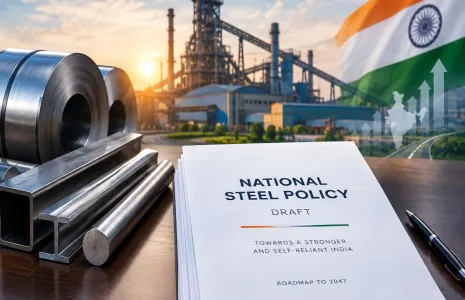
The Yojna will provide logistical solutions for connectivity modes such as railways, ports and inland waterways, gas pipelines, airports and airstrips, among others. The Ministry of Steel recently identified 38 high-impact projects to develop multi-modal connectivity and bridge infrastructure gaps under the scheme. These strategies will propel the steel industry to its end objectives as per the National Steel Policy 2017 by 2030–31, helping India fulfill the dream of an Aatmanirbhar Bharat.
Targets under PM Gati shakti Yojna
The Rs.100 trillion PM Gati Shakti Yojna aims to achieve the following infrastructure targets by 2024-25:
Corridors - 11 industrial corridors and 2 new defense Corridors - one in Tamil Nadu and the other in Uttar Pradesh. The infrastructure will result in Rs.1.7 trillion turnover in defense production.
Clusters - To set up 38 electronics manufacturing clusters and 109 pharma clusters.
Road Transport and Highways Ministry - To have national highways of two lakh km, completion of four or six-lane national highways of 5,590 km along coastal areas, and all state capitals in the north-east to be connected with four-lane national highways or two, two-lane national highways.
Railways - Handle cargo of 1,600 million tons, decongesting 51 per cent of the Railway network by completing additional lines and implementing two Dedicated Freight Corridors (DFCs).
Civil Aviation - Double the existing aviation footprint to have a total of 220 airports, heliports, and water aerodromes would mean building 109 more such facilities by the targeted timeline.
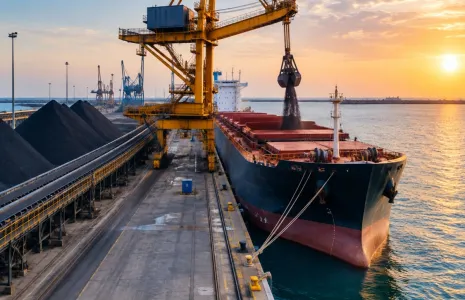
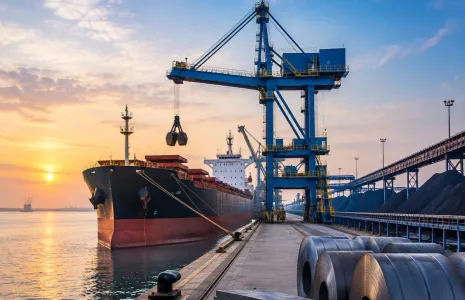
Shipping - To have total cargo capacity to be handled
at the ports at 1,759 Million Metric Tonne Per Annum (MMTPA) which was 1,282 MMTPA in 2020.
Gas pipeline network - Doubled to 34,500 km by building an additional 17,000 km trunk pipeline connecting significant industry demand and supply centers.
Power lines - An entire transmission network of 4.52 lakh circuit km and a renewable energy capacity of 225 GW.
The scheme will benefit all income groups and industries, significantly boosting the Micro, Small & Medium Enterprises (MSME) sector to achieve high-speed growth. It will ensure a broader reach of essential amenities to the remotest areas in India and substantially enhance business opportunities for inclusive growth. Apart from this, the plan will help India to become the most coveted business place in the world with reduced logistics costs, in contrast to currently being ranked as the most costly country in the world in terms of logistics as it spends approximately
3 per cent of its GDP under this head.
The scheme is also working in synergy with the National Monetization Pipeline (NMP), providing a clear monetization framework and giving potential investors a ready list of assets to create wealth.
However, the government should take some practical steps for the plan’s success by encouraging private investors with suitable measures. Having extensive experience working in the steel and cement sector, I hope the government encourages the steel industry while implementing the PM Gati Shakti Yojna, as steel sector will significantly influence its implementation. In addition to the PLI Scheme that the Government currently offers for specialty steel, many other steps are needed.
Some primary measures that could benefit the industry broadly are softening different taxes and relaxation for
land acquisition and litigation. Steel mills need land for expansion to achieve the goal of 300 million tonnes by
2030, but land acquisition poses a significant challenge to this date. Further, many pending court cases have
delayed manufacturing, leading to project delays. The macroeconomic environment must also be constructed with a stable and predictable regulatory and institutional framework. All macroeconomic concerns demand urgent address as they directly influence nation-building and job creation to change the face of our country from developing to a developed one.
Despite all such hurdles, the commercialization of coal mining has been a big boost from the government since coal is an important energy source for steel production. Moreover, the relaxation of forest and environmental rules will certainly invigorate economic activities ahead. All these measures and future improvements can help shape the nation into what we all dream for India - A self-reliant nation that knows no bounds.
By: Bimlendra Jha, Managing Director, Jindal Steel & Power Ltd.