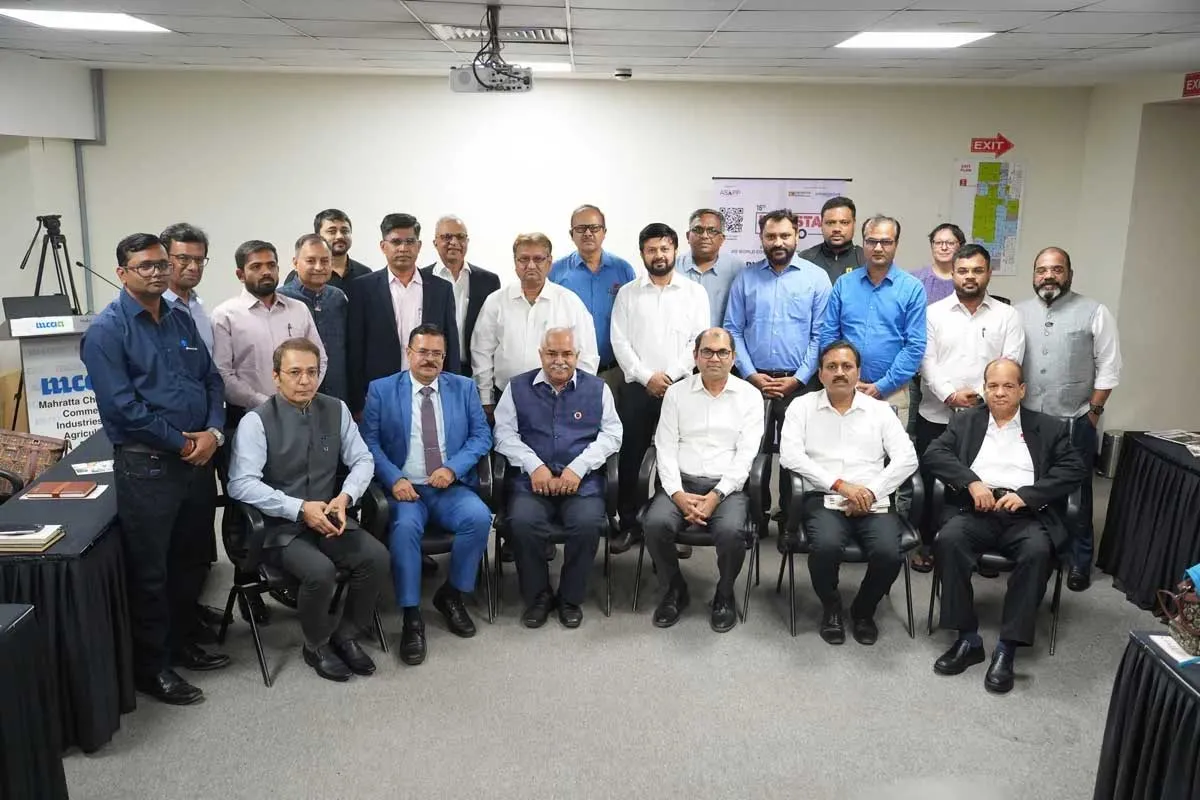
India’s road construction sector is facing pressure from two sides. On one side is the West Asia crisis, which has pushed up the cost of oil-linked inputs such as bitumen, diesel and logistics. On the other is the persistent problem of negative bidding, where contractors are quoting sharply below project estimates to secure work.Together, these forces are creating a serious risk for project viability, execution quality and contractor survival.“What this has done is create a 360° attack,” said Pratap Padode, Founder, First Construction Council, speaking at the RAHSTA Roundtable. “Materials, equipment, labour, capital… everything is being affected simultaneously. Our industry already works on very thin margins and this has added another layer of pressure.”The concern is particularly sharp in road projects, where bitumen, diesel, steel, cement and transport form a major part of the cost structure. When crude oil prices move up, the impact is not limited to fuel. It travels through the entire project chain – from material production to equipment operation and site logistics.Lt Gen Rajeev Chaudhary, former DG, Border Roads Organisation, and Chairman of the RAHSTA Committee, warned that even a 5-8 per cent rise in project cost can severely affect contractors when bids are already 30-45 per cent below estimates. He questioned how projects can be delivered at such steep discounts without affecting quality, timelines or long-term durability.Negative bidding, he said, may appear to save money at the award stage, but the actual cost often reappears later through delays, disputes, arbitration, maintenance and compromised asset life.The L1 system remains at the centre of the problem. While the lowest-bid model offers simplicity, it does not always reward capability, quality or innovation. Contractors often bid aggressively because they need to keep machinery, manpower and teams engaged. But when the quoted price is too far below the project estimate, the margin for absorbing shocks disappears.Ajay Hans, Managing Director, GV Infra, said contractors are facing a difficult situation as input prices rise without an automatic mechanism for relief in many contracts. Steel, bitumen and fuel costs are volatile, while cash flows are already stretched. This leads to slower execution, more claims and a higher possibility of disputes.He suggested that irrationally low bids should be filtered out through a clear rule. For instance, if bids are on the negative side and the gap between L1 and L2 is more than five per cent, the lowest bid should be ignored. Such a system, he argued, would help prevent unrealistic pricing and protect project quality.Innovation must enter the bidThe way forward is not merely to reject low bids, but to understand whether a lower cost is backed by a credible method.Abhijit Som, Managing Director, Dynapac India, said India needs to allow greater flexibility in construction methods. In some countries, contractors are permitted to submit alternative bids, provided they can prove how a different methodology will reduce cost without affecting performance.For example, changes in pavement design, thinner layers, improved material use or different construction techniques can reduce cost if technically validated. But in India, road construction often continues to follow conventional specifications, leaving little room for new methods.According to Som, the question should not only be, ‘Why is this bid so low?’ It should also be, ‘How exactly will this cost reduction be achieved?’Technology as a bufferThe crisis has also reopened the case for electrification, automation and digital monitoring in construction.Sunil More, Director - Factory Operations, Sany India, pointed out that the industry cannot depend indefinitely on fuel-heavy systems. Electric construction equipment, automated batching plants and man-less operations can reduce long-term exposure to fuel and labour volatility.The shortage of labour is another growing concern. Rising wages, migration uncertainty and the demand for faster execution are pushing contractors to explore mechanised and technology-led solutions.AI-based monitoring, digital twins, independent quality checks, modular construction and pre-engineered systems can help improve productivity and reduce waste. However, these tools need wider acceptance in tender design and project approval systems.Quality needs stronger protectionOne of the strongest concerns raised was the need for independent third-party audits. If roads, bridges and highways are being awarded at aggressive discounts, quality assurance becomes even more important.A strong audit mechanism can help ensure that work delivered onsite matches the scope, specification and performance expected in the tender. It can also reduce future disputes by creating a more transparent record of execution quality.Contractor rating systems were also discussed as a possible reform. Similar to credit ratings in finance, infrastructure contractors could be rated on execution record, safety, quality, financial strength and delivery reliability. This would help move procurement away from price alone.From lowest cost to best valueThe present situation shows that India’s roads sector cannot rely only on the lowest price to decide project awards. A project that looks cheaper at the tender stage can become more expensive later if it leads to delays, arbitration, repairs or lower asset life.The sector needs a more balanced model – one that considers cost, quality, financial capacity, technical method and delivery record.RAHSTA 2026, scheduled for 8-9 July 2026 at Jio World Convention Centre, Mumbai, will carry this conversation forward by bringing together the roads and highways ecosystem across technology, equipment, materials, contractors and policy.For India’s infrastructure ambitions to stay on track, procurement reform and technology adoption must move faster. The message is clear: the cheapest bid is not always the most economical one. - KARTHIK M