
+
Capital-A Leads $750K Pre-Seed Round in Quintrans
Equipment

Capital-A Leads $750K Pre-Seed Round in Quintrans

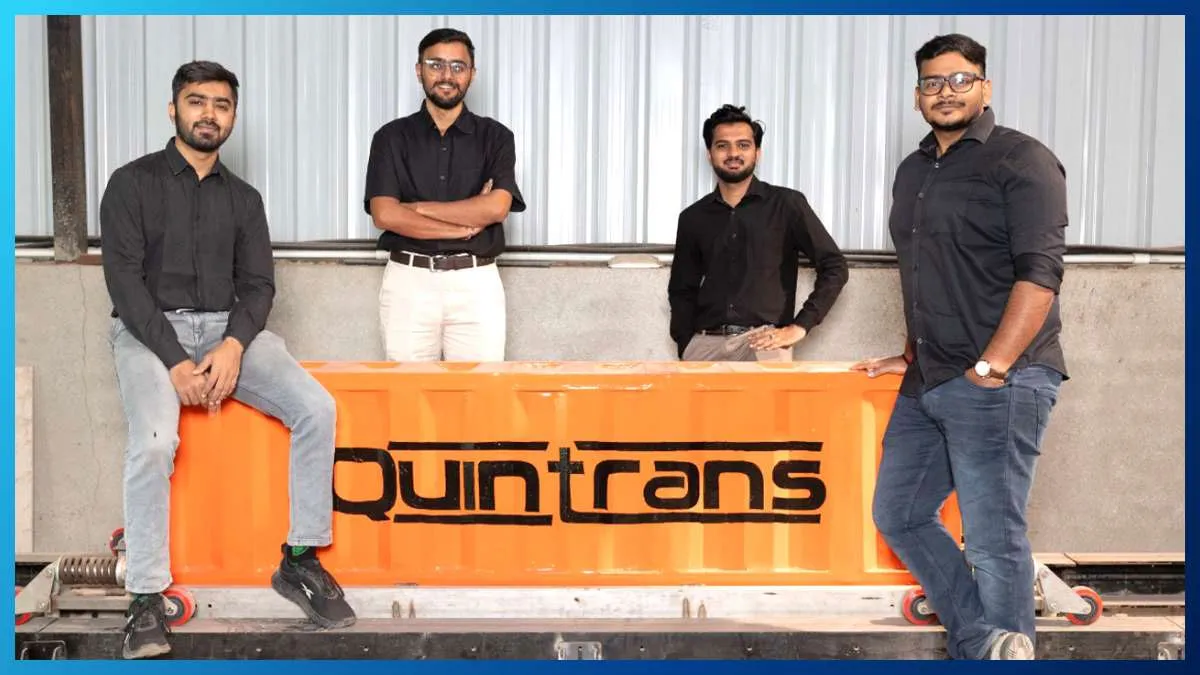
Capital-A, India’s manufacturing- and deep tech-focused venture capital fund, has led a $750,000 pre-seed funding round in Quintrans, a Pune-based engineering startup developing India-built direct-drive linear motion systems for industrial automation, robotics and equipment manufacturing. The round also saw participation from Sumeet Kabra of RR Global, SanchiConnect, AIC-Pinnacle and other strategic partners, with continued ecosystem support from IIMA Ventures.
Founded by engineers from MIT Pune, Quintrans is developing advanced electromagnetic and electromechanical linear motion components that enable frictionless movement, high-speed operation and micron-level precision. Its India-led design and manufacturing approach offers cost efficiency, custom deployment and assured service, positioning the company as a domestic alternative in a segment dominated by global OEMs.
The funds will be used to set up an in-house manufacturing and advanced testing facility in Pune, accelerate R&D in electromagnetic actuation, and build core engineering and operations teams ahead of commercial rollout. India’s actuator market is expected to grow from 6.8 million units in FY 2022 to over 10 million units by FY 2026, driven by automation and mobility demand. Quintrans aims to produce nearly 500,000 actuators annually by 2030, strengthening India’s indigenous manufacturing capabilities. 

Capital-A, India’s manufacturing- and deep tech-focused venture capital fund, has led a $750,000 pre-seed funding round in Quintrans, a Pune-based engineering startup developing India-built direct-drive linear motion systems for industrial automation, robotics and equipment manufacturing. The round also saw participation from Sumeet Kabra of RR Global, SanchiConnect, AIC-Pinnacle and other strategic partners, with continued ecosystem support from IIMA Ventures.Founded by engineers from MIT Pune, Quintrans is developing advanced electromagnetic and electromechanical linear motion components that enable frictionless movement, high-speed operation and micron-level precision. Its India-led design and manufacturing approach offers cost efficiency, custom deployment and assured service, positioning the company as a domestic alternative in a segment dominated by global OEMs.The funds will be used to set up an in-house manufacturing and advanced testing facility in Pune, accelerate R&D in electromagnetic actuation, and build core engineering and operations teams ahead of commercial rollout. India’s actuator market is expected to grow from 6.8 million units in FY 2022 to over 10 million units by FY 2026, driven by automation and mobility demand. Quintrans aims to produce nearly 500,000 actuators annually by 2030, strengthening India’s indigenous manufacturing capabilities. 

Related Stories

Gold Stories
Next Story
Infrastructure Urban

Infrastructure Opportunity Outlook by IMPACCT.Info

India’s infrastructure pipeline is witnessing dynamic activity across stages — from immediate bidding to future planning. IMPACCT segments these into three categories: Immediate, 3–6 Month, and Future Opportunities, enabling businesses to identify, prepare, and participate in high-value tenders and projects across sectors.To read full article Click Here ..

Next Story
Real Estate

Glass, Reframed!

Glass façades, quintessential aesthetic building envelopes globally, have been widely adopted in India as well. But when the focus is high-performance building systems that deliver energy efficiency, comfort and architectural identity, glass isn’t the only preference. Combination solutions, involving glass and some other material, improve façade outcomes. Some combinations come at comparable prices, some at a higher price. Here is a selection of performance-oriented solutions...To read the full story Click Here ..

Next Story
Infrastructure Urban

Beyond Building Faster

India’s cities are expanding at an unprecedented pace, bringing new infrastructure and development opportunities while also intensifying challenges around mobility, public spaces, liveability and supporting infrastructure. The question, therefore, is not simply whether India can build faster, but whether it can build cities that work better.At a CW webinar, Are We Designing Better Cities – or Just Building Faster?, moderator Ar. Samir Shaikh, Founding Principal, AR&UD Studio, brought together perspectives from design, development, master planning and technology...To read the full artic..

Advertisement

Subscribe to Our Newsletter

Get daily newsletters around different themes from Construction world.

STAY CONNECTED

Advertisement

SPECIAL OFFER
QR Code