How Periodic Thermographic Inspections Help Prevent Equipment Failures
Equipment

How Periodic Thermographic Inspections Help Prevent Equipment Failures

Periodic thermographic inspections are increasingly being adopted as a critical component of modern asset management strategies, helping organisations detect potential equipment failures before they escalate into costly disruptions.
By using advanced infrared (IR) technology, thermal inspections allow maintenance teams to identify abnormal heat patterns that signal underlying issues such as loose connections, corrosion, overloads, or insulation failures—often long before visible damage occurs. This proactive approach enables timely corrective action, reducing unplanned downtime and extending equipment life.
Why thermographic inspections matter
Thermal imaging plays a vital role in preventive maintenance by offering non-contact, real-time assessment of electrical and mechanical systems. Key benefits include:
Early fault detection: Identifies overheating components that could lead to system failure.
Reduced maintenance costs: Prevents expensive breakdowns and emergency repairs.
Improved operational safety: Detects hidden risks without interrupting operations.
Optimised asset performance: Supports data-driven maintenance planning.
Advanced imaging for reliable insights
Modern thermal cameras offer high-resolution infrared sensors, accurate temperature measurement, and intuitive interfaces that allow technicians to identify anomalies quickly. Features such as temperature threshold alerts, thermal mapping, and combined visual-IR imaging enhance inspection efficiency, especially in complex industrial environments.
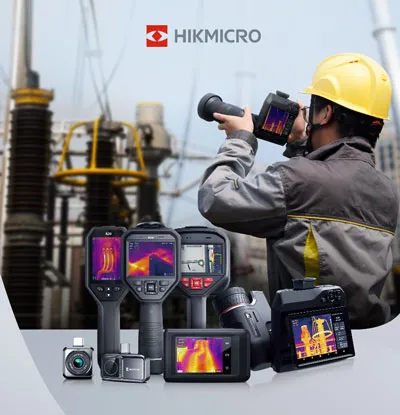
HIKMICRO’s range of thermal and acoustic imaging solutions—including handheld cameras and advanced diagnostic systems—is designed to support maintenance teams across power utilities, manufacturing, oil and gas, infrastructure, and construction sectors. These tools enable organisations to shift from reactive to predictive maintenance strategies, improving uptime and long-term asset reliability.
By integrating periodic thermographic inspections into regular maintenance schedules, organisations can significantly reduce risk, improve safety, and optimise operational performance.

Periodic thermographic inspections are increasingly being adopted as a critical component of modern asset management strategies, helping organisations detect potential equipment failures before they escalate into costly disruptions.By using advanced infrared (IR) technology, thermal inspections allow maintenance teams to identify abnormal heat patterns that signal underlying issues such as loose connections, corrosion, overloads, or insulation failures—often long before visible damage occurs. This proactive approach enables timely corrective action, reducing unplanned downtime and extending equipment life.Why thermographic inspections matterThermal imaging plays a vital role in preventive maintenance by offering non-contact, real-time assessment of electrical and mechanical systems. Key benefits include:Early fault detection: Identifies overheating components that could lead to system failure.Reduced maintenance costs: Prevents expensive breakdowns and emergency repairs.Improved operational safety: Detects hidden risks without interrupting operations.Optimised asset performance: Supports data-driven maintenance planning.Advanced imaging for reliable insightsModern thermal cameras offer high-resolution infrared sensors, accurate temperature measurement, and intuitive interfaces that allow technicians to identify anomalies quickly. Features such as temperature threshold alerts, thermal mapping, and combined visual-IR imaging enhance inspection efficiency, especially in complex industrial environments.HIKMICRO’s range of thermal and acoustic imaging solutions—including handheld cameras and advanced diagnostic systems—is designed to support maintenance teams across power utilities, manufacturing, oil and gas, infrastructure, and construction sectors. These tools enable organisations to shift from reactive to predictive maintenance strategies, improving uptime and long-term asset reliability.By integrating periodic thermographic inspections into regular maintenance schedules, organisations can significantly reduce risk, improve safety, and optimise operational performance.

Next Story
Infrastructure Urban

Multimodal Corridors Reshape India’s Freight Logistics

India’s freight and logistics landscape is undergoing a structural transformation, driven by Dedicated Freight Corridors (DFCs) and an expanding network of multimodal logistics infrastructure. Purpose-built freight rail corridors, combined with integrated logistics parks, are enabling faster, more predictable and cost-efficient cargo movement across the country. The Eastern and Western DFCs together span more than 2,800 km, with most sections now operational. Designed exclusively for freight, these corridors allow longer, heavier and faster trains, significantly improving throughput. Freigh..

Next Story
Infrastructure Urban

Jyoti Structures Secures TÜV ISO Certifications

Jyoti Structures (JSL), a listed global Engineering, Procurement and Construction (EPC) company, has secured ISO 9001:2015, ISO 14001:2015 and ISO 45001:2018 certifications following an independent audit by TÜV, one of the world’s most stringent and internationally recognised certification bodies. The certifications were awarded after an extensive, organisation-wide evaluation process spanning more than a year. They apply across JSL’s EPC operations, including design, engineering, manufacturing, procurement, erection and commissioning of transmission, substation and distribution projects..

Next Story
Infrastructure Urban

Infrastructure Push in 2025 Highlights Sustainable, Localised Growth

As 2025 draws to a close, India’s infrastructure and core industries are closing the year with a sharper focus on sustainability, energy efficiency and domestic manufacturing. Rather than pursuing scale alone, companies across sectors are investing in advanced materials, green technologies and digital systems that lower lifecycle costs while strengthening resilient, globally competitive supply chains under the Make in India vision. Speaking on trends in the refractories sector, Ish Mohan Garg, Senior Vice President – APAC Region, Calderys, said 2025 marked a defining year driven by strong..

Advertisement

Subscribe to Our Newsletter

Get daily newsletters around different themes from Construction world.

STAY CONNECTED

Advertisement

Advertisement

Advertisement

Advertisement

Open In App