Bengaluru Metro to Demolish 700+ Properties for Orange Line
Real Estate

Bengaluru Metro to Demolish 700+ Properties for Orange Line

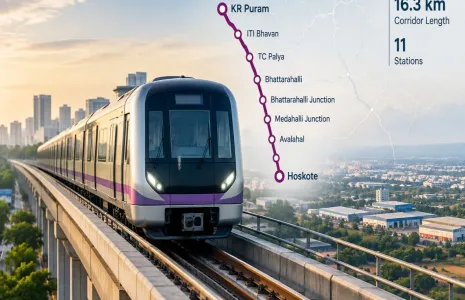
The Bangalore Metro Rail Corporation Limited (BMRCL) is gearing up to demolish more than 700 properties to pave the way for the construction of the Orange Line in Bengaluru. This ambitious infrastructure project aims to enhance the city's metro connectivity and address transportation needs.

The properties slated for demolition include residential and commercial structures located along the proposed route of the Orange Line. BMRCL's decision to clear these properties underscores the prioritisation of public infrastructure development in Bengaluru, despite potential disruptions to local communities and businesses.

The Orange Line project is expected to significantly augment Bengaluru's metro network, providing commuters with improved accessibility and connectivity across various parts of the city. However, the demolition of properties poses challenges in terms of relocation, compensation, and mitigating the impact on affected individuals and businesses.

BMRCL is likely to implement measures to ensure the smooth execution of the demolition process while minimising inconvenience to stakeholders. This may include providing adequate compensation to property owners, facilitating relocation assistance, and maintaining transparent communication throughout the project's lifecycle.

As Bengaluru continues to grapple with urban mobility challenges, the expansion of its metro network assumes greater significance in enhancing connectivity and reducing congestion. The Orange Line project represents a significant step forward in this direction, albeit with accompanying complexities and trade-offs that necessitate careful planning and stakeholder engagement.

The Bangalore Metro Rail Corporation Limited (BMRCL) is gearing up to demolish more than 700 properties to pave the way for the construction of the Orange Line in Bengaluru. This ambitious infrastructure project aims to enhance the city's metro connectivity and address transportation needs. The properties slated for demolition include residential and commercial structures located along the proposed route of the Orange Line. BMRCL's decision to clear these properties underscores the prioritisation of public infrastructure development in Bengaluru, despite potential disruptions to local communities and businesses. The Orange Line project is expected to significantly augment Bengaluru's metro network, providing commuters with improved accessibility and connectivity across various parts of the city. However, the demolition of properties poses challenges in terms of relocation, compensation, and mitigating the impact on affected individuals and businesses. BMRCL is likely to implement measures to ensure the smooth execution of the demolition process while minimising inconvenience to stakeholders. This may include providing adequate compensation to property owners, facilitating relocation assistance, and maintaining transparent communication throughout the project's lifecycle. As Bengaluru continues to grapple with urban mobility challenges, the expansion of its metro network assumes greater significance in enhancing connectivity and reducing congestion. The Orange Line project represents a significant step forward in this direction, albeit with accompanying complexities and trade-offs that necessitate careful planning and stakeholder engagement.

Next Story
Infrastructure Energy

Coal Ministry Simplifies Disposal of Washery Rejects

The Ministry of Coal has recently simplified the process for disposal of coal washery rejects to enhance ease of doing business and ensure faster utilisation, while maintaining environmental safeguards. The move aligns with the government’s Atmanirbhar Bharat vision and ongoing reform agenda in the coal sector. Under the existing policy issued on 27 May 2021, washery rejects were disposed of through a three-tier priority system. The first priority allows their use for energy extraction, in line with Solid Waste Management Rules, 2016, applicable to waste with calorific value above 1,500 kca..

Next Story
Infrastructure Urban

India, Oman Sign CEPA to Boost Trade and Services Ties

India and Oman have recently signed a Comprehensive Economic Partnership Agreement (CEPA), marking a major milestone in India’s strategic engagement with the Gulf region. The agreement was signed in the presence of Narendra Modi and Sultan Haitham bin Tarik, by Piyush Goyal and Qais bin Mohammed Al Yousef. The CEPA provides unprecedented market access for Indian goods, with Oman offering zero-duty access on 98.08 per cent of its tariff lines, covering 99.38 per cent of India’s exports by value. Major labour-intensive sectors such as textiles, leather, footwear, gems and jewellery, enginee..

Next Story
Technology

TTDF Backs 136 Telecom R&D Projects Worth Rs 5.42 Bn

The Telecom Technology Development Fund (TTDF) Scheme has recently approved 136 projects worth Rs 5.42 billion to strengthen indigenous telecom innovation across India, the government informed Parliament. The scheme focuses on bridging the digital divide by enabling development and manufacturing of advanced telecom technologies for rural and remote areas. In a written reply to the Rajya Sabha, Minister of State for Communications and Rural Development Pemmasani Chandra Sekhar said the TTDF Scheme, launched on 1 October 2022, supports IITs, NITs, MSMEs, start-ups and research institutions work..

Advertisement

Subscribe to Our Newsletter

Get daily newsletters around different themes from Construction world.

STAY CONNECTED

Advertisement

Advertisement

Advertisement

Advertisement

Open In App