Bombay HC Questions Cuffe Parade Redevelopment On Prime Govt Land
Real Estate

Bombay HC Questions Cuffe Parade Redevelopment On Prime Govt Land

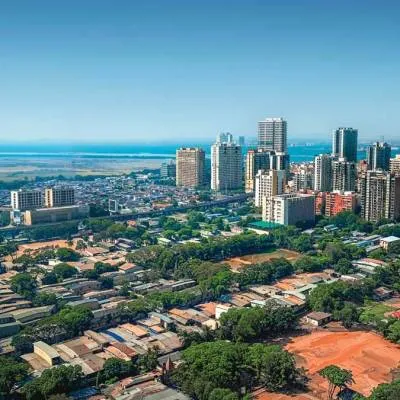
The Bombay High Court (HC) has raised serious concerns over the redevelopment of 33 acres of prime government land in Cuffe Parade, South Mumbai, under the Slum Rehabilitation Authority (SRA) scheme, calling it a potential misuse of public property under the guise of slum rehabilitation.
In a strongly worded order issued on 1 October 2025, a division bench of Justices G.S. Kulkarni and Aarti Sathe observed that transferring such valuable land for private development amounted to “removing it from the public pool” and “throwing it open for commercial exploitation” in a city already deprived of basic urban amenities such as gardens, open spaces, and public infrastructure.
The bench questioned whether the SRA had obtained Cabinet approval before initiating the redevelopment, warning that “prime land cannot be permanently taken away from the public domain for private gain”. The judges stated that such actions “under the garb of slum rehabilitation” could constitute a fraud on the Constitution if found to be inconsistent with public interest.
The court described a worrying “modus operandi” in which public lands are encroached upon, declared as slums, and subsequently redeveloped for profit. “This is a usual method to siphon off valuable public lands. The cost of each unit in a locality like Cuffe Parade or Colaba speaks for itself—the value of the land is unimaginable,” the order noted.
Spread across 33 acres, the land in question belongs to the Maharashtra government and houses nearly 65,000 slum dwellers who have sought redevelopment under the SRA scheme through a federation of local societies. Developer Precaution Properties Pvt Ltd has been appointed to execute the project.
The court acknowledged that rehabilitation of eligible slum dwellers is a legal right but emphasised that it does not entitle them to occupy the same high-value land indefinitely. “Mumbai is an island city where public land is scarce and indispensable for civic utilities. The government cannot afford to lose such tracts to private redevelopment,” the judges said.
They reiterated that slum dwellers’ rights are limited to securing alternate housing, not permanent possession of prime state-owned land, particularly in areas like Cuffe Parade, Nariman Point, or Malabar Hill.
The HC also highlighted that the Ministry of Defence had denied a no-objection certificate for the project due to its proximity to defence establishments. The court has directed the Defence Ministry, along with the SRA CEO and Maharashtra’s Revenue and Urban Development Secretaries, to file affidavits within 10 days addressing security concerns and the legality of land transfer.
The matter has been adjourned to 15 October, with the bench clarifying that the case extends beyond the rights of individual residents or developers. “At stake is the long-term public interest and the constitutional obligation of the state to safeguard its limited land for future generations,” the court observed.
The Cuffe Parade project is part of the SRA’s redevelopment framework, which provides eligible slum dwellers with 330 sq ft one-bedroom apartments free of cost. In exchange, developers receive rights to use part of the land for saleable housing, intended to balance social welfare with commercial incentives.
However, the court’s remarks suggest growing judicial unease about how such schemes are being applied in Mumbai’s high-value localities, warning that public largesse must not be diverted for private enrichment.

The Bombay High Court (HC) has raised serious concerns over the redevelopment of 33 acres of prime government land in Cuffe Parade, South Mumbai, under the Slum Rehabilitation Authority (SRA) scheme, calling it a potential misuse of public property under the guise of slum rehabilitation.In a strongly worded order issued on 1 October 2025, a division bench of Justices G.S. Kulkarni and Aarti Sathe observed that transferring such valuable land for private development amounted to “removing it from the public pool” and “throwing it open for commercial exploitation” in a city already deprived of basic urban amenities such as gardens, open spaces, and public infrastructure.The bench questioned whether the SRA had obtained Cabinet approval before initiating the redevelopment, warning that “prime land cannot be permanently taken away from the public domain for private gain”. The judges stated that such actions “under the garb of slum rehabilitation” could constitute a fraud on the Constitution if found to be inconsistent with public interest.The court described a worrying “modus operandi” in which public lands are encroached upon, declared as slums, and subsequently redeveloped for profit. “This is a usual method to siphon off valuable public lands. The cost of each unit in a locality like Cuffe Parade or Colaba speaks for itself—the value of the land is unimaginable,” the order noted.Spread across 33 acres, the land in question belongs to the Maharashtra government and houses nearly 65,000 slum dwellers who have sought redevelopment under the SRA scheme through a federation of local societies. Developer Precaution Properties Pvt Ltd has been appointed to execute the project.The court acknowledged that rehabilitation of eligible slum dwellers is a legal right but emphasised that it does not entitle them to occupy the same high-value land indefinitely. “Mumbai is an island city where public land is scarce and indispensable for civic utilities. The government cannot afford to lose such tracts to private redevelopment,” the judges said.They reiterated that slum dwellers’ rights are limited to securing alternate housing, not permanent possession of prime state-owned land, particularly in areas like Cuffe Parade, Nariman Point, or Malabar Hill.The HC also highlighted that the Ministry of Defence had denied a no-objection certificate for the project due to its proximity to defence establishments. The court has directed the Defence Ministry, along with the SRA CEO and Maharashtra’s Revenue and Urban Development Secretaries, to file affidavits within 10 days addressing security concerns and the legality of land transfer.The matter has been adjourned to 15 October, with the bench clarifying that the case extends beyond the rights of individual residents or developers. “At stake is the long-term public interest and the constitutional obligation of the state to safeguard its limited land for future generations,” the court observed.The Cuffe Parade project is part of the SRA’s redevelopment framework, which provides eligible slum dwellers with 330 sq ft one-bedroom apartments free of cost. In exchange, developers receive rights to use part of the land for saleable housing, intended to balance social welfare with commercial incentives.However, the court’s remarks suggest growing judicial unease about how such schemes are being applied in Mumbai’s high-value localities, warning that public largesse must not be diverted for private enrichment.

Related Stories

Gold Stories

Next Story
Infrastructure Urban

KONE Opens India's First Digital Experience Centre in Pune

KONE, a global elevator and escalator manufacturer, has inaugurated its first Digital Experience Centre (DEC) in India, located in Pune. The facility aims to showcase how artificial intelligence (AI), connectivity and data-driven technologies can enhance customer experiences and improve building operations.The centre was inaugurated by Jussi Herlin, Executive Vice Chair, KONE Corporation; Philippe Delorme, President and CEO, KONE; and Nandan Nilekani, Co-founder and Chairman of the Board, Infosys.Designed as an interactive customer environment, the facility demonstrates digital solutions cover..

Next Story
Infrastructure Urban

CII GreenCo Launches Circularity Guidelines for Indian Industry

The Confederation of Indian Industry (CII) GreenCo Council has launched the CII GreenCo Circularity Guidelines – Pilot Version at the 17th CII GreenCo Waste & Resource Management Summit 2026 in Chennai. The initiative aims to strengthen resource efficiency, waste reduction and circular economy practices across Indian manufacturing and process industries.The guidelines introduce a structured framework with circularity indices covering raw materials, consumables, packaging and other resource inputs. These indicators will help industries assess existing practices, identify opportunities to ..

Next Story
Infrastructure Energy

Global Electronics Association Launches IPC-1783-CO2E Standard

The Global Electronics Association has introduced IPC-1783-CO2E, a new international standard aimed at improving consistency, transparency and comparability in product carbon footprint reporting across the electronics manufacturing industry.The standard, titled International Standard for Data Collection and Reporting of CO2 Equivalent (CO2e) Emissions for the Electronics Manufacturing Supply Chain, provides industry-specific guidance for collecting, estimating and reporting carbon emissions data.With increasing regulatory requirements and customer expectations, electronics manufacturers face c..

Advertisement

Subscribe to Our Newsletter

Get daily newsletters around different themes from Construction world.

STAY CONNECTED

Advertisement

SPECIAL OFFER
QR Code