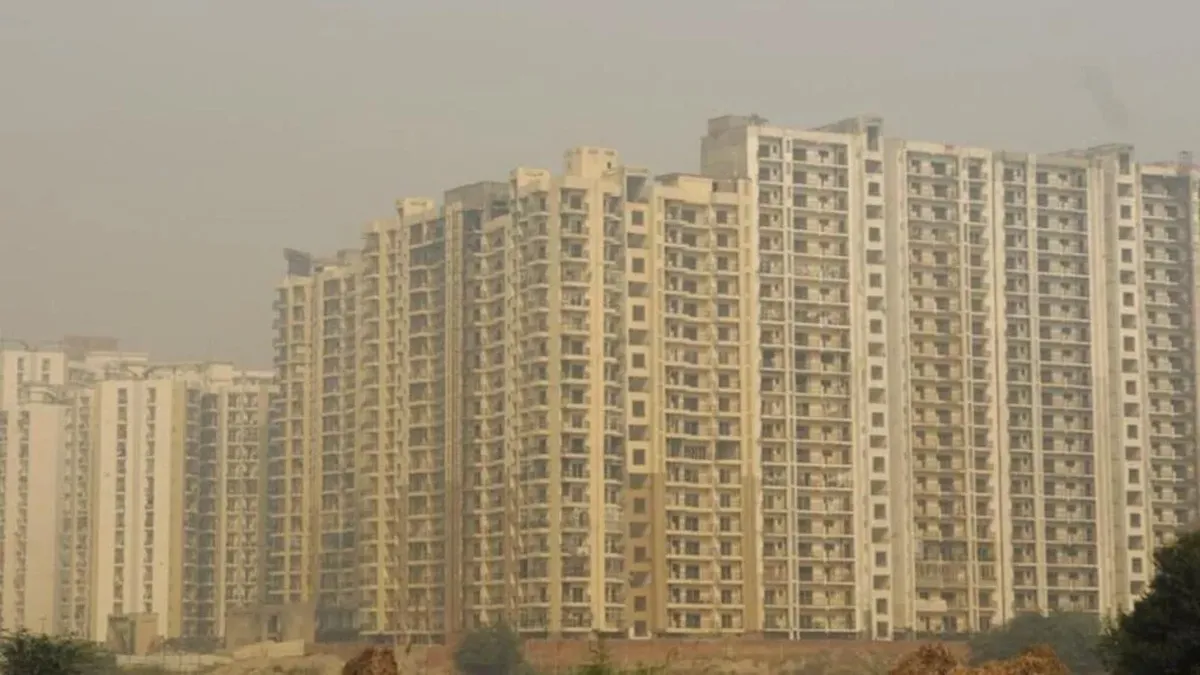
GNIDA Allows Partial Occupancy For Stalled Noida Projects
Real Estate

GNIDA Allows Partial Occupancy For Stalled Noida Projects

In a major relief for homebuyers and developers, the Greater Noida Industrial Development Authority (GNIDA) has announced that it will grant partial occupancy and completion certificates to developers who have made advance payments under the Uttar Pradesh government’s rehabilitation policy for stalled real estate projects.

The decision is expected to benefit thousands of buyers who have been waiting for their homes for years, as well as developers struggling with long-delayed projects in the Greater Noida region.

According to the new directive, developers who have deposited one-fourth of their recalculated dues — including the two-year zero period granted during the Covid-19 pandemic — and made subsequent payments towards the remaining balance, will now be eligible for occupancy and completion certificates in proportion to the payments made.

This change will help facilitate possession for buyers and reduce procedural delays that have hampered project delivery.

Under the rehabilitation policy notified in December 2023, developers were required to pay 25 per cent of their revised dues upfront, with the balance payable in instalments. The initial payment enabled them to obtain a No Dues Certificate (NDC), allowing construction to resume.

However, several projects remained stalled due to bureaucratic hurdles, as multiple no-objection certificates (NOCs) from government departments were required before further payments could be processed. Missing payment deadlines often rendered developers ineligible for subsequent NDCs, effectively halting progress.

The issue was taken up by the Confederation of Real Estate Developers’ Associations of India (CREDAI), NCR and Western Uttar Pradesh chapters, urging GNIDA to ease restrictions for compliant developers.

The latest decision addresses these concerns by allowing partial clearances tied to payment progress, which will enable both buyers to take possession and developers to generate liquidity through sales.

Officials said the move will also improve the Authority’s financial recovery, ensuring stalled projects return to the construction pipeline while protecting the interests of homebuyers and builders alike.

In a major relief for homebuyers and developers, the Greater Noida Industrial Development Authority (GNIDA) has announced that it will grant partial occupancy and completion certificates to developers who have made advance payments under the Uttar Pradesh government’s rehabilitation policy for stalled real estate projects. The decision is expected to benefit thousands of buyers who have been waiting for their homes for years, as well as developers struggling with long-delayed projects in the Greater Noida region. According to the new directive, developers who have deposited one-fourth of their recalculated dues — including the two-year zero period granted during the Covid-19 pandemic — and made subsequent payments towards the remaining balance, will now be eligible for occupancy and completion certificates in proportion to the payments made. This change will help facilitate possession for buyers and reduce procedural delays that have hampered project delivery. Under the rehabilitation policy notified in December 2023, developers were required to pay 25 per cent of their revised dues upfront, with the balance payable in instalments. The initial payment enabled them to obtain a No Dues Certificate (NDC), allowing construction to resume. However, several projects remained stalled due to bureaucratic hurdles, as multiple no-objection certificates (NOCs) from government departments were required before further payments could be processed. Missing payment deadlines often rendered developers ineligible for subsequent NDCs, effectively halting progress. The issue was taken up by the Confederation of Real Estate Developers’ Associations of India (CREDAI), NCR and Western Uttar Pradesh chapters, urging GNIDA to ease restrictions for compliant developers. The latest decision addresses these concerns by allowing partial clearances tied to payment progress, which will enable both buyers to take possession and developers to generate liquidity through sales. Officials said the move will also improve the Authority’s financial recovery, ensuring stalled projects return to the construction pipeline while protecting the interests of homebuyers and builders alike.

Next Story
Real Estate

RBI Rate Cut Boosts Confidence Across Housing Market

Industry Context and Market DynamicsThe real estate industry has welcomed the RBI’s rate cut as a timely boost to affordability and demand. With home prices having risen steadily across major markets, even a marginal reduction in interest rates meaningfully strengthens purchasing power, especially for first-time and mid-income buyers.Ashish Jerath, President – Sales & Marketing, Smartworld Developers, observes:“The RBI’s 25-basis-point cut, bringing the repo rate down to 5.25%, is a timely boost for the real estate sector. Lower interest rates reduce borrowing costs, enabling homeb..

Next Story
Infrastructure Transport

BMC Resumes Rs 170 Billion Road Works, Targets 80 per cent By Jan 2026

Following the withdrawal of the southwest monsoon in October, the Brihanmumbai Municipal Corporation (BMC) has restarted work on 645 roads—covering 297.49 kilometres—under its large-scale concretisation programme. Data shows that more than 60 per cent of the resumed works are located in the western suburbs. Officials said the civic body aims to complete concretisation on 80 per cent of the roads where fresh work has begun by January 2026. Launched in 2022, the Rs 170 billion project seeks to concretise 700 kilometres of roads across Mumbai. All civil works were halted during the monsoon ..

Next Story
Infrastructure Urban

India Pushes Digital Shift In Urban Land Mapping

The Department of Land Resources (DoLR) under the Ministry of Rural Development has convened a National Symposium on NAKSHA – the National Geospatial Knowledge-based Land Survey of Urban Habitations – to advance India’s transition to modern, technology-driven land mapping. Speaking at the inaugural session, Secretary Manoj Joshi underscored the urgent need to move revenue departments away from outdated, tape-based methods and rough hand-drawn sketches. He stressed that adopting latitude–longitude-based digital mapping and GIS-linked registration systems is essential for economic stabi..

Advertisement

Subscribe to Our Newsletter

Get daily newsletters around different themes from Construction world.

STAY CONNECTED

Advertisement

Advertisement

Advertisement

Advertisement

Open In App