Mumbai Starts Work On Twin Tunnel And Freeway Expansion
ROADS & HIGHWAYS

Mumbai Starts Work On Twin Tunnel And Freeway Expansion

With municipal corporation elections approaching, particularly the high-stakes Brihanmumbai Municipal Corporation (BMC) poll, the Mahayuti Government is accelerating high-value, high-visibility infrastructure projects across Mumbai.

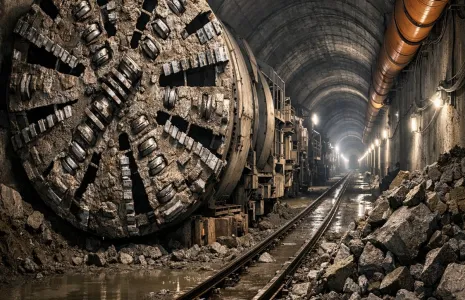
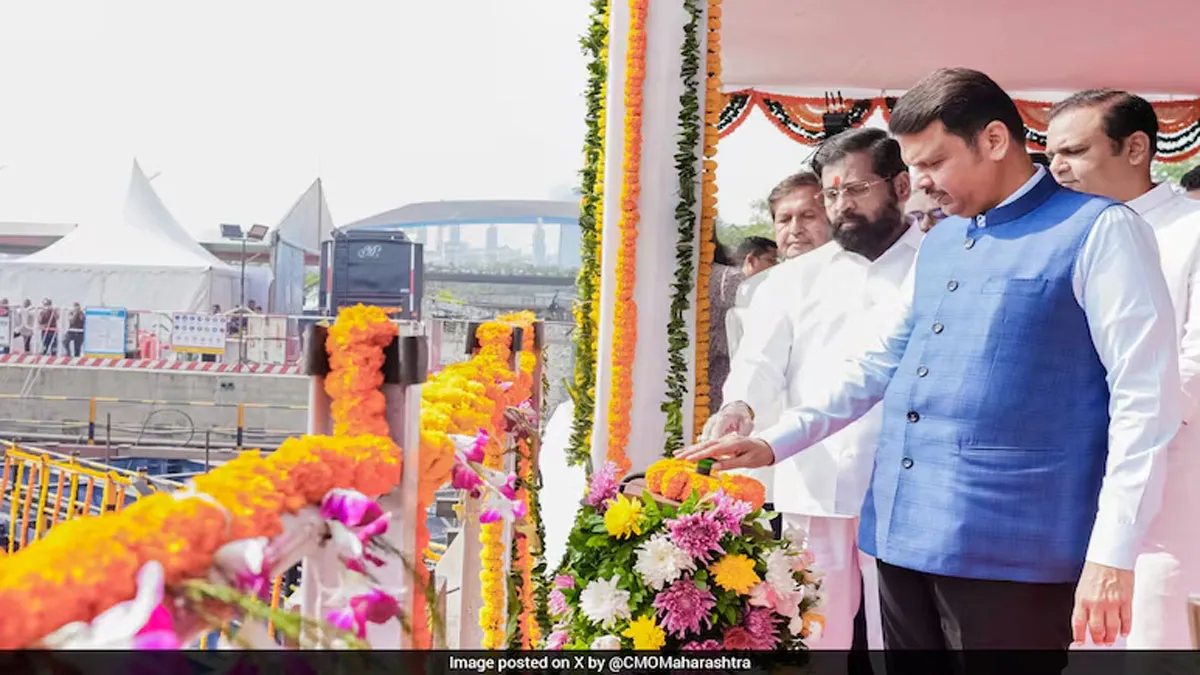
In a major boost to the city’s connectivity, construction of the Orange Gate–Marine Drive Tunnel has begun. Chief Minister Devendra Fadnavis and Deputy Chief Minister Eknath Shinde launched the Tunnel Boring Machine (TBM) for the project, which links the eastern edge of Orange Gate to Marine Drive.

Fadnavis said the tunnel was conceived to ease long detours and chronic congestion faced by Eastern Freeway commuters. He added that the project will transform travel across the city, making journeys significantly faster. The tunnel will connect the Eastern Freeway to the Coastal Road network, running beneath almost 700 properties, including heritage structures over a century old. It will pass under Western Railway, Central Railway and the Metro without disrupting existing infrastructure, making it a major engineering achievement.

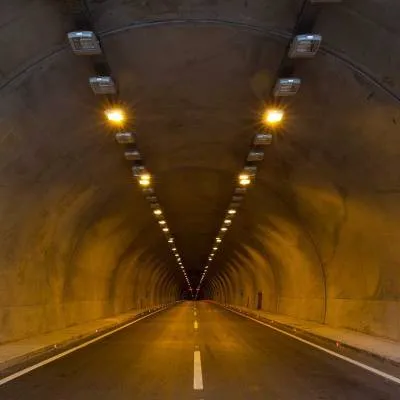
The twin tunnel will span 9.96 km, with 3–3.5 km sections featuring two lanes plus an emergency lane. It will include advanced ventilation, ITS Smart Mobility technology and an AI-enabled traffic management system. Completion is targeted for December 2028, with efforts underway to finish six months earlier.

Fadnavis said the tunnel will save thousands of hours for daily commuters and strengthen Mumbai’s long-term growth vision. He commended MMRDA’s leadership in driving the project.

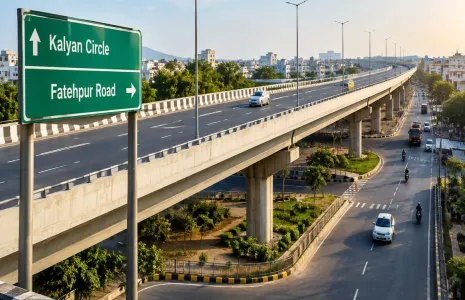
Alongside the tunnel, work has also begun on the Elevated Eastern Freeway Extension, a key link expected to cut travel time between South Mumbai and Thane to just 25–30 minutes.

MMRDA has started construction of the 13.9 km fully elevated, six-lane, high-speed corridor, which is set to ease congestion on the Eastern Express Highway — one of Mumbai’s busiest routes, used by millions of commuters daily. The corridor will stretch from Anand Nagar in Thane to Chheda Nagar in Ghatkopar, connecting Mulund, Airoli, JVLR, Vikhroli, Kanjurmarg, Mankhurd and Ghatkopar. In Thane, it will merge with the Anand Nagar–Saket Elevated Road to create a continuous high-speed route, with onward access to the Samruddhi Expressway.

Once complete, the project is expected to improve traffic flow, reduce emissions and deliver a faster, more reliable and greener commute for millions, while supporting economic activity across the Mumbai Metropolitan Region.

As part of its sustainability commitments, MMRDA realigned the Vikhroli–Ghatkopar stretch to save 127 Pink Trumpet trees and will plant 4,175 new trees as compensatory green cover.

With municipal corporation elections approaching, particularly the high-stakes Brihanmumbai Municipal Corporation (BMC) poll, the Mahayuti Government is accelerating high-value, high-visibility infrastructure projects across Mumbai. In a major boost to the city’s connectivity, construction of the Orange Gate–Marine Drive Tunnel has begun. Chief Minister Devendra Fadnavis and Deputy Chief Minister Eknath Shinde launched the Tunnel Boring Machine (TBM) for the project, which links the eastern edge of Orange Gate to Marine Drive. Fadnavis said the tunnel was conceived to ease long detours and chronic congestion faced by Eastern Freeway commuters. He added that the project will transform travel across the city, making journeys significantly faster. The tunnel will connect the Eastern Freeway to the Coastal Road network, running beneath almost 700 properties, including heritage structures over a century old. It will pass under Western Railway, Central Railway and the Metro without disrupting existing infrastructure, making it a major engineering achievement. The twin tunnel will span 9.96 km, with 3–3.5 km sections featuring two lanes plus an emergency lane. It will include advanced ventilation, ITS Smart Mobility technology and an AI-enabled traffic management system. Completion is targeted for December 2028, with efforts underway to finish six months earlier. Fadnavis said the tunnel will save thousands of hours for daily commuters and strengthen Mumbai’s long-term growth vision. He commended MMRDA’s leadership in driving the project. Alongside the tunnel, work has also begun on the Elevated Eastern Freeway Extension, a key link expected to cut travel time between South Mumbai and Thane to just 25–30 minutes. MMRDA has started construction of the 13.9 km fully elevated, six-lane, high-speed corridor, which is set to ease congestion on the Eastern Express Highway — one of Mumbai’s busiest routes, used by millions of commuters daily. The corridor will stretch from Anand Nagar in Thane to Chheda Nagar in Ghatkopar, connecting Mulund, Airoli, JVLR, Vikhroli, Kanjurmarg, Mankhurd and Ghatkopar. In Thane, it will merge with the Anand Nagar–Saket Elevated Road to create a continuous high-speed route, with onward access to the Samruddhi Expressway. Once complete, the project is expected to improve traffic flow, reduce emissions and deliver a faster, more reliable and greener commute for millions, while supporting economic activity across the Mumbai Metropolitan Region. As part of its sustainability commitments, MMRDA realigned the Vikhroli–Ghatkopar stretch to save 127 Pink Trumpet trees and will plant 4,175 new trees as compensatory green cover.

Related Stories

Gold Stories

Next Story
Infrastructure Transport

Jammu Division Records Highest Punctuality of 94.12%

The Jammu Division of Northern Railway (Jammu Division) set a new benchmark in operational efficiency when it achieved a single-day punctuality rate of 94.12 per cent for Mail and Express trains on July 31. This performance is the highest recorded in the division's history and surpasses the previous best of 92.59 per cent achieved on February 20, 2025. The official communique indicated that the figure represents a significant improvement in on-time arrivals and departures across the network. Railway officials attributed the outcome to meticulous planning and effective coordination between grou..

Next Story
Infrastructure Transport

Tinaighat-Kulem Rail Doubling Threatens Forest Biodiversity

A peer-reviewed study by 20 scientists has challenged the cumulative environmental impact assessment prepared by the Wildlife Institute of India for the proposed doubling of the Tinaighat-Kulem railway line in Karnataka and Goa. The study says the assessment overlooks biodiversity and ecological impacts across one of the region's most sensitive forest landscapes. The authors describe the matter as urgent given the scale of planned infrastructure. The review was published in the Journal of Threatened Taxa and was carried out by a multidisciplinary team of ecologists, social scientists, conserva..

Next Story
Infrastructure Transport

CONCOR Launches Ennore to Hyderabad Rail Freight Service

Container Corporation of India (CONCOR) has commenced a new rail freight service that links Ennore Port, part of the Kamarajar Port cluster in Chennai, with ICD Sanathnagar in Hyderabad. The new corridor provides containerised cargo movement directly between the eastern gateway port and a major inland logistics hub in the Deccan plateau. CONCOR positioned the launch as an expansion of its multi-modal offerings to trade and industry in Telangana and neighbouring regions. The service connects the port cluster through intermediate logistics nodes and establishes a dedicated rail corridor for expo..

Advertisement

Subscribe to Our Newsletter

Get daily newsletters around different themes from Construction world.

STAY CONNECTED

Advertisement