


India Pushes Digital Shift In Urban Land Mapping
ECONOMY & POLICY

India Pushes Digital Shift In Urban Land Mapping

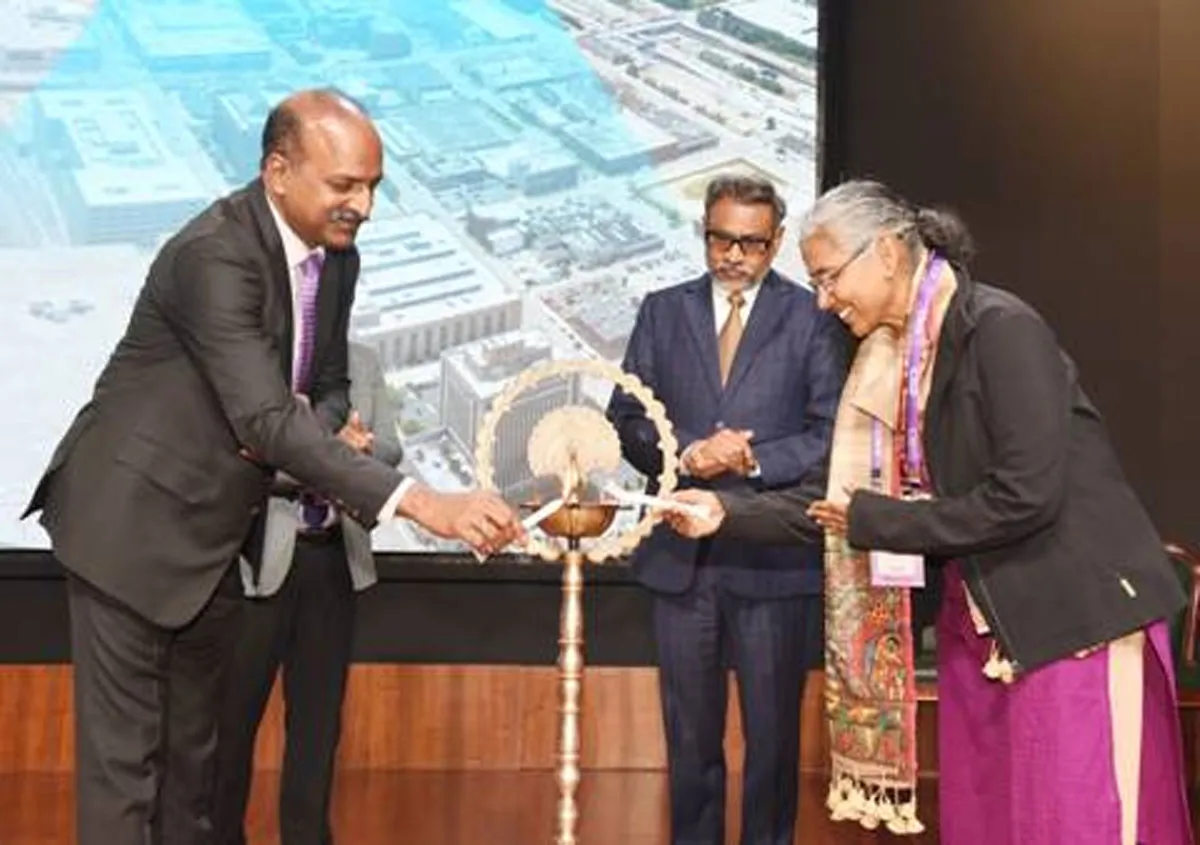
The Department of Land Resources (DoLR) under the Ministry of Rural Development has convened a National Symposium on NAKSHA – the National Geospatial Knowledge-based Land Survey of Urban Habitations – to advance India’s transition to modern, technology-driven land mapping.

Speaking at the inaugural session, Secretary Manoj Joshi underscored the urgent need to move revenue departments away from outdated, tape-based methods and rough hand-drawn sketches. He stressed that adopting latitude–longitude-based digital mapping and GIS-linked registration systems is essential for economic stability, stronger property markets, and transparent, reliable land records.

Providing a technical update, Joint Secretary Kunal Satyarthi noted the Government’s increasing use of advanced technologies for aerial imaging. He highlighted that the Continuously Operating Reference System (CORS) now enables surveyors to map around 200 properties a day — a task that previously consumed an entire day for a single parcel. He added that a major pilot across 157 cities is testing a unified “urban property card”, which will consolidate registration deeds, municipal tax details and existing land documents into a single authoritative record.

He further explained that technologies such as LiDAR and oblique cameras are being deployed across 20–30 states to tackle complex terrains and the challenges of rapid urbanisation.

Concluding the symposium, Director Shyam Kumar urged a coordinated push to accelerate the NAKSHA programme, develop modern GIS-based software, and ensure comprehensive national-level land datasets to improve ease of living and ease of doing business.

The Department of Land Resources (DoLR) under the Ministry of Rural Development has convened a National Symposium on NAKSHA – the National Geospatial Knowledge-based Land Survey of Urban Habitations – to advance India’s transition to modern, technology-driven land mapping. Speaking at the inaugural session, Secretary Manoj Joshi underscored the urgent need to move revenue departments away from outdated, tape-based methods and rough hand-drawn sketches. He stressed that adopting latitude–longitude-based digital mapping and GIS-linked registration systems is essential for economic stability, stronger property markets, and transparent, reliable land records. Providing a technical update, Joint Secretary Kunal Satyarthi noted the Government’s increasing use of advanced technologies for aerial imaging. He highlighted that the Continuously Operating Reference System (CORS) now enables surveyors to map around 200 properties a day — a task that previously consumed an entire day for a single parcel. He added that a major pilot across 157 cities is testing a unified “urban property card”, which will consolidate registration deeds, municipal tax details and existing land documents into a single authoritative record. He further explained that technologies such as LiDAR and oblique cameras are being deployed across 20–30 states to tackle complex terrains and the challenges of rapid urbanisation. Concluding the symposium, Director Shyam Kumar urged a coordinated push to accelerate the NAKSHA programme, develop modern GIS-based software, and ensure comprehensive national-level land datasets to improve ease of living and ease of doing business.

Next Story
Infrastructure Urban

Army Chief Concludes Defence Outreach to UAE and Sri Lanka

The Chief of the Army Staff (COAS), Upendra Dwivedi, has recently concluded his official visit to the United Arab Emirates and Sri Lanka, reaffirming India’s commitment to strengthening defence cooperation, military-to-military engagement and strategic partnerships across West Asia and the Indian Ocean Region.During his visit to the UAE, the COAS held wide-ranging discussions with senior leadership of the UAE Armed Forces, including the Commander of the UAE Land Forces. The interactions focused on enhancing interoperability, expanding joint training initiatives and strengthening professional..

Next Story
Infrastructure Transport

DRDL Achieves Breakthrough in Hypersonic Missile Engine Tests

The Defence Research & Development Laboratory (DRDL), a Hyderabad-based laboratory of the Defence Research and Development Organisation (DRDO), has recently achieved a major milestone in the development of hypersonic missile technology. The laboratory successfully conducted a long-duration ground test of its Actively Cooled Scramjet Full Scale Combustor, recording a run time of over 12 minutes at the Scramjet Connect Pipe Test (SCPT) Facility on 9 January 2026.This achievement builds on an earlier successful subscale long-duration test carried out in April 2025 and represents a significant..

Next Story
Infrastructure Urban

TRAI Drive Test Assesses Mobile Network Quality in Sonipat

The Telecom Regulatory Authority of India (TRAI) has released the findings of an Independent Drive Test (IDT) conducted across Sonipat city in Haryana during December 2025, aimed at informing consumers about the real-world quality of mobile network services. The exercise evaluated both voice and data performance offered by Telecom Service Providers (TSPs) under live network conditions.During the IDT, TRAI captured performance data on key indicators such as call setup success rate, drop call rate, call setup time, speech quality and data throughput. Advanced test handsets and software tools wer..

Advertisement

Subscribe to Our Newsletter

Get daily newsletters around different themes from Construction world.

STAY CONNECTED

Advertisement

Advertisement

Advertisement

Advertisement

Open In App