- Home
- Real Estate
- High-rise, compact, and mega cities are the only answer for this world, for the future
High-rise, compact, and mega cities are the only answer for this world, for the future
For this icon, architecture is not a job but a calling.
You can see it in every building that bears his unmistakable stamp, the sheer magnificence of his designs, the breathtaking impact of his oeuvre, and his profound influence over much of the built environment of metropolitan India. Fittingly, Hafeez Contractor was recently awarded the Padma Bhushan by the President of India. While graciously accepting CW´s congratulations, he underscored the plight of India´s cities and the challenges in the country´s building scenario. Not surprising, considering Contractor is a ´soldier of architecture´, a sentinel whose vision goes far beyond mere brick and mortar to encompass sustainable building for the entire country. In conversation with SHRIYAL SETHUMADHAVAN and SERAPHINA D´SOUZA, Contractor shares his journey and thoughts on building the future.
How does it feel to be honoured with the country´s most prestigious award?
When one receives an award, at that moment it is the biggest achievement. This one is a bit different because the country recognises you; so, of course, it is one of my big achievements.
But today, in India, how much importance is given to architecture? What cities used to be, and what are they getting converted to? Look at Mumbai 20-25 years ago. Suddenly there is a big vacuum and work to be created. People first need to be made aware of what architecture is all about and what it can get for the city. But, in urban design, what is not good for architecture is that anyone makes decisions, the results of which are evident only after 10-12 years. One cannot even imagine how bad laws have destroyed cities, especially Mumbai.
In 1885, Mumbai was ´the destination´ to set up a business in India. Then, our city fathers made a law that said no to more office buildings. At this time, Mumbai used to be the only place with a proper phone system, electrical and water supply, and a fantastic work culture. But one law, and the focus shifted to cities such as Delhi and Bengaluru. What remained for Mumbai was its skyline.
What is the scenario like in Mumbai today?
Today, Mumbai is getting a raw deal. In urban areas, three years back, there was no development allowed; then, one year there was a lull, some new laws were made; then ministers changed. So, for the past three to four years, plans are changing and there is complete uncertainty. If we were to have only ´MHADA-looking´ buildings, we need to question ourselves if this is what our cities should look like. Also, we have been talking about a ring road for Mumbai since 1968. While this is yet to see the light of the day, today almost every small town in the country has a ring road. So, it is now high time that Mumbai questions whether it has done something wrong. The whole world is reclaiming and creating beautiful spaces. But good projects in India tend to come to a halt owing to various reasons. I feel dejected because unlike the situation back in 1986-87, today Delhi´s bylaws are a thousand times better than Mumbai´s. For instance, while Delhi permits eight to 10 basements, the law in Mumbai limits it to not more than 10 or 10.5 m. We are not allowing cantilevers of more than 2 m when, world over, 60-80 m of cantilevers are designed.
So, which is the one move required to meet international standards?
We need to build an environment. With scarcity, scarcity and scarcity, our prices have gone up, up, up and up. We are in a situation where you cannot afford to buy a house of your standard unless you are born rich. First, India has to get its housing prices in parity with earnings.
India is now promoting affordable homes.
Affordable is a nice term. But with taxes introduced being so high, there is nothing like affordability. However, the government is focusing on urban along with rural areas. For the first time, there is something like cities on the map. Urban areas, water and connecting of rivers are important and the government is going in the right direction. But it will take some time. The biggest problem remains that we have created so many laws, and we have a web of laws, laws and laws.
The recently released model building bylaws speak about easing the approval process and creating set standards for tall structures and green buildings, among others...
Getting online clearance is a positive move. But we need strong laws and permissions that consider architectural features as well. For example, any projection in a building, such as sun breakers, will be considered in the FSI. But in most probability, a builder will not pay for an architectural feature in FSI. So, what are left are boxes without any decoration. We need to not just build, but build aseptically, because these buildings are going to be there for another 100 years.
You were a part of the Bombay Heritage Society; what should be done to preserve heritage?
Heritage in every aspect - urban, family, culture - is important. In the urban context, preserving all good buildings is important. But we have over-amplified and created precincts that we call heritage today. The heritage committee comprises bureaucrats who are administrators, while we are speaking design. So, heritage is important, but you need to have it in the right dose. Then it will be appreciated and preserved.
For a successful project, how should the relationship between an architect and builder be?
It is most cooperative when a builder says something and I agree, or the other way round. We need to understand the constraints that developers in India work around. It has to be a close-knit relationship, it has to be appreciative; it has to be a perfect marriage.
Many developers are now working and consulting with international architects for their projects...
International architects are like a new flavour, a new girl in town. To create something new, a lot of developers get architects from abroad. A developer may want to give something new, but before that, he wants to announce that he has an international architect. So, whether he likes it or not, a builder today follows the trend.
What is the relevance of a project like the coastal road that Mumbai is planning? You have been involved in the project...
The coastal road is a great opportunity in several ways and we are throwing it away. Today, everyone is talking about the environment and global warming, and it is a reality. A lot of coastal cities have already started raising their coast, considering the rise in sea level after 10-15 years.
We could have taken this opportunity and created it with a garden or a forest of 500 m all along and protected the west side all along the second phase; we have the BPT development; we could have created 500 or 600 m of forestation. With this, we could change the microclimate of the city.
What has gone wrong in the process?
Every day, someone or the other takes objection and work comes to a halt. If the same kind of people existed about a hundred years back, Mumbai would not have developed to this extent. We need to be magnanimous, have a balanced approach, and live and let live.
You have been advocating vertical growth and sustainable compact cities for over four decades; this seems to be the right time.
High-rise, compact and mega cities are the only answer for this world, for the future. Our Prime Minister is talking about smart cities. I appreciate it, but instead of talking about cities, I would take only three or four places where there is ample water and develop concentrated cities. These can have water, electricity, the required infrastructure, underground tubes, etc. Water is an infrastructure not available to all cities, so this should be used to advantage. We need new ways of developing cities.
What´s your message for budding architects?
The newer generation is looking at things in a different way. That´s essential and that´s the right way. But while they have a herculean task ahead of them, we are responsible for how we leave the environment for them.
Please share a memorable experience from your career, and a dream project you are still looking forward to achieve.
What will go down in history is a memorable experience. Consider how Lake Castle gave rise to Powai in Mumbai; also, my experience with developing the DLF city, the whole golf course, etc, in Gurgaon. This experience is certainly memorable. But going forward, if Mumbai´s west-side freeway with the park gets done, it will be a memorable experience, and this will be a dream project not just for me but the city. Mumbai has the population, the people are so vibrant and work-oriented; we have everything. The sad part is that we do not have the leadership.
To share your feedback on this interview, write in at feedback@ConstructionWorld.in
- Architect Hafeez Contractor For this icon, architecture is not a job but a calling. You can see it in every building that bears his unmistakable stamp, the sheer magnificence of his designs, the breathtaking impact of his oeuvre, and his profound influence over much of the built environment of metropolitan India. Fittingly, Hafeez Contractor was recently awarded the Padma Bhushan by the President of India. While graciously accepting CW´s congratulations, he underscored the plight of India´s cities and the challenges in the country´s building scenario. Not surprising, considering Contractor is a ´soldier of architecture´, a sentinel whose vision goes far beyond mere brick and mortar to encompass sustainable building for the entire country. In conversation with SHRIYAL SETHUMADHAVAN and SERAPHINA D´SOUZA, Contractor shares his journey and thoughts on building the future. How does it feel to be honoured with the country´s most prestigious award? When one receives an award, at that moment it is the biggest achievement. This one is a bit different because the country recognises you; so, of course, it is one of my big achievements. But today, in India, how much importance is given to architecture? What cities used to be, and what are they getting converted to? Look at Mumbai 20-25 years ago. Suddenly there is a big vacuum and work to be created. People first need to be made aware of what architecture is all about and what it can get for the city. But, in urban design, what is not good for architecture is that anyone makes decisions, the results of which are evident only after 10-12 years. One cannot even imagine how bad laws have destroyed cities, especially Mumbai. In 1885, Mumbai was ´the destination´ to set up a business in India. Then, our city fathers made a law that said no to more office buildings. At this time, Mumbai used to be the only place with a proper phone system, electrical and water supply, and a fantastic work culture. But one law, and the focus shifted to cities such as Delhi and Bengaluru. What remained for Mumbai was its skyline. What is the scenario like in Mumbai today? Today, Mumbai is getting a raw deal. In urban areas, three years back, there was no development allowed; then, one year there was a lull, some new laws were made; then ministers changed. So, for the past three to four years, plans are changing and there is complete uncertainty. If we were to have only ´MHADA-looking´ buildings, we need to question ourselves if this is what our cities should look like. Also, we have been talking about a ring road for Mumbai since 1968. While this is yet to see the light of the day, today almost every small town in the country has a ring road. So, it is now high time that Mumbai questions whether it has done something wrong. The whole world is reclaiming and creating beautiful spaces. But good projects in India tend to come to a halt owing to various reasons. I feel dejected because unlike the situation back in 1986-87, today Delhi´s bylaws are a thousand times better than Mumbai´s. For instance, while Delhi permits eight to 10 basements, the law in Mumbai limits it to not more than 10 or 10.5 m. We are not allowing cantilevers of more than 2 m when, world over, 60-80 m of cantilevers are designed. So, which is the one move required to meet international standards? We need to build an environment. With scarcity, scarcity and scarcity, our prices have gone up, up, up and up. We are in a situation where you cannot afford to buy a house of your standard unless you are born rich. First, India has to get its housing prices in parity with earnings. India is now promoting affordable homes. Affordable is a nice term. But with taxes introduced being so high, there is nothing like affordability. However, the government is focusing on urban along with rural areas. For the first time, there is something like cities on the map. Urban areas, water and connecting of rivers are important and the government is going in the right direction. But it will take some time. The biggest problem remains that we have created so many laws, and we have a web of laws, laws and laws. The recently released model building bylaws speak about easing the approval process and creating set standards for tall structures and green buildings, among others... Getting online clearance is a positive move. But we need strong laws and permissions that consider architectural features as well. For example, any projection in a building, such as sun breakers, will be considered in the FSI. But in most probability, a builder will not pay for an architectural feature in FSI. So, what are left are boxes without any decoration. We need to not just build, but build aseptically, because these buildings are going to be there for another 100 years. You were a part of the Bombay Heritage Society; what should be done to preserve heritage? Heritage in every aspect - urban, family, culture - is important. In the urban context, preserving all good buildings is important. But we have over-amplified and created precincts that we call heritage today. The heritage committee comprises bureaucrats who are administrators, while we are speaking design. So, heritage is important, but you need to have it in the right dose. Then it will be appreciated and preserved. For a successful project, how should the relationship between an architect and builder be? It is most cooperative when a builder says something and I agree, or the other way round. We need to understand the constraints that developers in India work around. It has to be a close-knit relationship, it has to be appreciative; it has to be a perfect marriage. Many developers are now working and consulting with international architects for their projects... International architects are like a new flavour, a new girl in town. To create something new, a lot of developers get architects from abroad. A developer may want to give something new, but before that, he wants to announce that he has an international architect. So, whether he likes it or not, a builder today follows the trend. What is the relevance of a project like the coastal road that Mumbai is planning? You have been involved in the project... The coastal road is a great opportunity in several ways and we are throwing it away. Today, everyone is talking about the environment and global warming, and it is a reality. A lot of coastal cities have already started raising their coast, considering the rise in sea level after 10-15 years. We could have taken this opportunity and created it with a garden or a forest of 500 m all along and protected the west side all along the second phase; we have the BPT development; we could have created 500 or 600 m of forestation. With this, we could change the microclimate of the city. What has gone wrong in the process? Every day, someone or the other takes objection and work comes to a halt. If the same kind of people existed about a hundred years back, Mumbai would not have developed to this extent. We need to be magnanimous, have a balanced approach, and live and let live. You have been advocating vertical growth and sustainable compact cities for over four decades; this seems to be the right time. High-rise, compact and mega cities are the only answer for this world, for the future. Our Prime Minister is talking about smart cities. I appreciate it, but instead of talking about cities, I would take only three or four places where there is ample water and develop concentrated cities. These can have water, electricity, the required infrastructure, underground tubes, etc. Water is an infrastructure not available to all cities, so this should be used to advantage. We need new ways of developing cities. What´s your message for budding architects? The newer generation is looking at things in a different way. That´s essential and that´s the right way. But while they have a herculean task ahead of them, we are responsible for how we leave the environment for them. Please share a memorable experience from your career, and a dream project you are still looking forward to achieve. What will go down in history is a memorable experience. Consider how Lake Castle gave rise to Powai in Mumbai; also, my experience with developing the DLF city, the whole golf course, etc, in Gurgaon. This experience is certainly memorable. But going forward, if Mumbai´s west-side freeway with the park gets done, it will be a memorable experience, and this will be a dream project not just for me but the city. Mumbai has the population, the people are so vibrant and work-oriented; we have everything. The sad part is that we do not have the leadership. To share your feedback on this interview, write in at feedback@ConstructionWorld.in
Related Stories
Gold Stories
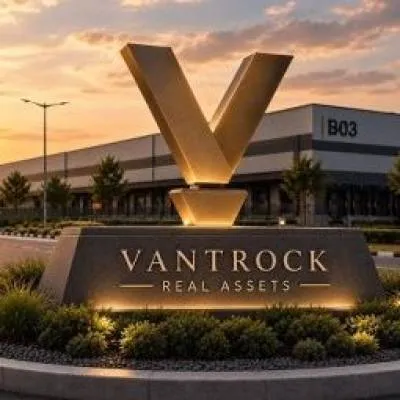
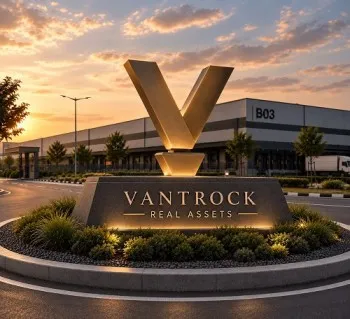
Anshul Singhal launches Vantrock with Rs 42 billion development plan
Real estate professional Anshul Singhal has launched Vantrock Real Assets Private Limited (VRAPL), a Mumbai-headquartered platform focused initially on warehousing, industrial and logistics parks. The company plans to develop approximately 11.5 million sq ft of assets, with an estimated gross development value (GDV) of Rs 42 billion (approximately USD 434 million) on completion.The first phase will cover around 3 million sq ft across the National Capital Region (NCR), Bengaluru and Pune, with an estimated development value of Rs 11 billion (approximately USD 113 million). Construction is sched..
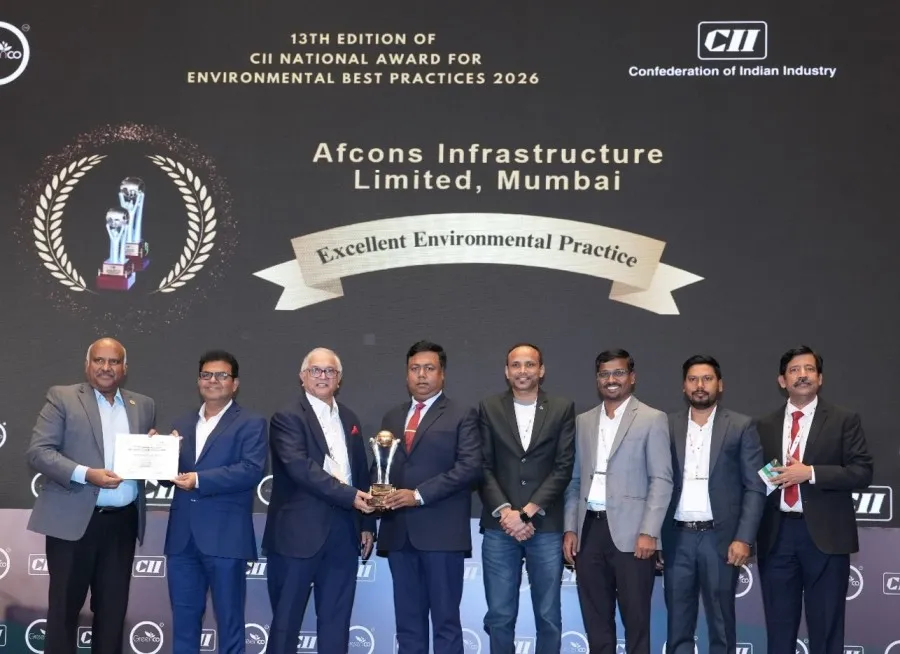
Afcons wins CII award for biodiversity management
Afcons Infrastructure has received the Confederation of Indian Industry (CII) National Award for Environmental Best Practices 2026 in the Biodiversity Management category for its work on the Mumbai-Ahmedabad High Speed Rail Project’s C-2 package.The award was presented at a ceremony in Chennai on 9 October 2026. It was received by Mihir Mishra, Vice-President, CPE, and Sumon Paul, Assistant General Manager, HSE, along with the Afcons team.The project adopted several resource recovery and waste management practices. These included recycling concrete washout waste to recover sand, aggregates a..
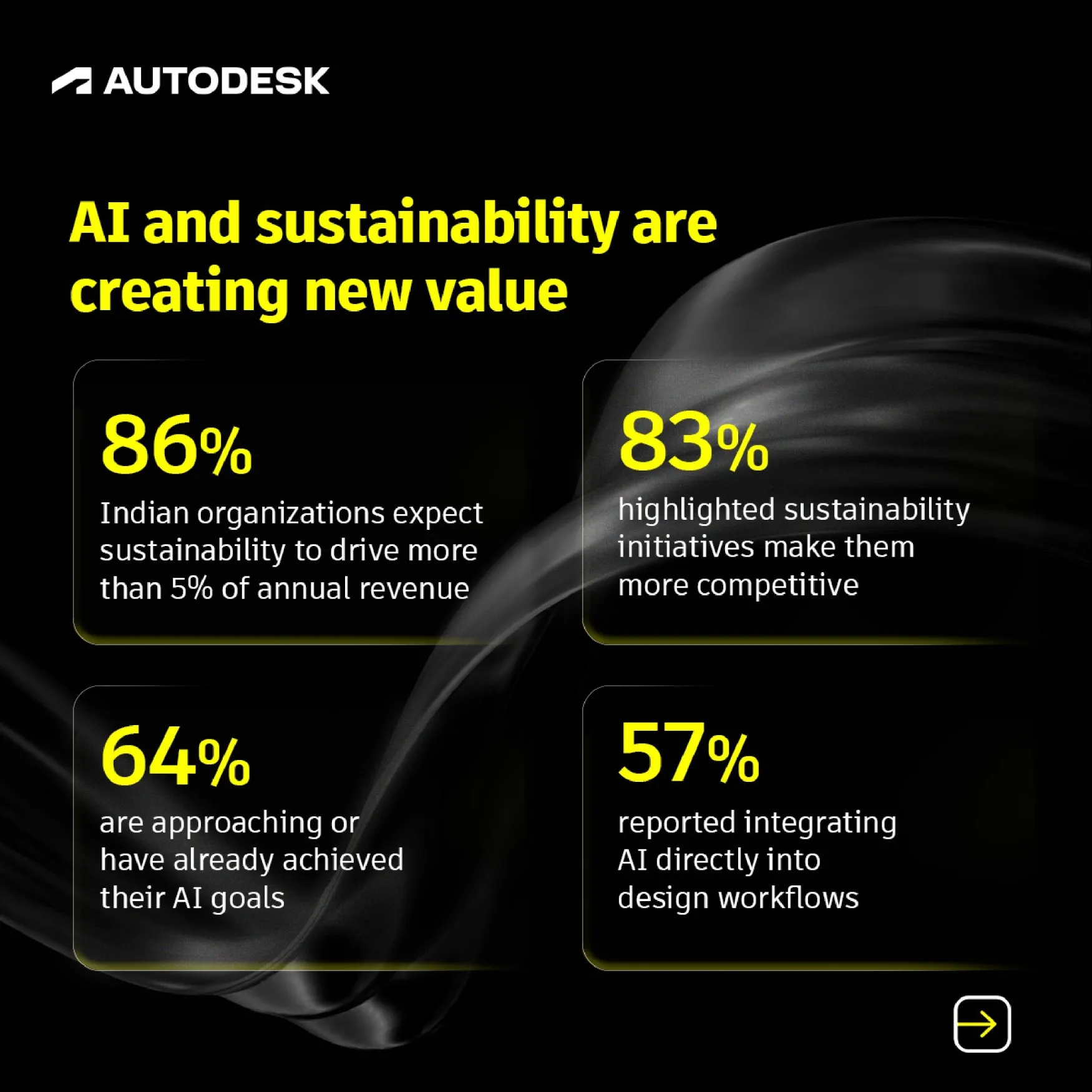
Indian businesses lead globally in planned AI investment, says Autodesk
Indian organisations are moving towards deeper integration of artificial intelligence (AI), digital technologies and sustainability into business operations, according to Autodesk’s 2026 State of Design & Make report. The fourth edition of the annual study highlights growing AI adoption, measurable outcomes from digital transformation and the role of sustainability in long-term business growth.The report found that 64 per cent of Indian organisations are approaching or have achieved their current AI goals. While 88 per cent believe AI will enhance their industry, up from 78 per cent in 2..
Related Articles
Latest Updates
Recommended for you
Advertisement
Subscribe to Our Newsletter
Get daily newsletters around different themes from Construction world.
subscribe to the newsletter
Don't miss out on valuable insights and opportunities
to connect with like minded professionals