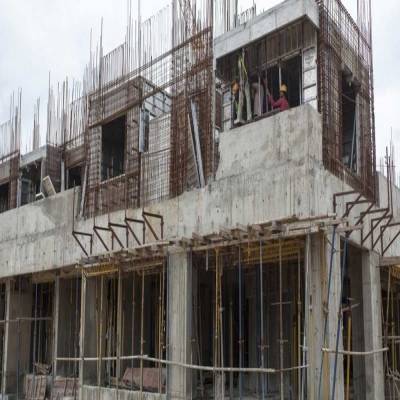
MHADA Offers 120 Flats In Mumbai On First-Come-First-Served Basis
Real Estate

MHADA Offers 120 Flats In Mumbai On First-Come-First-Served Basis

The Mumbai Housing and Area Development Authority (MHADA) has announced an offer of 120 flats in Mumbai to be allotted on a first-come-first-served basis. The scheme is presented as an opportunity for eligible applicants to secure housing through a straightforward allotment method prioritising application order. The authority has issued information on the allotment procedure and eligibility criteria and has asked interested parties to follow official channels for full details.

Applications will be processed in the sequence of receipt and successful allotment will depend on verification of eligibility and documentation. The authority will administer the scheme under its existing regulatory framework and will publish application protocols and submission requirements on its recognised platforms. Prospective applicants are advised to ensure completeness of paperwork to avoid disqualification at the verification stage.

Demand for affordable flats in the city is likely to be strong and the first-come-first-served approach may favour those who act promptly. Observers noted that such allotment methods can expedite occupancy but may require careful management to ensure fairness and transparency. The authority is expected to monitor the process and address queries through established helplines and information portals.

Prospective buyers and applicants should assess their eligibility and prepare necessary documents in advance and monitor the authority's official notices for timelines and procedural updates. Those seeking assistance may consult registered agents or legal advisers while relying principally on the authority's published guidance. The announcement underlines continuing efforts to make housing stock accessible within the city.

Applicants should assemble common supporting documents, including valid identity proof, proof of residence and income documentation, and ensure that originals and copies are readily available for verification. Payment mechanisms and any registration fees will be detailed by the authority and candidates should verify acceptable modes before submission. Clear records of communication with the authority will help applicants track application status and resolve any disputes efficiently.

The Mumbai Housing and Area Development Authority (MHADA) has announced an offer of 120 flats in Mumbai to be allotted on a first-come-first-served basis. The scheme is presented as an opportunity for eligible applicants to secure housing through a straightforward allotment method prioritising application order. The authority has issued information on the allotment procedure and eligibility criteria and has asked interested parties to follow official channels for full details. Applications will be processed in the sequence of receipt and successful allotment will depend on verification of eligibility and documentation. The authority will administer the scheme under its existing regulatory framework and will publish application protocols and submission requirements on its recognised platforms. Prospective applicants are advised to ensure completeness of paperwork to avoid disqualification at the verification stage. Demand for affordable flats in the city is likely to be strong and the first-come-first-served approach may favour those who act promptly. Observers noted that such allotment methods can expedite occupancy but may require careful management to ensure fairness and transparency. The authority is expected to monitor the process and address queries through established helplines and information portals. Prospective buyers and applicants should assess their eligibility and prepare necessary documents in advance and monitor the authority's official notices for timelines and procedural updates. Those seeking assistance may consult registered agents or legal advisers while relying principally on the authority's published guidance. The announcement underlines continuing efforts to make housing stock accessible within the city. Applicants should assemble common supporting documents, including valid identity proof, proof of residence and income documentation, and ensure that originals and copies are readily available for verification. Payment mechanisms and any registration fees will be detailed by the authority and candidates should verify acceptable modes before submission. Clear records of communication with the authority will help applicants track application status and resolve any disputes efficiently.

Next Story
Infrastructure Transport

Large Format Store Planned At M G Road Metro Station

M G Road station in Bengaluru is set to host the city’s first large-format commercial and experience space, with planning led by Bangalore Metro Rail Corporation Limited. BMRCL has invited proposals to develop and operate a central business district destination at the Purple?Pink Line interchange. The plan positions the station as a commercial hub designed to serve a broad commuter base across the city. The proposal is part of a broader effort to activate transit nodes commercially. Tender documents set a minimum monthly rental of Rs 0.944 million (mn), inclusive of GST, for the large-format..

Next Story
Infrastructure Energy

Government Cancels Auction Of Eleven Critical Mineral Blocks

The government has cancelled the auction of 11 critical and strategic mineral blocks after receiving a poor investor response and failing to attract a sufficient number of qualified bidders. The decision represents a setback to plans to ramp up domestic exploration and production of critical minerals amid global supply chain disruptions and rising demand for materials used in clean energy and advanced technologies. The mines ministry issued an annulment notice setting out the reasons for the cancellations. The annulment notice indicated that the auction process for five mineral blocks was canc..

Next Story
Infrastructure Energy

Gujarat Pushes Biogas Growth With 193 Operational Units

Gujarat has operationalised 193 biogas plants across the state and is planning to add 60 more units as part of a broader push to scale up clean and sustainable energy solutions. The existing plants, established under various government-supported schemes, process organic waste including cattle dung and agricultural residue to produce biogas and a nutrient-rich slurry. The output is mainly used for cooking and other energy needs in rural and semi-urban communities, while also improving local waste management practices. The Gujarat Energy Development Agency (GEDA) is leading the initiative and is..

Advertisement

Subscribe to Our Newsletter

Get daily newsletters around different themes from Construction world.

STAY CONNECTED

Advertisement

Advertisement

Advertisement