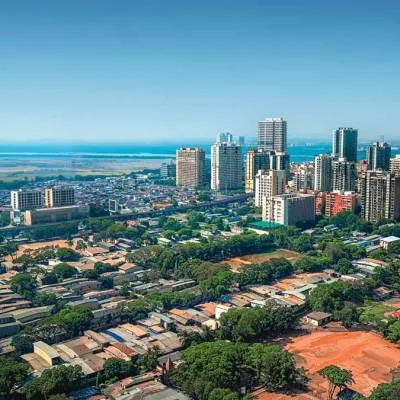





Mumbai property registrations peak in June
Real Estate

Mumbai property registrations peak in June

Despite the increase in interest rates and the elimination of the reduced stamp duty advantage, Mumbai, the largest and most expensive real estate market in the nation, continued its record-breaking streak in June.

The number of property registrations in India's financial hub increased by 23 per cent from a year earlier to over 9,675 during the month, making it the largest in terms of both the volume of transactions and the amount of stamp duty collected. The state exchequer has received over Rs 7.14 billion from stamp duty fees, up more than 70 per cent from a year ago due to the larger number of agreements that were completed.

Growing employment and job markets, increased incomes, income stability, returning to the office and campus scenarios, and substantial core sectors of the economy that pose a greater degree of resumption all have a good cumulative effect on the demand for homes.

Homes between 500 and 1000 sq ft were the most popular kind of apartment during the month, with over 52 per cent of property registrations falling in the Rs 10 million and above price range.

With a contribution of 46 per cent of June's registrations, the age group of 31 to 45 years old had the highest percentage of house purchasers. 32 per cent of homebuyers were in the 46 to 60 year old age range, while 11 per cent were under 30 and 11 per cent were over 60. 38 per cent of the properties registered during the month are tiny dwellings under 500 sq ft, up from 34 per cent in May.

Following the state government's announcement of a limited-window cut in stamp duty, Mumbai has recently been establishing new standards for real estate transactions.

Despite the increase in interest rates and the elimination of the reduced stamp duty advantage, Mumbai, the largest and most expensive real estate market in the nation, continued its record-breaking streak in June. The number of property registrations in India's financial hub increased by 23 per cent from a year earlier to over 9,675 during the month, making it the largest in terms of both the volume of transactions and the amount of stamp duty collected. The state exchequer has received over Rs 7.14 billion from stamp duty fees, up more than 70 per cent from a year ago due to the larger number of agreements that were completed. Growing employment and job markets, increased incomes, income stability, returning to the office and campus scenarios, and substantial core sectors of the economy that pose a greater degree of resumption all have a good cumulative effect on the demand for homes. Homes between 500 and 1000 sq ft were the most popular kind of apartment during the month, with over 52 per cent of property registrations falling in the Rs 10 million and above price range. With a contribution of 46 per cent of June's registrations, the age group of 31 to 45 years old had the highest percentage of house purchasers. 32 per cent of homebuyers were in the 46 to 60 year old age range, while 11 per cent were under 30 and 11 per cent were over 60. 38 per cent of the properties registered during the month are tiny dwellings under 500 sq ft, up from 34 per cent in May. Following the state government's announcement of a limited-window cut in stamp duty, Mumbai has recently been establishing new standards for real estate transactions.

Next Story
Technology

AI-Enabled Workflows Lift Profitability and Productivity

Organisations modernising frontline workflows with artificial intelligence, automation and real-time data are reporting stronger financial performance, higher productivity and improved employee engagement, according to a global study by Zebra Technologies and Oxford Economics.The research covered 1,000 senior leaders across retail, manufacturing, transportation and logistics in the US, Mexico, the UK, Germany, India, Japan, Australia and New Zealand.In transportation and logistics, 54 per cent of companies that improved picking and packing operations reported faster operational performance, wh..

Next Story
Real Estate

India Leads Global AI Readiness but Implementation Lags

Indian companies lead global averages across all eight artificial intelligence readiness indicators tracked by JLL, but only 19 per cent have started making changes to their workplaces, according to the JLL 2026 Future of Work Survey.The study found that 77 per cent of Indian business leaders expect AI to change their office requirements, creating a 58-percentage-point gap between awareness and implementation. The survey covered more than 2,200 CEOs, CFOs and real estate leaders across 21 countries during the first quarter of 2026.Despite concerns over automation, 58 per cent of Indian leaders..

Next Story
Equipment

Three WOLFF Cranes Build Riyadh Cable-Stayed Bridges

Three WOLFF 180 B luffing jib cranes are supporting the construction of two cable-stayed bridges alongside the existing Wadi Laban Bridge in Riyadh, Saudi Arabia. The project is being developed for the Royal Commission for Riyadh City and executed by the ICRC joint venture comprising IC Ictas and Al Rashid Trading & Contracting Company.The cranes are handling lifting operations including formwork, reinforcement, concrete placement, work platforms, surveying equipment and other construction materials. Each crane is fitted with a 40 m jib, reaches a hook height of 157 m and offers a maximum ..

Advertisement

Subscribe to Our Newsletter

Get daily newsletters around different themes from Construction world.

STAY CONNECTED

Advertisement

Advertisement

Advertisement