+
India Shifts to Tech Leadership: DST–NIDHI CoE Launched at IIM-A
Technology

India Shifts to Tech Leadership: DST–NIDHI CoE Launched at IIM-A

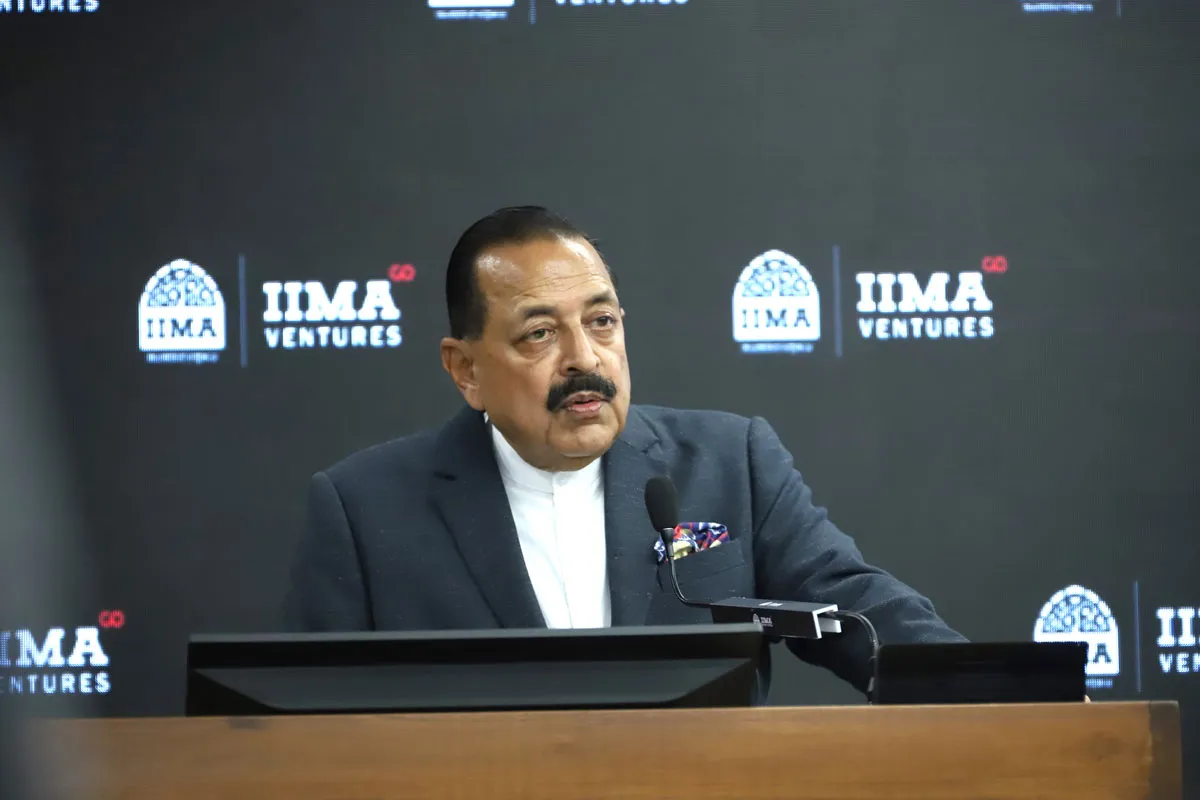
India’s transition from technology adoption to technology leadership gained momentum with the inauguration of the DST–NIDHI Centre of Excellence (CoE) at the Indian Institute of Management, Ahmedabad (IIM-A). The Centre, supported and funded by the Department of Science and Technology (DST) with an investment of around Rs 400 million, was dedicated to the nation by Dr Jitendra Singh, Minister of State (Independent Charge) for Science & Technology and Earth Sciences.

Housed in a newly developed dedicated block within the IIM Ahmedabad campus, the Centre of Excellence has been envisioned as a national hub for deep-tech entrepreneurship, technology translation and venture creation. It aims to offer startups and entrepreneurs an integrated ecosystem by bringing together technology experts, management professionals and industry stakeholders under one roof.

Addressing the gathering, Dr Jitendra Singh said that over the past decade India has decisively moved from incremental, technology-adopting growth to science-led, technology-driven development. Emphasising the importance of deep tech, he said innovation rooted in fundamental research must be translated into scalable, market-ready solutions to ensure long-term growth, strategic autonomy and global competitiveness.

The Minister underlined the critical role of institutions such as IIM Ahmedabad in bridging the gap between science and the market. He noted that technology without sound management cannot achieve optimal impact, while management without technological depth risks stagnation, making integrated centres such as the DST–NIDHI CoE vital for sustainable innovation.

Spread across nearly 59,000 sq ft, the Centre includes venture creation labs, collaborative workspaces, meeting and board rooms, training facilities and networking zones. It will support early-stage startups, deep-tech founders, investors, students and institutional partners, strengthening the pipeline from laboratory research to commercial deployment.

Dr Jitendra Singh also highlighted the democratisation of innovation, noting that nearly half of India’s startups now originate from Tier-2 and Tier-3 cities. He pointed to India’s position among the top three global startup ecosystems, supported by rising patent filings and scientific output. The launch also saw the unveiling of “Translation Endeavours”, a collaborative platform aimed at breaking silos between academia, industry and government to accelerate deep-tech translation and societal impact.

India’s transition from technology adoption to technology leadership gained momentum with the inauguration of the DST–NIDHI Centre of Excellence (CoE) at the Indian Institute of Management, Ahmedabad (IIM-A). The Centre, supported and funded by the Department of Science and Technology (DST) with an investment of around Rs 400 million, was dedicated to the nation by Dr Jitendra Singh, Minister of State (Independent Charge) for Science & Technology and Earth Sciences.Housed in a newly developed dedicated block within the IIM Ahmedabad campus, the Centre of Excellence has been envisioned as a national hub for deep-tech entrepreneurship, technology translation and venture creation. It aims to offer startups and entrepreneurs an integrated ecosystem by bringing together technology experts, management professionals and industry stakeholders under one roof.Addressing the gathering, Dr Jitendra Singh said that over the past decade India has decisively moved from incremental, technology-adopting growth to science-led, technology-driven development. Emphasising the importance of deep tech, he said innovation rooted in fundamental research must be translated into scalable, market-ready solutions to ensure long-term growth, strategic autonomy and global competitiveness.The Minister underlined the critical role of institutions such as IIM Ahmedabad in bridging the gap between science and the market. He noted that technology without sound management cannot achieve optimal impact, while management without technological depth risks stagnation, making integrated centres such as the DST–NIDHI CoE vital for sustainable innovation.Spread across nearly 59,000 sq ft, the Centre includes venture creation labs, collaborative workspaces, meeting and board rooms, training facilities and networking zones. It will support early-stage startups, deep-tech founders, investors, students and institutional partners, strengthening the pipeline from laboratory research to commercial deployment.Dr Jitendra Singh also highlighted the democratisation of innovation, noting that nearly half of India’s startups now originate from Tier-2 and Tier-3 cities. He pointed to India’s position among the top three global startup ecosystems, supported by rising patent filings and scientific output. The launch also saw the unveiling of “Translation Endeavours”, a collaborative platform aimed at breaking silos between academia, industry and government to accelerate deep-tech translation and societal impact.

Next Story
Infrastructure Transport

Lucknow Metro East-West Corridor Consultancy Contract Awarded

The Uttar Pradesh Metro Rail Corporation has awarded the first construction-related consultancy contract for the Lucknow Metro East West Corridor to a joint venture of AYESA Ingenieria Arquitectura SAU and AYESA India Pvt Ltd. The firm was declared the lowest bidder for the Detailed Design Consultant contract for Lucknow Metro Line-2 under Phase 1B and the contract was recommended following the financial bid. The contract is valued at Rs 159.0 million (mn), covering design services for the corridor. Lucknow Metro Line-2 envisages the construction of an 11.165 kilometre corridor connecting Cha..

Next Story
Infrastructure Urban

Div Com Kashmir Urges Fast Tracking Of Jhelum Water Transport Project

The Divisional Commissioner of Kashmir has called for the fast-tracking of the Jhelum water transport project, urging district administrations and relevant agencies to accelerate planning and clearances. In a meeting convened at the divisional headquarters, the commissioner instructed officials from irrigation, public health engineering and municipal departments to prioritise the project and coordinate survey and design work. The directive emphasised removal of administrative bottlenecks and close monitoring to ensure timely mobilisation of resources and contractors. Officials were told to in..

Next Story
Infrastructure Urban

Interarch Reports Strong Q3 And Nine Month Results

Interarch Building Solutions Limited reported unaudited results for the third quarter and nine months ended 31 December 2025, recording strong revenue growth driven by execution and a robust order book. Net revenue for the third quarter rose by 43.7 per cent to Rs 5.225 billion (bn), compared with Rs 3.636 bn a year earlier, reflecting heightened demand in pre-engineered building projects. The company’s total order book as at 31 January 2026 stood at Rs 16.85 bn, supporting near-term visibility. EBITDA excluding other income for the quarter increased by 43.2 per cent to Rs 503 million (mn),..

Advertisement

Subscribe to Our Newsletter

Get daily newsletters around different themes from Construction world.

STAY CONNECTED

Advertisement

Advertisement

Advertisement

Open In App