

+
MeitY, IndiaAI Host Human Capital AI Meet at IIT Guwahati
Technology

MeitY, IndiaAI Host Human Capital AI Meet at IIT Guwahati

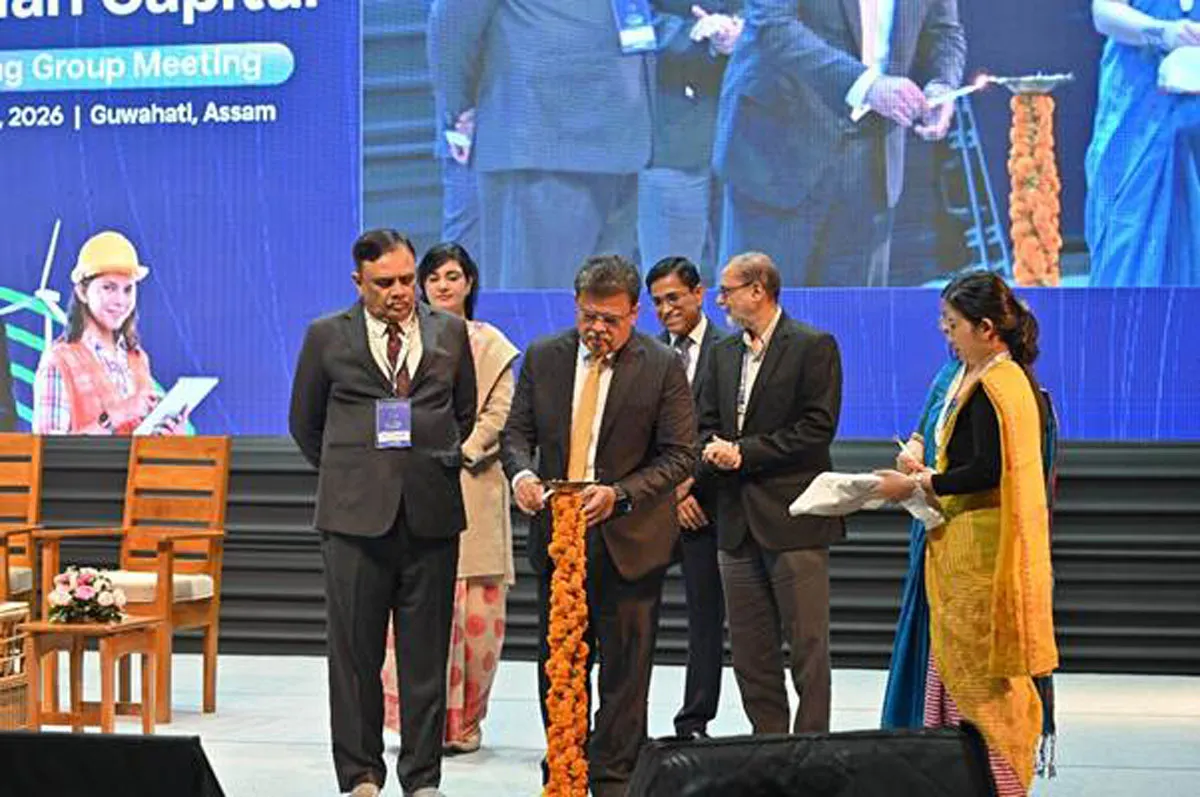
The Ministry of Electronics and Information Technology (MeitY), the IndiaAI Mission, the Government of Assam and IIT Guwahati are hosting a two-day Human Capital Working Group Meeting at the IIT Guwahati campus, bringing together policymakers, academics and industry experts to shape India’s approach to AI-driven workforce transformation. The meeting, being held on January 5–6, 2026, is chaired by Prof T G Sitharam and serves as a thematic precursor to the India AI Impact Summit 2026, scheduled in New Delhi from February 15–20.

The opening session featured addresses by Syedain Abbasi, IAS, Special Chief Secretary, Government of Assam; K S Gopinath Narayan, IAAS, Principal Secretary (IT), Government of Assam; Prof T G Sitharam, Chair, Human Capital Working Group; Prof Devendra Jalihal, Director, IIT Guwahati; and Shikha Dahiya, Joint Director, IndiaAI, MeitY. Speakers emphasised the central role of human capital in India’s AI journey and the need to move beyond conventional skilling models towards lifelong learning, human augmentation and institutional readiness.

Welcoming participants, Prof Devendra Jalihal, Director, IIT Guwahati, highlighted the institute’s role as a convening platform linking policy, academia and industry, and underscored its commitment to inclusive and socially responsive AI ecosystems.

Shikha Dahiya, Joint Director, IndiaAI, MeitY, outlined the vision of the India AI Impact Summit 2026, noting its focus on democratising AI resources, building future-ready human capital and amplifying Global South perspectives. She added that insights from the Guwahati deliberations would directly inform global-level discussions at the Summit.

Prof T G Sitharam stressed that India’s transition to an AI-enabled economy must be inclusive and people-centric, calling for lifelong learning ecosystems that prioritise adaptability and human judgement alongside technical skills.

A key highlight of the first day was the keynote address on “Democratizing Competency in the Age of AI” by Prof Gautam Barua, Former Director, IIT Guwahati, who examined the shift towards AI-enabled human augmentation and the need for sovereign, sector-aligned AI systems that ensure workforce transition security.

The Ministry of Electronics and Information Technology (MeitY), the IndiaAI Mission, the Government of Assam and IIT Guwahati are hosting a two-day Human Capital Working Group Meeting at the IIT Guwahati campus, bringing together policymakers, academics and industry experts to shape India’s approach to AI-driven workforce transformation. The meeting, being held on January 5–6, 2026, is chaired by Prof T G Sitharam and serves as a thematic precursor to the India AI Impact Summit 2026, scheduled in New Delhi from February 15–20.The opening session featured addresses by Syedain Abbasi, IAS, Special Chief Secretary, Government of Assam; K S Gopinath Narayan, IAAS, Principal Secretary (IT), Government of Assam; Prof T G Sitharam, Chair, Human Capital Working Group; Prof Devendra Jalihal, Director, IIT Guwahati; and Shikha Dahiya, Joint Director, IndiaAI, MeitY. Speakers emphasised the central role of human capital in India’s AI journey and the need to move beyond conventional skilling models towards lifelong learning, human augmentation and institutional readiness.Welcoming participants, Prof Devendra Jalihal, Director, IIT Guwahati, highlighted the institute’s role as a convening platform linking policy, academia and industry, and underscored its commitment to inclusive and socially responsive AI ecosystems.Shikha Dahiya, Joint Director, IndiaAI, MeitY, outlined the vision of the India AI Impact Summit 2026, noting its focus on democratising AI resources, building future-ready human capital and amplifying Global South perspectives. She added that insights from the Guwahati deliberations would directly inform global-level discussions at the Summit.Prof T G Sitharam stressed that India’s transition to an AI-enabled economy must be inclusive and people-centric, calling for lifelong learning ecosystems that prioritise adaptability and human judgement alongside technical skills.A key highlight of the first day was the keynote address on “Democratizing Competency in the Age of AI” by Prof Gautam Barua, Former Director, IIT Guwahati, who examined the shift towards AI-enabled human augmentation and the need for sovereign, sector-aligned AI systems that ensure workforce transition security.

Next Story
Infrastructure Transport

Second Mountain Tunnel Breakthrough in Palghar Advances High Speed Rail

The Mumbai-Ahmedabad high speed rail (MAHSR) project reached a milestone with the breakthrough of a mountain tunnel in Palghar, Maharashtra. Mountain tunnel MT-six measures 454 metres long and 14.4 metres wide and will accommodate up and down tracks. The breakthrough follows MT-five near Saphale on second January 2026 and the MT-six excavation was completed from both ends using the New Austrian Tunnelling Method. The ministry reported that the tunnelling was completed within 12 months. The New Austrian Tunnelling Method is favoured for its flexibility in complex geology and irregular tunnel s..

Next Story
Infrastructure Transport

Modi Government Pushes Atmanirbhar Container Drive With BCSL MoU

The Union Government advanced a plan to create an integrated, domestically anchored container ecosystem with the signing of a Memorandum of Understanding to establish the Bharat Container Shipping Line (BCSL). The MoU was signed by key agencies including the Shipping Corporation of India and Container Corporation of India alongside major port authorities and Sagarmala Finance Corporation Limited under the Ministry of Ports, Shipping and Waterways, in the presence of senior ministers. The initiative aligns with the Container Manufacturing Assistance Scheme announced in the Union Budget 2026–2..

Next Story
Infrastructure Urban

Ministry Reports Gains In Mobility For Marginalised Communities

The Ministry of Social Justice and Empowerment is implementing skill development, education and rehabilitation schemes to promote socio-economic mobility and sustainable livelihoods for marginalised and disadvantaged communities across the country. Programmes target Scheduled Castes, Other Backward Classes, Economically Weaker Sections, De-notified Tribes and Safai Karamcharis through specialised implementing corporations and empanelled training institutes. Pradhan Mantri Dakshata Aur Kushalta Sampann Hitgrahi Yojana, or PM-DAKSH, provided skill training and placement support through the Nati..

Advertisement

Subscribe to Our Newsletter

Get daily newsletters around different themes from Construction world.

STAY CONNECTED

Advertisement

Advertisement

Advertisement

Open In App