




Repository Maps 110+ AI Impact Startups Across India
Technology

Repository Maps 110+ AI Impact Startups Across India

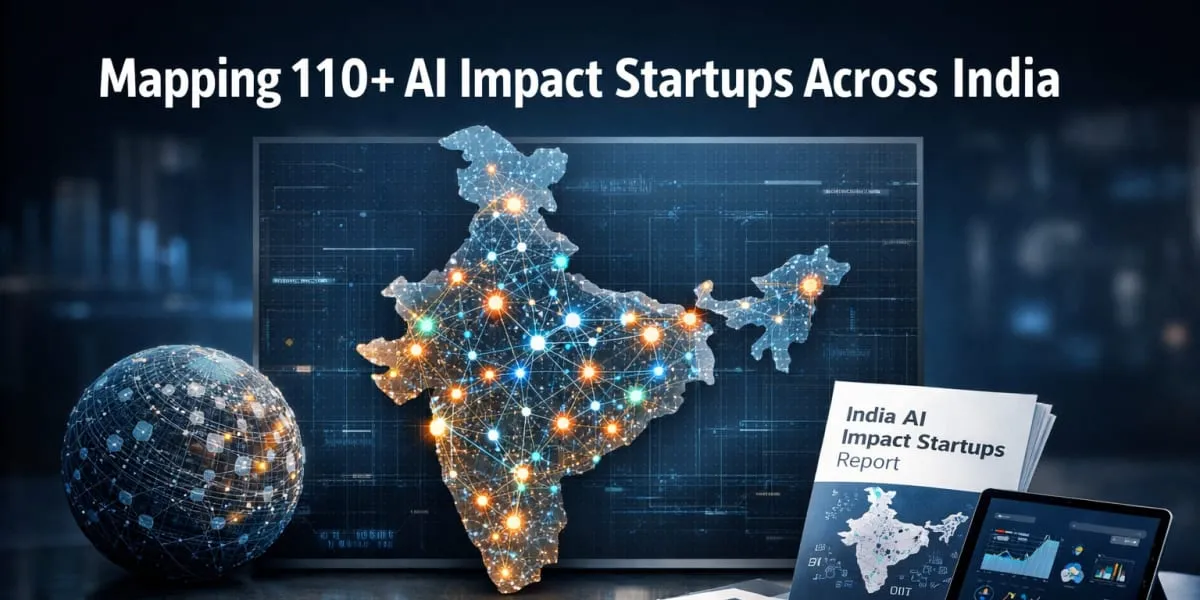
The India AI Impact Startups repository, released at the India AI Impact Summit 2026 by the Ministry of Electronics and Information Technology in collaboration with IndiaAI and Kalpa Impact, profiles 110 startups and non-profits deploying artificial intelligence for population-scale social and economic impact. The compendium covers healthcare, agriculture, education, climate, financial inclusion, urban mobility and public service delivery, and represents the first structured mapping of India’s AI-for-impact ecosystem. It documents locally designed solutions with global relevance and varied stages of maturity.

The analysis indicates an ecosystem that is simultaneously experimenting and consolidating, with voice AI and vernacular interfaces emerging as primary channels to reach underserved populations and a growing cohort investing in Made-in-India foundation models. The report highlights examples ranging from courtroom transcription to rural health screening and smallholder farm advisory, and notes the rise of Edge AI solutions that function without continuous internet connectivity. It also observes that many growth-stage companies have begun international expansion.

Officials from the IndiaAI Mission and MeitY framed the repository as a practical resource for policymakers, saying it highlights capabilities ready for integration with existing digital public infrastructure and offers a structured overview of initiatives aligned with public objectives. They added that the publication provides industry and investors with insight into ventures that demonstrate technical maturity, scalability and long-term potential. Kalpa Impact characterised the startup focus as super-utility, emphasising deployment of AI for human needs and public service challenges.

The repository was researched and compiled by the Kalpa Impact team and is presented as a reference for policymakers seeking integration-ready AI capabilities, for investors identifying ventures with readiness to scale, and for the global development community seeking replicable models from the Global South. The compendium is available online through the original press release link and is intended to assist informed engagement and adoption across public and private sectors.

The India AI Impact Startups repository, released at the India AI Impact Summit 2026 by the Ministry of Electronics and Information Technology in collaboration with IndiaAI and Kalpa Impact, profiles 110 startups and non-profits deploying artificial intelligence for population-scale social and economic impact. The compendium covers healthcare, agriculture, education, climate, financial inclusion, urban mobility and public service delivery, and represents the first structured mapping of India’s AI-for-impact ecosystem. It documents locally designed solutions with global relevance and varied stages of maturity. The analysis indicates an ecosystem that is simultaneously experimenting and consolidating, with voice AI and vernacular interfaces emerging as primary channels to reach underserved populations and a growing cohort investing in Made-in-India foundation models. The report highlights examples ranging from courtroom transcription to rural health screening and smallholder farm advisory, and notes the rise of Edge AI solutions that function without continuous internet connectivity. It also observes that many growth-stage companies have begun international expansion. Officials from the IndiaAI Mission and MeitY framed the repository as a practical resource for policymakers, saying it highlights capabilities ready for integration with existing digital public infrastructure and offers a structured overview of initiatives aligned with public objectives. They added that the publication provides industry and investors with insight into ventures that demonstrate technical maturity, scalability and long-term potential. Kalpa Impact characterised the startup focus as super-utility, emphasising deployment of AI for human needs and public service challenges. The repository was researched and compiled by the Kalpa Impact team and is presented as a reference for policymakers seeking integration-ready AI capabilities, for investors identifying ventures with readiness to scale, and for the global development community seeking replicable models from the Global South. The compendium is available online through the original press release link and is intended to assist informed engagement and adoption across public and private sectors.

Next Story
Infrastructure Urban

MIDC and Ramky Unit Sign Concession for Life Sciences Park

Maharashtra Industrial Development Corporation has signed a concession agreement with Maha Integrated Life Sciences City Limited (MILeS City), a wholly owned subsidiary of Ramky Infrastructure Limited (RIL), to develop a high-tech pharmaceutical park at Dighi Port Industrial Area in Raigad. The project will follow a public-private partnership under a DBFOT model and has an estimated cost of Rs 30 billion (Rs 30 bn). The concession will run for 95 years, including a five-year construction phase, with MILeS City responsible for development and management. The development will occupy approximatel..

Next Story
Real Estate

BuzzWorks Leases Hyderabad Office to MyComplianceOffice

Brigade Group’s managed workspace provider BuzzWorks has leased 550 seats at Mindspace Business Park in Hyderabad to Dublin based MyComplianceOffice, in what is the company’s largest office in India. With this signing, BuzzWorks' total leased office space in Hyderabad stands at zero point one one million (mn) square feet. The new premises will house core functions including product engineering, product management, customer success and global operations. Artificial intelligence enabled compliance technology initiatives will also be part of the local delivery model. BuzzWorks will provide wo..

Next Story
Infrastructure Transport

Jindal Stainless Flags Operational Strain From Middle East Crisis

Jindal Stainless warned that the Middle East war crisis has affected its operations because of dependence on industrial gases such as propane and LPG and on natural gas. The scrap-based production route used by the stainless steel maker does not generate blast furnace or coke oven gases internally, unlike the conventional steel industry. Several plant processes have been adversely impacted and production is being run at rationalised capacity. Disruptions in global shipping routes have resulted in vessel diversions, longer transit times and cargo delays, adding pressure to supply chains and to ..

Advertisement

Subscribe to Our Newsletter

Get daily newsletters around different themes from Construction world.

STAY CONNECTED

Advertisement

Advertisement

Advertisement