+
The New-Age CFO: Moving Beyond Finance to Become a Business Architect
Technology

The New-Age CFO: Moving Beyond Finance to Become a Business Architect

A few years ago, the CFO's role was largely defined by financial performance, reporting, cost and cash management, and financial discipline. Today, that mandate is expanding.

As operations, capital, technology and risk become increasingly interconnected, the CFO is expected to influence not just financial outcomes but also the business decisions that create them. This is particularly relevant in construction and infrastructure, where material prices, procurement decisions, execution timelines, collections and financing costs can significantly alter project economics. A project can be financially viable at one stage and look very different once its underlying assumptions change.

The CFO's vantage point, therefore, needs to extend beyond the balance sheet to how the business creates and protects value.

Moving from Reporting to Operating Intelligence
Financial metrics such as revenue, margins, receivables, and cash flows remain critical. But they are outcomes. The decisions that shape them often happen much earlier and across different parts of the business.

A delayed material dispatch can affect execution timelines, which in turn delays collections and puts pressure on working capital. A shift in material prices can directly erode project margins before it ever shows up as a variance in the P&L. Because these signals originate in separate systems procurement, site execution, sales, collections their combined impact often only becomes visible once everything is consolidated in financial reporting, by which point the window to act early has already narrowed.

This is where the finance function's job is changing. It is no longer enough to explain what happened after the fact; the more valuable role is connecting these signals as they emerge, so risk is visible in real time rather than in hindsight. Digital workflows and AI can help draw these threads together, pulling procurement, execution, and collections data into one line of sight, but only where the underlying data itself is clean, timely, and structured enough to be trusted. Many finance functions are still building toward that foundation. For the CFO, then, AI adoption is as much a question of building the right information architecture as it is of adopting the technology itself; one without the other delivers very little.

Allocating Capital with Risk Intelligence
The CFO's role in capital allocation is no longer simply about determining where capital can generate the highest return. It is also about understanding when to deploy it, what assumptions underpin that return, and how resilient those assumptions are to change.

This becomes critical in businesses with long operating cycles, and few sectors have cycles as long, or as exposed to variability, as construction and infrastructure. Material prices, execution timelines, supply chains, regulatory shifts, and financing conditions can all move independently of each other, and any one of them can materially alter project economics well after capital has already been committed. A project underwritten on one set of assumptions can look meaningfully different eighteen months later, simply because one input moved while the rest of the plan stayed fixed.

This is why capital allocation and risk management are converging into a single discipline rather than sitting as two separate conversations. Scenario modelling is what brings them together in practice. What happens to project returns if material costs rise? If execution is delayed? If collections move out? If financing costs increase mid-project? Running these questions before capital is committed, not after, is increasingly the CFO's job. It doesn't eliminate risk; it ensures growth is pursued with informed risk rather than assumed certainty.

Shaping Business Design and Structure
The CFO's expanding mandate also brings the operating model itself into focus. Across industries, CFOs are increasingly co-leading enterprise data and analytics, playing a role in enterprise risk management, and shaping corporate strategy extending well beyond finance's traditional boundaries into areas like M&A and procurement as well.

This doesn't mean the CFO owns every function. It means bringing an economic lens to decisions that shape how the enterprise works: Which capabilities should be built internally, and which are better outsourced? How should functions coordinate with each other? Where should accountability for outcomes actually sit? Which systems need to become more sophisticated to support oversight?

These are not abstract governance questions in construction and infrastructure, they show up directly in cost structures, working capital cycles, scalability, and ultimately in how much value a project or a platform is able to create. A well-designed operating model shortens the distance between a signal appearing in the business and a decision being made about it; a poorly designed one lets that distance stretch until the signal only shows up as a number on a report. By working at this structural level, the CFO becomes the connecting bridge between what the organisation wants to achieve and how it is actually built and resourced to achieve it.

Conclusion
The new-age CFO's mandate is no longer limited to managing finances or ensuring the reliability of financial information.

It is about connecting commercial priorities with disciplined execution, using technology to create earlier visibility into operational risk, understanding uncertainty before it becomes financial impact, and allocating capital with both ambition and discipline in equal measure.

The CFO is moving beyond being the steward of financial outcomes to becoming an architect of the business itself because the value finance delivers isn't only in the numbers it reports, but in the quality of the decisions those numbers make possible.

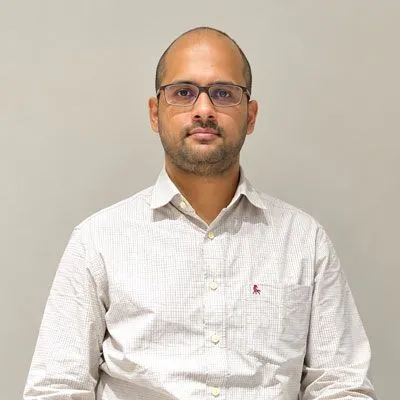
The article is authored by Bhavik Khara, Whole-Time Director & CFO, Arisinfra Solutions

A few years ago, the CFO's role was largely defined by financial performance, reporting, cost and cash management, and financial discipline. Today, that mandate is expanding.As operations, capital, technology and risk become increasingly interconnected, the CFO is expected to influence not just financial outcomes but also the business decisions that create them. This is particularly relevant in construction and infrastructure, where material prices, procurement decisions, execution timelines, collections and financing costs can significantly alter project economics. A project can be financially viable at one stage and look very different once its underlying assumptions change.The CFO's vantage point, therefore, needs to extend beyond the balance sheet to how the business creates and protects value.Moving from Reporting to Operating IntelligenceFinancial metrics such as revenue, margins, receivables, and cash flows remain critical. But they are outcomes. The decisions that shape them often happen much earlier and across different parts of the business.A delayed material dispatch can affect execution timelines, which in turn delays collections and puts pressure on working capital. A shift in material prices can directly erode project margins before it ever shows up as a variance in the P&L. Because these signals originate in separate systems procurement, site execution, sales, collections their combined impact often only becomes visible once everything is consolidated in financial reporting, by which point the window to act early has already narrowed.This is where the finance function's job is changing. It is no longer enough to explain what happened after the fact; the more valuable role is connecting these signals as they emerge, so risk is visible in real time rather than in hindsight. Digital workflows and AI can help draw these threads together, pulling procurement, execution, and collections data into one line of sight, but only where the underlying data itself is clean, timely, and structured enough to be trusted. Many finance functions are still building toward that foundation. For the CFO, then, AI adoption is as much a question of building the right information architecture as it is of adopting the technology itself; one without the other delivers very little.Allocating Capital with Risk IntelligenceThe CFO's role in capital allocation is no longer simply about determining where capital can generate the highest return. It is also about understanding when to deploy it, what assumptions underpin that return, and how resilient those assumptions are to change.This becomes critical in businesses with long operating cycles, and few sectors have cycles as long, or as exposed to variability, as construction and infrastructure. Material prices, execution timelines, supply chains, regulatory shifts, and financing conditions can all move independently of each other, and any one of them can materially alter project economics well after capital has already been committed. A project underwritten on one set of assumptions can look meaningfully different eighteen months later, simply because one input moved while the rest of the plan stayed fixed.This is why capital allocation and risk management are converging into a single discipline rather than sitting as two separate conversations. Scenario modelling is what brings them together in practice. What happens to project returns if material costs rise? If execution is delayed? If collections move out? If financing costs increase mid-project? Running these questions before capital is committed, not after, is increasingly the CFO's job. It doesn't eliminate risk; it ensures growth is pursued with informed risk rather than assumed certainty.Shaping Business Design and StructureThe CFO's expanding mandate also brings the operating model itself into focus. Across industries, CFOs are increasingly co-leading enterprise data and analytics, playing a role in enterprise risk management, and shaping corporate strategy extending well beyond finance's traditional boundaries into areas like M&A and procurement as well.This doesn't mean the CFO owns every function. It means bringing an economic lens to decisions that shape how the enterprise works: Which capabilities should be built internally, and which are better outsourced? How should functions coordinate with each other? Where should accountability for outcomes actually sit? Which systems need to become more sophisticated to support oversight?These are not abstract governance questions in construction and infrastructure, they show up directly in cost structures, working capital cycles, scalability, and ultimately in how much value a project or a platform is able to create. A well-designed operating model shortens the distance between a signal appearing in the business and a decision being made about it; a poorly designed one lets that distance stretch until the signal only shows up as a number on a report. By working at this structural level, the CFO becomes the connecting bridge between what the organisation wants to achieve and how it is actually built and resourced to achieve it.ConclusionThe new-age CFO's mandate is no longer limited to managing finances or ensuring the reliability of financial information.It is about connecting commercial priorities with disciplined execution, using technology to create earlier visibility into operational risk, understanding uncertainty before it becomes financial impact, and allocating capital with both ambition and discipline in equal measure.The CFO is moving beyond being the steward of financial outcomes to becoming an architect of the business itself because the value finance delivers isn't only in the numbers it reports, but in the quality of the decisions those numbers make possible.The article is authored by Bhavik Khara, Whole-Time Director & CFO, Arisinfra Solutions

Related Stories

Gold Stories

Next Story
Resources

NCC Founder and Padma Shri Awardee AVS Raju Passes Away at 89

Dr Alluri Venkata Satyanarayana Raju, founder and Chairman Emeritus of NCC Limited and a Padma Shri awardee, passed away in Hyderabad on 13 October 2026. He was 89.Born on 18 April 1937 in Antarvedipalem village in Andhra Pradesh's erstwhile East Godavari district, Raju began his entrepreneurial journey in 1956. He established Nagarjuna Construction Company (NCC) Limited in 1978, which subsequently emerged as one of India's leading construction and infrastructure companies.Under his leadership, NCC became a public limited company in 1990 and expanded into one of India's prominent listed constr..

Next Story
Infrastructure Transport

Embraer to Acquire 51 Per Cent Stake in Mahindra Aerospace Arm

Brazilian aerospace major Embraer will acquire a 51 per cent equity stake in Novavayu Aerospace, a step-down subsidiary of Mahindra and Mahindra, under an Investment Agreement notified by the automobile company in an exchange filing. The transaction will give Embraer control of the aerospace business. Following completion of the acquisition, Novavayu Aerospace will cease to be a wholly owned subsidiary and become an associate of Mahindra Defence Systems, which is a step-down wholly owned subsidiary of Mahindra and Mahindra. The agreement is expected to be completed on or before December 1. Mah..

Next Story
Infrastructure Urban

RBI Opens Special Dollar Window for Three State-Run OMCs

The Reserve Bank of India (RBI) has opened a special facility to meet the entire daily US dollar requirements of three public sector oil marketing companies (OMCs), in a move aimed at easing pressure on the Indian rupee. The facility will take effect on October 12, 2026, and remain available until further notice. Indian Oil Corporation, Hindustan Petroleum Corporation and Bharat Petroleum Corporation are eligible to use the arrangement. Under the facility, the RBI will sell US dollars to the three companies through designated banks, allowing them to meet their oil-import payments without sourc..

Advertisement

Subscribe to Our Newsletter

Get daily newsletters around different themes from Construction world.

STAY CONNECTED

Advertisement

SPECIAL OFFER
QR Code