
3-D Concrete Printing
ECONOMY & POLICY

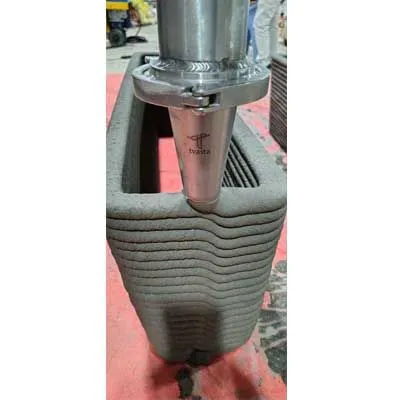
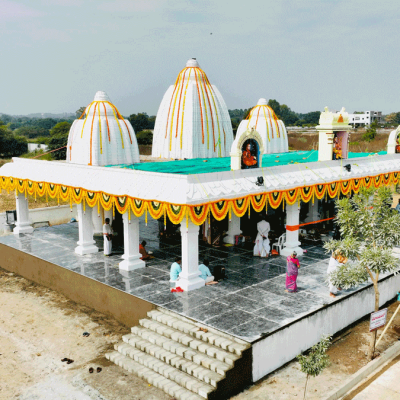
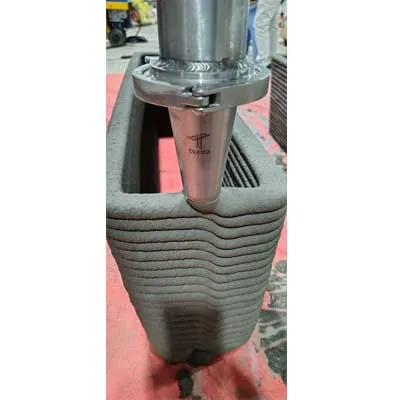
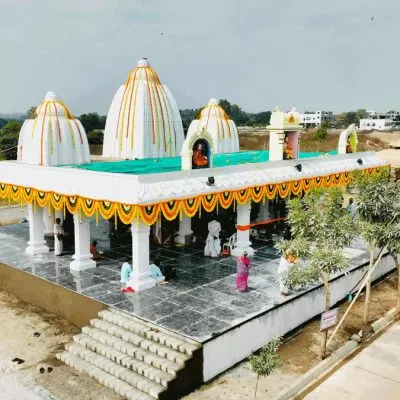
3-D Concrete Printing

From mass customisation to automation, 3-D concrete printing is redefining how India builds.
India is witnessing rapid economic growth and the trend is expected to continue despite the challenging times. In the infrastructure space, the investment targets are impressive. The Union Budget 2026-27 pegged the public capital expenditure in the infrastructure sector at `12.2 lakh crore ($ 150 billion). In the real-estate space, the World Bank report, Towards Resilient and Prosperous Cities in India, prepared in close collaboration with the Ministry of Housing and Urban Affairs, states that with India’s urban population expected to almost double by 2050 to 951 million, more than 144 million new homes will be needed by 2070.
In this environment, builders are looking to offer innovative and unique products to meet the aspirations of the rising middle class and high net-worth individuals for their homes and offices. 

From mass customisation to automation, 3-D concrete printing is redefining how India builds.India is witnessing rapid economic growth and the trend is expected to continue despite the challenging times. In the infrastructure space, the investment targets are impressive. The Union Budget 2026-27 pegged the public capital expenditure in the infrastructure sector at `12.2 lakh crore ($ 150 billion). In the real-estate space, the World Bank report, Towards Resilient and Prosperous Cities in India, prepared in close collaboration with the Ministry of Housing and Urban Affairs, states that with India’s urban population expected to almost double by 2050 to 951 million, more than 144 million new homes will be needed by 2070.In this environment, builders are looking to offer innovative and unique products to meet the aspirations of the rising middle class and high net-worth individuals for their homes and offices. To read the full article Click Here

Next Story
Real Estate

Peak, Plateau or Prolonged Run?

Visualise the real-estate market through the property clock concept, where the 12 o’clock position represents the peak and the 6 o’clock position the slump. A unique feature of this clock is that changes in market indicators become marginal near the peak. So, the growth between 11 and 12 is slower than that between, say, 9 and 10, while 12 to 1 sees the beginning of a mild decline before any sharper correction emerges. In fact, the mildness of these variances near the peak make it difficult to declare that the market has topped out.Yet, here’s the thing: several city markets – because,..

Next Story
Infrastructure Transport

The L1 Trap

If global shocks explain the pressure on India’s infrastructure sector, negative bidding explains its fragility. India’s public procurement system continues to rely heavily on the L1 (lowest bidder) model, where contracts are awarded primarily on the basis of the lowest cost. In theory, this approach promotes transparency and cost-efficiency. In practice, however, it often distorts pricing and undermines project viability.What is negative bidding?Negative bidding refers to contractors quoting 15-30 per cent below project estimates to secure contracts. To read the full article Click He..

Next Story
Technology

We delivered a 40,000 sq ft project with zero cost overruns

Sripad Nandiraj, Founder & CEO, WeHouse, outlines the challenges within India’s fragmented construction ecosystem and the company’s technology-led approach to addressing them. By tackling the industry’s ‘trust deficit’ and delivering measurable outcomes such as reduced wastage and zero cost overruns, WeHouse is enabling a more transparent, predictable and scalable construction model.What specific gaps in India’s fragmented construction ecosystem were you solving first, and what still remain unresolved today?We didn’t start WeHouse to just ‘build houses’; we started it to ..

Advertisement

Subscribe to Our Newsletter

Get daily newsletters around different themes from Construction world.

STAY CONNECTED

Advertisement

Advertisement

Advertisement

-->