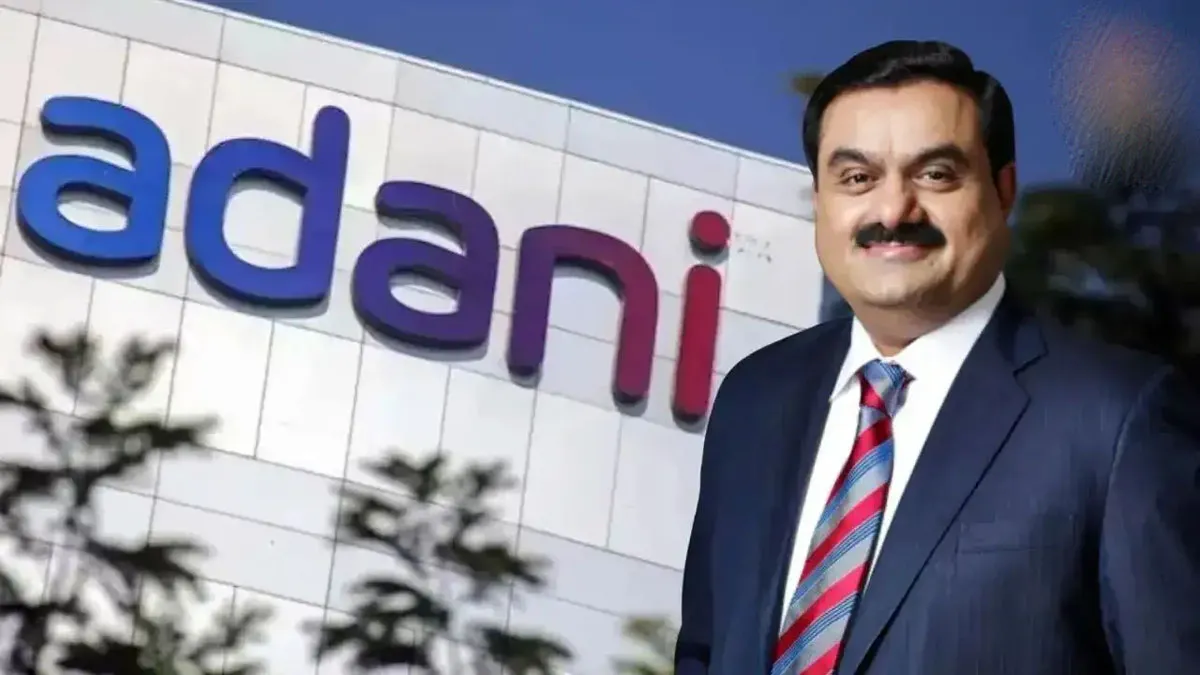
The Adani Group has completed 33 acquisitions worth around Rs 800 billion, or $9.6 billion, across its businesses since January 2023, underscoring sustained access to capital and steady execution nearly three years after short-seller allegations disrupted market sentiment. Market data and company sources indicate that the buying spree has been largely concentrated in the conglomerate’s core sectors.
Ports emerged as the largest contributor, accounting for acquisitions worth about Rs 281.45 billion, followed by cement at Rs 247.10 billion and power at Rs 122.51 billion. Newer, incubating businesses attracted deals worth Rs 39.27 billion, while transmission and distribution added acquisitions valued at Rs 25.44 billion. The tally does not include the proposed Rs 135 billion acquisition of debt-laden Jaypee Group assets under bankruptcy proceedings, which is yet to be concluded, nor a few transactions currently in the pipeline.
The acquisitions come as the ports-to-energy conglomerate works to rebuild investor confidence after allegations of accounting irregularities and stock manipulation were levelled by now-shuttered US-based short seller Hindenburg Research in early 2023, charges that the group has consistently denied. Since then, Adani’s strategy has centred on a calibrated mix of balance-sheet repair and selective expansion to restore credibility.
The group prioritised deleveraging, equity infusions and tighter capital allocation, while continuing acquisitions in core businesses such as ports, cement and power to protect cash flows and scale advantages. Analysts said improved transparency and sustained engagement with lenders have stabilised funding access, while consistent execution has kept projects on track.
This approach has gradually eased investor concerns, with lower leverage, resumed deal-making and the closure of regulatory proceedings reinforcing confidence that balance-sheet risks are contained and strategic momentum has returned. In recent quarters, Adani has highlighted its resilient balance sheet, with net debt-to-EBITDA at about 3x, below its stated guidance range of 3.5x to 4.5x, even as investments continued across sectors.
The largest of the 33 transactions was the Rs 217 billion acquisition of Australia’s North Queensland Export Terminal by Adani Ports and Special Economic Zones in April this year. The cement segment, however, was the busiest, with a series of back-to-back deals. In August 2023, Ambuja Cements acquired a 56.74 per cent controlling stake in Sanghi Industries for Rs 50 billion. This was followed by ACC’s purchase of Asian Concretes and Cements for Rs 7.75 billion in January 2024, the April acquisition of My Home Group’s Tuticorin grinding unit for Rs 4.14 billion, the Rs 104.22 billion buyout of Penna Cement Industries in June, and the Rs 81 billion acquisition of Orient Cement in October 2024.
In April this year, the group took control of ITD Cementation by acquiring 46.64 per cent from the promoters for Rs 32.04 billion, followed by the purchase of another 26 per cent from public shareholders, taking the total deal value to Rs 57.57 billion.
In the ports sector, Adani acquired Karaikal Port for Rs 14.85 billion in April 2023, Gopalpur Port for Rs 30.8 billion in March 2024, and Astro Offshore for Rs 15.5 billion in August 2024. It also expanded overseas with the acquisition of Tanzania’s Dar es Salaam Port for Rs 3.3 billion in May 2024. Power sector transactions included the Rs 41.01 billion acquisition of Lanco Amarkantak, the Rs 40 billion buyout of Vidarbha Industries, and the Rs 33.35 billion purchase of Coastal Energen.
Additional deals have been completed across data centres, electricity transmission, roads and real estate. Analysts said improving leverage metrics and consistent execution have helped restore confidence among lenders and investors, supporting the view that balance-sheet risks remain contained despite the group’s capital-intensive profile.
Looking ahead, the Adani Group has outlined a capital expenditure programme of around Rs 10 trillion over the next five years, with growth expected to be driven by a mix of greenfield and brownfield projects, alongside selective acquisitions across its infrastructure, energy and logistics portfolio.