Adani Secures JCR Ratings, Opens Access To Japanese Capital
ECONOMY & POLICY

Adani Secures JCR Ratings, Opens Access To Japanese Capital

JCR Ratings has assigned ratings to the Adani group that could broaden access to long-term Japanese capital. The agency cited stable concession cash flows, robust operating capability and prudent financial management, while noting that ratings remain capped by India’s country ceiling.

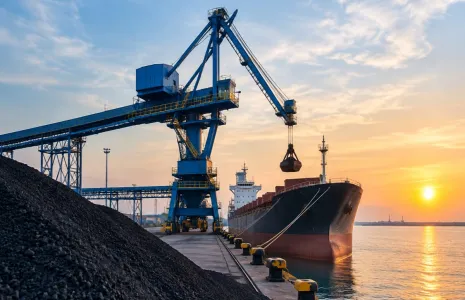
Adani Ports and Special Economic Zone operates 15 domestic and four international ports, handling nearly 30 per cent of India’s cargo and 50 per cent of container volumes. EBITDA rose from Rs 75,660 million (mn) in FY20 to Rs 190,250 mn in FY25, with Rs 110,460 mn in the first half of FY26, and net debt remained at a conservative one point eight times EBITDA. The agency cited predictable concession cash flows as a key strength.

Adani Green Energy Limited operates 16.7 gigawatt (GW) across twelve states, with more than 90 per cent of EBITDA from renewables and long-term power purchase agreements. EBITDA rose from Rs 18,550 mn in FY20 to Rs 105,320 mn in FY25, supported by high plant-load factors and cost-efficient operations. The predictable revenue profile was noted as supporting credit stability.

Adani Electricity Services Limited has expanded transmission, distribution, smart metering and cooling networks, with 26,705 ckm of lines, 97,236 MVA capacity and a seven point three seven mn metres smart metering portfolio. AESL’s EBITDA rose from Rs 45,320 mn in FY20 to Rs 77,470 mn in FY25, supported by a USD one billion (bn) equity raise and a diversified funding structure. These metrics were cited as evidence of improving balance sheet trends.

The ratings could make group credits accessible to a wider set of Japanese institutional investors, including insurers and pension funds, complementing existing lending by banks such as MUFG and Mizuho. Japan’s government bonds exceed USD 12 trillion (tn), and the market has an appetite for infrastructure debt with maturities of 20 to 30 years, aligning with ports and transmission financing. The group has guided for approximately USD 17 bn in capex this year and is accelerating a USD 100 bn investment programme through 2030 while regulatory enquiries in other jurisdictions continue.

JCR Ratings has assigned ratings to the Adani group that could broaden access to long-term Japanese capital. The agency cited stable concession cash flows, robust operating capability and prudent financial management, while noting that ratings remain capped by India’s country ceiling. Adani Ports and Special Economic Zone operates 15 domestic and four international ports, handling nearly 30 per cent of India’s cargo and 50 per cent of container volumes. EBITDA rose from Rs 75,660 million (mn) in FY20 to Rs 190,250 mn in FY25, with Rs 110,460 mn in the first half of FY26, and net debt remained at a conservative one point eight times EBITDA. The agency cited predictable concession cash flows as a key strength. Adani Green Energy Limited operates 16.7 gigawatt (GW) across twelve states, with more than 90 per cent of EBITDA from renewables and long-term power purchase agreements. EBITDA rose from Rs 18,550 mn in FY20 to Rs 105,320 mn in FY25, supported by high plant-load factors and cost-efficient operations. The predictable revenue profile was noted as supporting credit stability. Adani Electricity Services Limited has expanded transmission, distribution, smart metering and cooling networks, with 26,705 ckm of lines, 97,236 MVA capacity and a seven point three seven mn metres smart metering portfolio. AESL’s EBITDA rose from Rs 45,320 mn in FY20 to Rs 77,470 mn in FY25, supported by a USD one billion (bn) equity raise and a diversified funding structure. These metrics were cited as evidence of improving balance sheet trends. The ratings could make group credits accessible to a wider set of Japanese institutional investors, including insurers and pension funds, complementing existing lending by banks such as MUFG and Mizuho. Japan’s government bonds exceed USD 12 trillion (tn), and the market has an appetite for infrastructure debt with maturities of 20 to 30 years, aligning with ports and transmission financing. The group has guided for approximately USD 17 bn in capex this year and is accelerating a USD 100 bn investment programme through 2030 while regulatory enquiries in other jurisdictions continue.

Next Story
Infrastructure Transport

Large Format Store Planned At M G Road Metro Station

M G Road station in Bengaluru is set to host the city’s first large-format commercial and experience space, with planning led by Bangalore Metro Rail Corporation Limited. BMRCL has invited proposals to develop and operate a central business district destination at the Purple?Pink Line interchange. The plan positions the station as a commercial hub designed to serve a broad commuter base across the city. The proposal is part of a broader effort to activate transit nodes commercially. Tender documents set a minimum monthly rental of Rs 0.944 million (mn), inclusive of GST, for the large-format..

Next Story
Infrastructure Energy

Government Cancels Auction Of Eleven Critical Mineral Blocks

The government has cancelled the auction of 11 critical and strategic mineral blocks after receiving a poor investor response and failing to attract a sufficient number of qualified bidders. The decision represents a setback to plans to ramp up domestic exploration and production of critical minerals amid global supply chain disruptions and rising demand for materials used in clean energy and advanced technologies. The mines ministry issued an annulment notice setting out the reasons for the cancellations. The annulment notice indicated that the auction process for five mineral blocks was canc..

Next Story
Infrastructure Energy

Gujarat Pushes Biogas Growth With 193 Operational Units

Gujarat has operationalised 193 biogas plants across the state and is planning to add 60 more units as part of a broader push to scale up clean and sustainable energy solutions. The existing plants, established under various government-supported schemes, process organic waste including cattle dung and agricultural residue to produce biogas and a nutrient-rich slurry. The output is mainly used for cooking and other energy needs in rural and semi-urban communities, while also improving local waste management practices. The Gujarat Energy Development Agency (GEDA) is leading the initiative and is..

Advertisement

Subscribe to Our Newsletter

Get daily newsletters around different themes from Construction world.

STAY CONNECTED

Advertisement

Advertisement

Advertisement