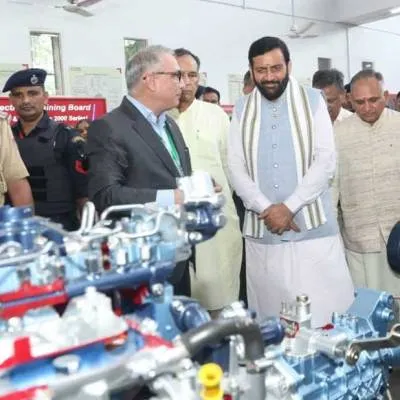
ADAS Tech Reduces Aapli Bus Accidents by 41% in Nagpur
ECONOMY & POLICY

ADAS Tech Reduces Aapli Bus Accidents by 41% in Nagpur

Advanced Driver Assistance Systems (ADAS) technology has demonstrated its effectiveness in Nagpur, leading to a significant 41% reduction in accidents involving Aapli buses. This success underscores the role of technology in enhancing urban transportation safety and efficiency.

Implemented as part of efforts to modernise Nagpur's public transport system, ADAS has played a crucial role in mitigating accident risks by providing real-time alerts and assisting drivers in navigating challenging road conditions. The deployment of ADAS reflects ongoing initiatives to leverage innovation for improving commuter safety and operational reliability.

According to recent reports, the integration of ADAS into Aapli buses has contributed to fewer accidents and smoother operations, benefiting both passengers and drivers alike. The technology's ability to monitor surroundings and alert drivers to potential hazards has significantly bolstered overall road safety standards in the city.

Officials and transport experts have lauded the positive outcomes of ADAS implementation, highlighting its potential to serve as a model for other urban centres grappling with transportation safety challenges. The success in Nagpur underscores the transformative impact of technological advancements in reducing accident rates and optimising public transport services.

Looking ahead, stakeholders are optimistic about expanding ADAS adoption across additional bus fleets and further enhancing safety measures in Nagpur's burgeoning transportation network. The ongoing commitment to integrating advanced technologies like ADAS underscores a proactive approach towards ensuring safer and more efficient urban mobility solutions.

Advanced Driver Assistance Systems (ADAS) technology has demonstrated its effectiveness in Nagpur, leading to a significant 41% reduction in accidents involving Aapli buses. This success underscores the role of technology in enhancing urban transportation safety and efficiency. Implemented as part of efforts to modernise Nagpur's public transport system, ADAS has played a crucial role in mitigating accident risks by providing real-time alerts and assisting drivers in navigating challenging road conditions. The deployment of ADAS reflects ongoing initiatives to leverage innovation for improving commuter safety and operational reliability. According to recent reports, the integration of ADAS into Aapli buses has contributed to fewer accidents and smoother operations, benefiting both passengers and drivers alike. The technology's ability to monitor surroundings and alert drivers to potential hazards has significantly bolstered overall road safety standards in the city. Officials and transport experts have lauded the positive outcomes of ADAS implementation, highlighting its potential to serve as a model for other urban centres grappling with transportation safety challenges. The success in Nagpur underscores the transformative impact of technological advancements in reducing accident rates and optimising public transport services. Looking ahead, stakeholders are optimistic about expanding ADAS adoption across additional bus fleets and further enhancing safety measures in Nagpur's burgeoning transportation network. The ongoing commitment to integrating advanced technologies like ADAS underscores a proactive approach towards ensuring safer and more efficient urban mobility solutions.

Next Story
Infrastructure Urban

Implementation Status of Jal Jeevan Mission

Since August 2019 the Government has implemented Jal Jeevan Mission to provide assured potable water through household tap connections in rural India. At the start of the mission only 32.3 million (mn) rural households, representing 16.7 per cent, were reported to have tap water connections. States and union territories have reported that 125.8 mn additional rural households have since been provided with tap connections. As a result, of about 193.6 mn rural households roughly 158.2 mn, or 81.71 per cent, are reported to have tap water supply at home.\n\nThe State, district and village level st..

Next Story
Infrastructure Urban

Jal Jeevan Mission Reaches Eighty One Per Cent Rural Coverage

The Government reported substantial progress under the Jal Jeevan Mission, launched in August 2019 to provide tap water to every rural household. At launch only 32.3 million (mn) rural households had tap connections and states and Union territories reported provision of 125.8 mn additional households by March 2026. Consequently, out of about 193.6 mn rural households around 158.2 mn, or 81.71 per cent, are reported to have tap water at home. The Finance Minister announced extension of the mission until 2028 in the 2025-26 budget speech. The Swachh Bharat Mission Grameen, launched in October 20..

Next Story
Infrastructure Urban

Empowering Local Governance for Sustainable Rural Water Supply

The Ministry of Jal Shakti has aligned the Jal Jeevan Mission (JJM) with the 73rd Amendment to strengthen village level planning and community ownership of water supply. Gram Panchayats, village water and sanitation committees and Pani Samitis are to plan, implement, manage and maintain piped water systems, with gram sabha processes formalising handover and oversight. Implementation support agencies including non government organisations, community based organisations and self help groups have been empanelled to train local committees and promote women participation. Under JJM, the department ..

Advertisement

Subscribe to Our Newsletter

Get daily newsletters around different themes from Construction world.

STAY CONNECTED

Advertisement

Advertisement

Advertisement