+
African Union granted permanent G20 membership
ECONOMY & POLICY

African Union granted permanent G20 membership

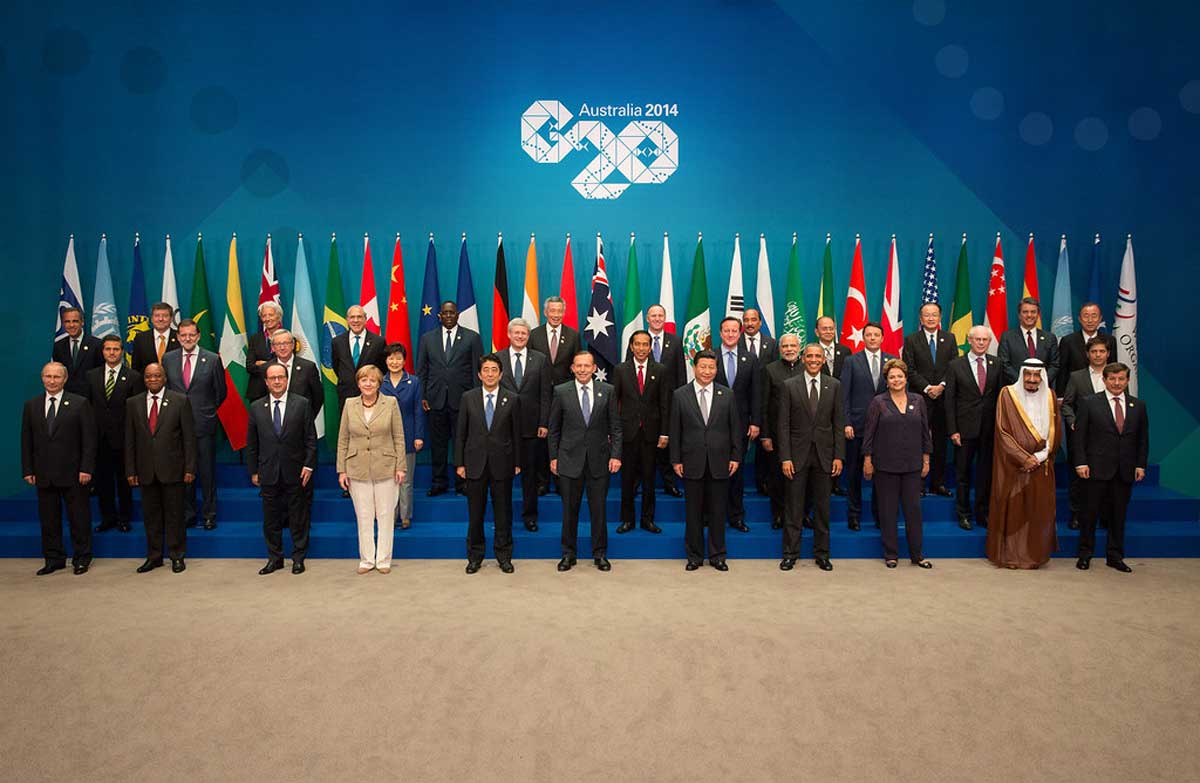
Under India's G20 presidency, a significant milestone was achieved as the African Union officially became a permanent member of the influential global economic forum, marking the first expansion of the G20 since its establishment in 1999. All G20 member countries, following Prime Minister Narendra Modi's proposal, unanimously accepted the African Union's inclusion, solidifying its position alongside other major world economies.

In his opening remarks at the G20 Summit, Prime Minister Modi invited Azali Assoumani, President of the Union of Comoros and Chairperson of the African Union, to join the distinguished gathering, making the 55-member African Union the second multinational entity, after the European Union, to gain permanent membership in the G20.

Modi emphasised the spirit of 'sabka saath' (with everyone), highlighting India's proposal for the African Union's permanent membership. He expressed gratitude for the consensus, and amidst applause from global leaders, invited the President of the African Union to join the high table.

The Prime Minister's Office lauded this achievement as an important step towards a more inclusive G20, aligning with the aspirations of the Global South. India's commitment to the African continent was reiterated, as Modi emphasised that including all voices in global affairs is essential for the success of any future plan for the planet.

The G20 Summit's theme, "Vasudhaiva Kutumbakam – One Earth, One Family, One Future," reflects India's cultural ethos and its dedication to inclusive growth, digital innovation, climate resilience, and equitable global health access, particularly benefiting developing nations.

The African Union, with its 55 member states, collectively possesses a GDP of nearly Rs 250 billion and a population of around 1.4 billion. This historic inclusion underscores India's leadership in promoting global collaboration and recognising the importance of representing the voices of all nations in shaping the world's future.

Under India's G20 presidency, a significant milestone was achieved as the African Union officially became a permanent member of the influential global economic forum, marking the first expansion of the G20 since its establishment in 1999. All G20 member countries, following Prime Minister Narendra Modi's proposal, unanimously accepted the African Union's inclusion, solidifying its position alongside other major world economies.In his opening remarks at the G20 Summit, Prime Minister Modi invited Azali Assoumani, President of the Union of Comoros and Chairperson of the African Union, to join the distinguished gathering, making the 55-member African Union the second multinational entity, after the European Union, to gain permanent membership in the G20.Modi emphasised the spirit of 'sabka saath' (with everyone), highlighting India's proposal for the African Union's permanent membership. He expressed gratitude for the consensus, and amidst applause from global leaders, invited the President of the African Union to join the high table.The Prime Minister's Office lauded this achievement as an important step towards a more inclusive G20, aligning with the aspirations of the Global South. India's commitment to the African continent was reiterated, as Modi emphasised that including all voices in global affairs is essential for the success of any future plan for the planet.The G20 Summit's theme, Vasudhaiva Kutumbakam – One Earth, One Family, One Future, reflects India's cultural ethos and its dedication to inclusive growth, digital innovation, climate resilience, and equitable global health access, particularly benefiting developing nations.The African Union, with its 55 member states, collectively possesses a GDP of nearly Rs 250 billion and a population of around 1.4 billion. This historic inclusion underscores India's leadership in promoting global collaboration and recognising the importance of representing the voices of all nations in shaping the world's future.

Next Story
Infrastructure Urban

Implementation Status of Jal Jeevan Mission

Since August 2019 the Government has implemented Jal Jeevan Mission to provide assured potable water through household tap connections in rural India. At the start of the mission only 32.3 million (mn) rural households, representing 16.7 per cent, were reported to have tap water connections. States and union territories have reported that 125.8 mn additional rural households have since been provided with tap connections. As a result, of about 193.6 mn rural households roughly 158.2 mn, or 81.71 per cent, are reported to have tap water supply at home.\n\nThe State, district and village level st..

Next Story
Infrastructure Urban

Jal Jeevan Mission Reaches Eighty One Per Cent Rural Coverage

The Government reported substantial progress under the Jal Jeevan Mission, launched in August 2019 to provide tap water to every rural household. At launch only 32.3 million (mn) rural households had tap connections and states and Union territories reported provision of 125.8 mn additional households by March 2026. Consequently, out of about 193.6 mn rural households around 158.2 mn, or 81.71 per cent, are reported to have tap water at home. The Finance Minister announced extension of the mission until 2028 in the 2025-26 budget speech. The Swachh Bharat Mission Grameen, launched in October 20..

Next Story
Infrastructure Urban

Empowering Local Governance for Sustainable Rural Water Supply

The Ministry of Jal Shakti has aligned the Jal Jeevan Mission (JJM) with the 73rd Amendment to strengthen village level planning and community ownership of water supply. Gram Panchayats, village water and sanitation committees and Pani Samitis are to plan, implement, manage and maintain piped water systems, with gram sabha processes formalising handover and oversight. Implementation support agencies including non government organisations, community based organisations and self help groups have been empanelled to train local committees and promote women participation. Under JJM, the department ..

Advertisement

Subscribe to Our Newsletter

Get daily newsletters around different themes from Construction world.

STAY CONNECTED

Advertisement

Advertisement

Advertisement