+
Andhra Pradesh Unveils Pedestrian Safety And Accessibility Policy
ECONOMY & POLICY

Andhra Pradesh Unveils Pedestrian Safety And Accessibility Policy

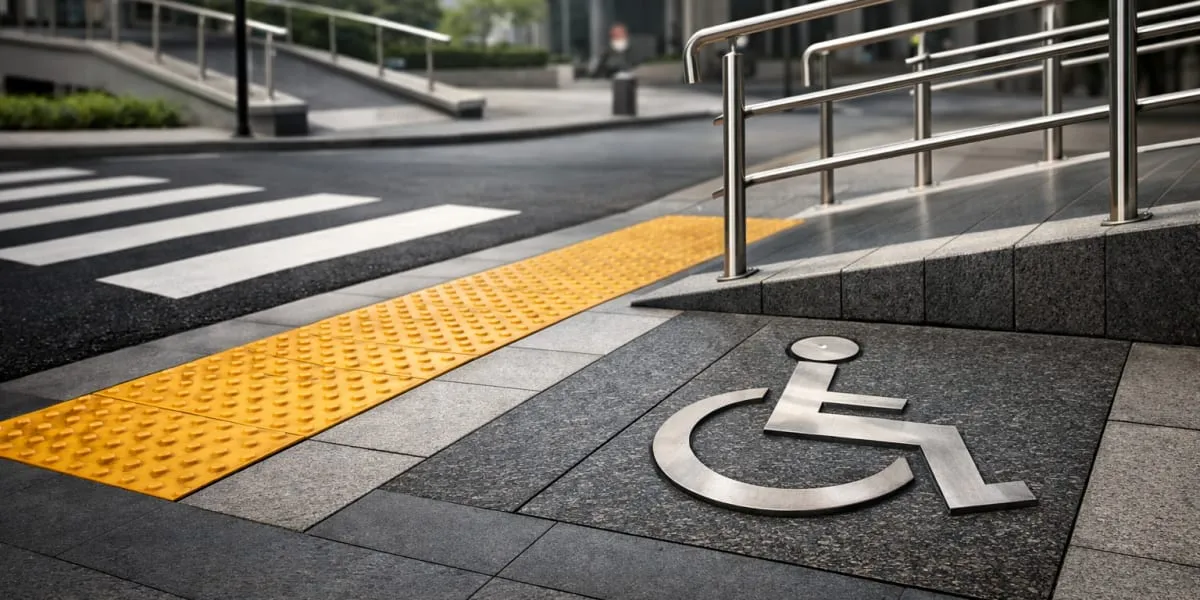
Andhra Pradesh has unveiled a Pedestrian Safety and Universal Accessibility Policy intended to make walking and public spaces safer and more inclusive. The state government presented the policy as a framework to guide urban and rural local bodies in redesigning footpaths, crossings and public facilities to serve all residents. It emphasises accessible design for persons with disabilities, older people and caregivers with young children. Officials indicated the approach prioritises pedestrians within transport planning.\n\nThe policy outlines design standards and maintenance practices aimed at removing barriers on pedestrian routes and at transit nodes. It calls for continuous footpaths, dropped kerbs, tactile paving and clear signage to assist navigation and safety. Municipal authorities are urged to integrate these standards into road upgrade works and to coordinate with public transport agencies. The document also highlights the need for training, auditing and community engagement to sustain improvements.\n\nImplementation responsibilities are assigned across departments to ensure funding, enforcement and monitoring are aligned. The policy specifies performance indicators and periodic reviews to measure accessibility outcomes and pedestrian reductions in conflict with vehicles. Technical guidance is provided to assist smaller towns and gram panchayats in adapting standards to local contexts without compromising safety. The state government plans capacity building for engineers and planners to embed universal design principles into routine projects.\n\nStakeholders including disability rights groups, urban designers and civil society organisations are encouraged to participate in roll out and feedback mechanisms to ensure the policy is responsive to lived experiences. Monitoring provisions will enable reporting on progress and corrective action where standards are not met, while funding allocations will be mainstreamed within municipal budgets and state programmes to support retrofits and new works. The state framed the policy as part of a broader effort to make public space equitable while promoting walking as a safe, accessible mode of transport.

Andhra Pradesh has unveiled a Pedestrian Safety and Universal Accessibility Policy intended to make walking and public spaces safer and more inclusive. The state government presented the policy as a framework to guide urban and rural local bodies in redesigning footpaths, crossings and public facilities to serve all residents. It emphasises accessible design for persons with disabilities, older people and caregivers with young children. Officials indicated the approach prioritises pedestrians within transport planning.\n\nThe policy outlines design standards and maintenance practices aimed at removing barriers on pedestrian routes and at transit nodes. It calls for continuous footpaths, dropped kerbs, tactile paving and clear signage to assist navigation and safety. Municipal authorities are urged to integrate these standards into road upgrade works and to coordinate with public transport agencies. The document also highlights the need for training, auditing and community engagement to sustain improvements.\n\nImplementation responsibilities are assigned across departments to ensure funding, enforcement and monitoring are aligned. The policy specifies performance indicators and periodic reviews to measure accessibility outcomes and pedestrian reductions in conflict with vehicles. Technical guidance is provided to assist smaller towns and gram panchayats in adapting standards to local contexts without compromising safety. The state government plans capacity building for engineers and planners to embed universal design principles into routine projects.\n\nStakeholders including disability rights groups, urban designers and civil society organisations are encouraged to participate in roll out and feedback mechanisms to ensure the policy is responsive to lived experiences. Monitoring provisions will enable reporting on progress and corrective action where standards are not met, while funding allocations will be mainstreamed within municipal budgets and state programmes to support retrofits and new works. The state framed the policy as part of a broader effort to make public space equitable while promoting walking as a safe, accessible mode of transport.

Related Stories

Gold Stories

Next Story
Infrastructure Transport

Mumbai-Ahmedabad Bullet Train’s Surat-Vapi Section Set for 2027

The first section of the Mumbai-Ahmedabad Bullet Train corridor, linking Surat and Vapi, is targeted to begin services in 2027. Construction is expected to be completed by December 2026, while Railway Minister Ashwini Vaishnaw has indicated that an inauguration could take place around the middle of 2027. The National High Speed Rail Corporation (NHSRCL) said the train being manufactured in India is expected to reach the tracks around April or May 2027. The train will undergo extensive testing before the section is opened for passenger services. The project began construction in 2021 and includ..

Next Story
Infrastructure Transport

Indian Railways Approves Four Projects Worth Rs. 7.36 bn Across Four States

Indian Railways has approved four projects with a combined value of Rs. 7.36 bn across Uttar Pradesh, Maharashtra, Andhra Pradesh and Gujarat. The programme covers train protection, signalling, electric traction supply and a road overbridge, with each project assigned to a different railway zone. In Uttar Pradesh, Rs. 2.52 bn has been approved to extend the Kavach 4.0 automatic train protection system across 607.7 km in the Lucknow Division of North Eastern Railway. The system monitors train movements and can apply the brakes if a driver fails to observe a signal or exceeds a safe speed. The w..

Next Story
Infrastructure Urban

Chandru Raheja Sells 1.49% Stake in Mindspace REIT for Rs. 5 bn

Billionaire Chandru Lachmandas Raheja has sold a 1.49 per cent holding in Mindspace Business Parks REIT for Rs. 5 bn through a bulk deal on the BSE. The transaction involved 9.9 mn units and was executed at an average price of Rs. 505 per unit, according to exchange data. Following the sale, units of Mindspace Business Parks REIT were trading 0.18 per cent lower at Rs. 504.05 on Tuesday. Exchange data did not identify the buyers involved in the transaction. Raheja is the chairman of real estate company K Raheja Corp. The sale involved 99,00,990 units, representing 1.49 per cent of the Mumbai-b..

Advertisement

Subscribe to Our Newsletter

Get daily newsletters around different themes from Construction world.

STAY CONNECTED

Advertisement

SPECIAL OFFER
QR Code