APSRTC Plans Six Bus Stations via PPP; Employee Unions Protest Move
ECONOMY & POLICY

APSRTC Plans Six Bus Stations via PPP; Employee Unions Protest Move

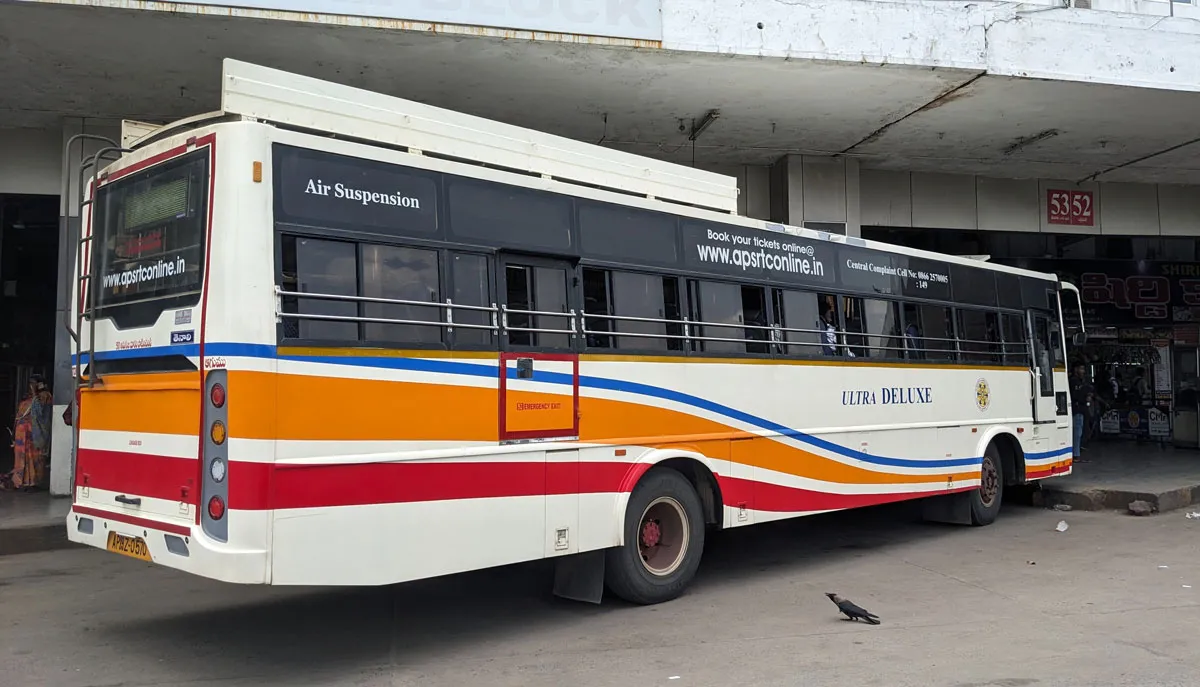
The Andhra Pradesh State Road Transport Corporation (APSRTC) has proposed to develop six major bus stations across the State under the Public-Private Partnership (PPP) model, aiming to modernise passenger facilities and generate additional non-fare revenue. However, the proposal has drawn strong opposition from RTC employee unions, who fear that long-term private control over public assets could weaken the corporation.

According to sources, the proposed projects include redevelopment of integrated bus terminals at Autonagar in Vijayawada, Rajvihar in Kurnool, Guntur and Kadapa. In addition, APSRTC plans to develop a modern intermodal station in Tirupati and a bus station-cum-commercial complex in Chittoor. The total estimated investment for the six projects is around Rs 9.58 billion.

Among these, the Autonagar Integrated Bus Terminal in Vijayawada, estimated to cost Rs 1.54 billion, is reportedly “ready to bid.” The Tirupati Intermodal Station, with a projected investment of Rs 4.95 billion, has completed its Detailed Project Report (DPR), while DPR preparation is underway for the remaining four projects.

The projects are proposed under various PPP formats, including Design–Finance–Build–Operate–Transfer (DF-BOT), Build–Operate–Transfer with Viability Gap Funding (BOT-VGF), and BOT models with revenue-sharing mechanisms.

RTC employee unions have strongly opposed the move, alleging that the PPP model would amount to backdoor privatisation of valuable public assets for periods ranging from three to five decades. Union leaders argue that APSRTC has historically modernised its infrastructure using internal resources, citing large-scale renovations undertaken during the 2015–16 period under then Vice-Chairman and Managing Director N Sambasiva Rao without private participation.

According to the unions, those projects demonstrated APSRTC’s capacity to develop and maintain its own assets. They warned that transferring commercially valuable land and infrastructure to private players could erode the corporation’s long-term financial strength and limit future revenue opportunities. The unions have demanded direct government funding for redevelopment instead of PPP. “After renovation of Vijayawada bus stand, commercial revenue increased and went directly to the corporation. Under PPP, most of the revenue will go to private companies,” union leaders said.

APSRTC officials, however, maintained that the PPP model is intended to mobilise investment, enhance passenger amenities and integrate commercial facilities without burdening the State exchequer. Officials said APSRTC is working with KPMG as transaction and project management consultant to identify eligible private players, structure the PPP framework and facilitate the bidding process.

News source: The New Indian Express

The Andhra Pradesh State Road Transport Corporation (APSRTC) has proposed to develop six major bus stations across the State under the Public-Private Partnership (PPP) model, aiming to modernise passenger facilities and generate additional non-fare revenue. However, the proposal has drawn strong opposition from RTC employee unions, who fear that long-term private control over public assets could weaken the corporation.According to sources, the proposed projects include redevelopment of integrated bus terminals at Autonagar in Vijayawada, Rajvihar in Kurnool, Guntur and Kadapa. In addition, APSRTC plans to develop a modern intermodal station in Tirupati and a bus station-cum-commercial complex in Chittoor. The total estimated investment for the six projects is around Rs 9.58 billion.Among these, the Autonagar Integrated Bus Terminal in Vijayawada, estimated to cost Rs 1.54 billion, is reportedly “ready to bid.” The Tirupati Intermodal Station, with a projected investment of Rs 4.95 billion, has completed its Detailed Project Report (DPR), while DPR preparation is underway for the remaining four projects.The projects are proposed under various PPP formats, including Design–Finance–Build–Operate–Transfer (DF-BOT), Build–Operate–Transfer with Viability Gap Funding (BOT-VGF), and BOT models with revenue-sharing mechanisms.RTC employee unions have strongly opposed the move, alleging that the PPP model would amount to backdoor privatisation of valuable public assets for periods ranging from three to five decades. Union leaders argue that APSRTC has historically modernised its infrastructure using internal resources, citing large-scale renovations undertaken during the 2015–16 period under then Vice-Chairman and Managing Director N Sambasiva Rao without private participation.According to the unions, those projects demonstrated APSRTC’s capacity to develop and maintain its own assets. They warned that transferring commercially valuable land and infrastructure to private players could erode the corporation’s long-term financial strength and limit future revenue opportunities. The unions have demanded direct government funding for redevelopment instead of PPP. “After renovation of Vijayawada bus stand, commercial revenue increased and went directly to the corporation. Under PPP, most of the revenue will go to private companies,” union leaders said.APSRTC officials, however, maintained that the PPP model is intended to mobilise investment, enhance passenger amenities and integrate commercial facilities without burdening the State exchequer. Officials said APSRTC is working with KPMG as transaction and project management consultant to identify eligible private players, structure the PPP framework and facilitate the bidding process.News source: The New Indian Express

Next Story
Infrastructure Energy

Rays Power Infra Wins Rs 19.12 Bn Renewable Energy Project

Rays Power Infra has secured a 300 MW renewable energy project valued at Rs 19.12 billion from a state-owned company, strengthening its position in India’s utility-scale clean energy sector. With this latest order, the company’s total order book has crossed Rs 80 billion.The project will be executed under Rays Power Infra’s co-development business model. Under this framework, the company will undertake land acquisition, secure interstate transmission system (ISTS) connectivity and carry out complete engineering, procurement and construction (EPC) works. The project is planned to be devel..

Next Story
Infrastructure Transport

MMRDA Signs $96 Bn MoUs at Davos, Marks Record Day 1 Haul

The Mumbai Metropolitan Region Development Authority (MMRDA) marked a historic achievement on the opening day of the World Economic Forum (WEF) Annual Summit 2026 in Davos by securing investment commitments worth about Rs 8.73 trillion. The investments were formalised through the signing of 10 major Memoranda of Understanding (MoUs), setting a new benchmark for the authority’s global outreach.According to MMRDA, the agreements are expected to generate nearly 9.6 lakh direct and indirect jobs, reinforcing the Mumbai Metropolitan Region’s position as a major talent and economic hub in India ..

Next Story
Infrastructure Transport

AAI Submits Hydrology Report to WRD for Chennai Airport Corridor

In a move to accelerate the implementation of an elevated corridor and the long-pending satellite terminal at Chennai Airport, the Airports Authority of India (AAI) has submitted a detailed study report to the Water Resources Department (WRD) of the Tamil Nadu government.The satellite terminal, first proposed nearly eight years ago, is aimed at easing congestion by handling additional aircraft and passenger traffic while optimally utilising remote bays at the airport. Although the project remained stalled for several years, it gained renewed momentum in 2024 after AAI revived the proposal.Acco..

Advertisement

Subscribe to Our Newsletter

Get daily newsletters around different themes from Construction world.

STAY CONNECTED

Advertisement

Advertisement

Advertisement

Advertisement

Open In App