+
ATF Price Raised Five Point Four Six Per Cent; Commercial LPG Up Rs Nine Point Five Zero
ECONOMY & POLICY

ATF Price Raised Five Point Four Six Per Cent; Commercial LPG Up Rs Nine Point Five Zero

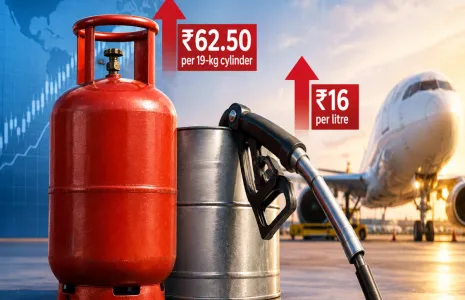
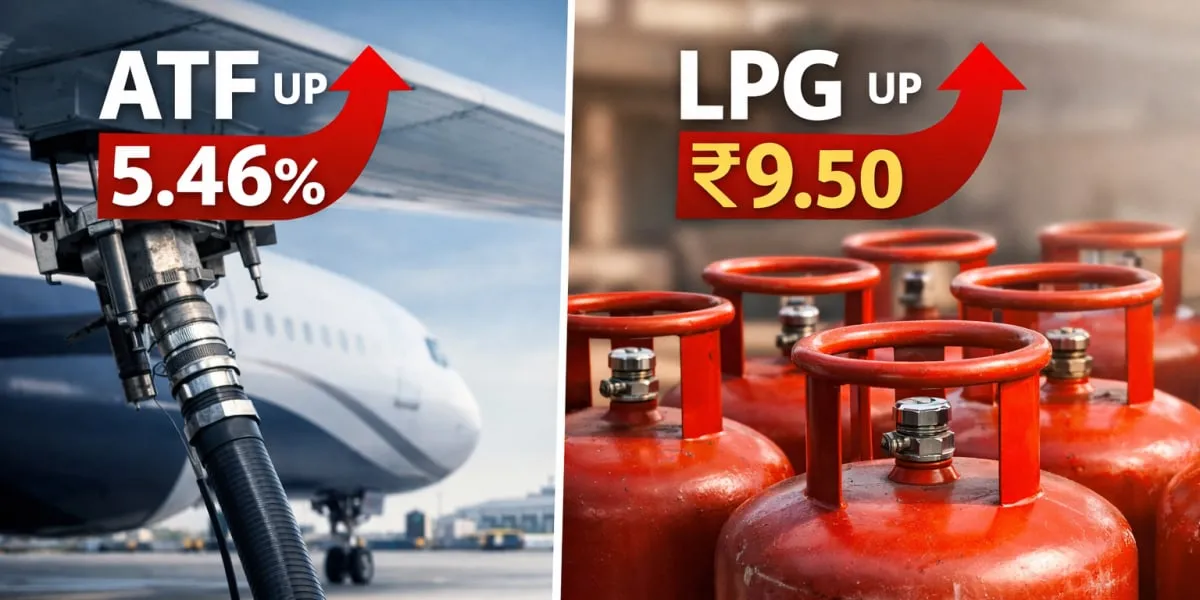
Oil marketing companies raised Aviation Turbine Fuel (ATF) by five point four six per cent and increased commercial liquefied petroleum gas (LPG) cylinders by Rs nine point five zero per cylinder. The revisions were announced as part of the latest routine pricing cycle by fuel retailers and take effect immediately at retail outlets. The moves follow adjustments to input costs that distributors factor into consumer rates so that downstream prices reflect prevailing cost structures.

The ATF increase will raise operating costs for airlines and will feed through into higher air transportation charges for passengers and for air freight services. Carriers will absorb some immediate impact but will pass through additional costs in schedules and cargo tariffs over subsequent billing cycles. Airports and ground handling firms are also likely to record higher fuel-linked expenditure as a direct consequence of the revision.

Commercial LPG users such as restaurants, hotels and small manufacturers will face higher fuel bills because each commercial cylinder has risen by Rs nine point five zero. The revision targets commercial rather than household cylinders and sits alongside separate schemes and subsidies that govern domestic cooking fuel pricing. Businesses that rely on LPG for process heat or cooking will need to factor the increased outgo into operating budgets and menu or service pricing where relevant.

Price revisions of this kind are part of periodic reviews that align retail rates with international energy benchmarks, changes in refining and distribution costs, and tax and margin structures applied by oil marketing companies (OMCs). Analysts noted that such adjustments have a modest influence on broader inflationary trends as they raise costs across transport and hospitality sectors, and that policymakers and firms will monitor pass-through effects as the changes settle into market prices.

Oil marketing companies raised Aviation Turbine Fuel (ATF) by five point four six per cent and increased commercial liquefied petroleum gas (LPG) cylinders by Rs nine point five zero per cylinder. The revisions were announced as part of the latest routine pricing cycle by fuel retailers and take effect immediately at retail outlets. The moves follow adjustments to input costs that distributors factor into consumer rates so that downstream prices reflect prevailing cost structures. The ATF increase will raise operating costs for airlines and will feed through into higher air transportation charges for passengers and for air freight services. Carriers will absorb some immediate impact but will pass through additional costs in schedules and cargo tariffs over subsequent billing cycles. Airports and ground handling firms are also likely to record higher fuel-linked expenditure as a direct consequence of the revision. Commercial LPG users such as restaurants, hotels and small manufacturers will face higher fuel bills because each commercial cylinder has risen by Rs nine point five zero. The revision targets commercial rather than household cylinders and sits alongside separate schemes and subsidies that govern domestic cooking fuel pricing. Businesses that rely on LPG for process heat or cooking will need to factor the increased outgo into operating budgets and menu or service pricing where relevant. Price revisions of this kind are part of periodic reviews that align retail rates with international energy benchmarks, changes in refining and distribution costs, and tax and margin structures applied by oil marketing companies (OMCs). Analysts noted that such adjustments have a modest influence on broader inflationary trends as they raise costs across transport and hospitality sectors, and that policymakers and firms will monitor pass-through effects as the changes settle into market prices.

Related Stories

Gold Stories

Next Story
Infrastructure Transport

Mumbai-Ahmedabad Bullet Train’s Surat-Vapi Section Set for 2027

The first section of the Mumbai-Ahmedabad Bullet Train corridor, linking Surat and Vapi, is targeted to begin services in 2027. Construction is expected to be completed by December 2026, while Railway Minister Ashwini Vaishnaw has indicated that an inauguration could take place around the middle of 2027. The National High Speed Rail Corporation (NHSRCL) said the train being manufactured in India is expected to reach the tracks around April or May 2027. The train will undergo extensive testing before the section is opened for passenger services. The project began construction in 2021 and includ..

Next Story
Infrastructure Transport

Indian Railways Approves Four Projects Worth Rs. 7.36 bn Across Four States

Indian Railways has approved four projects with a combined value of Rs. 7.36 bn across Uttar Pradesh, Maharashtra, Andhra Pradesh and Gujarat. The programme covers train protection, signalling, electric traction supply and a road overbridge, with each project assigned to a different railway zone. In Uttar Pradesh, Rs. 2.52 bn has been approved to extend the Kavach 4.0 automatic train protection system across 607.7 km in the Lucknow Division of North Eastern Railway. The system monitors train movements and can apply the brakes if a driver fails to observe a signal or exceeds a safe speed. The w..

Next Story
Infrastructure Urban

Chandru Raheja Sells 1.49% Stake in Mindspace REIT for Rs. 5 bn

Billionaire Chandru Lachmandas Raheja has sold a 1.49 per cent holding in Mindspace Business Parks REIT for Rs. 5 bn through a bulk deal on the BSE. The transaction involved 9.9 mn units and was executed at an average price of Rs. 505 per unit, according to exchange data. Following the sale, units of Mindspace Business Parks REIT were trading 0.18 per cent lower at Rs. 504.05 on Tuesday. Exchange data did not identify the buyers involved in the transaction. Raheja is the chairman of real estate company K Raheja Corp. The sale involved 99,00,990 units, representing 1.49 per cent of the Mumbai-b..

Advertisement

Subscribe to Our Newsletter

Get daily newsletters around different themes from Construction world.

STAY CONNECTED

Advertisement

SPECIAL OFFER
QR Code