Avro India Launches Largest Flexible Plastic Recycling Unit
ECONOMY & POLICY

Avro India Launches Largest Flexible Plastic Recycling Unit

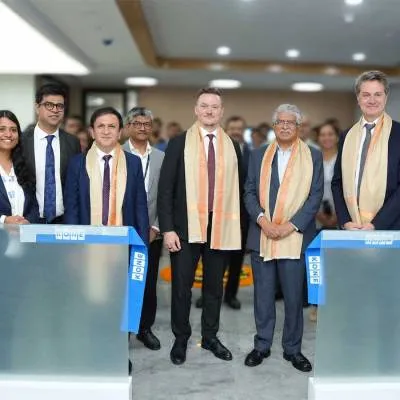
Avro India has recently announced the launch of a state-of-the-art greenfield recycling facility in Ghaziabad, aimed at addressing the challenge of recycling difficult-to-process plastic waste. The facility operates under AVRO Recycling Limited, a wholly owned subsidiary of Avro India Limited, and houses India’s largest flexible plastic recycling unit with a current processing capacity of 500 metric tonnes per month, which is set to scale up in future phases.

The company has invested Rs 250 million in the recycling plant to date and plans an additional investment of Rs 300 million by FY 2027. As part of its long-term sustainability strategy, Avro India also plans to expand pan-India through future greenfield recycling projects.

Founded in 2002, Avro India is a leading manufacturer of plastic-moulded furniture, serving households, businesses and institutions across the country. The company is listed on the NSE and BSE and has built an extensive distribution network of over 30,000 retailers supported by more than 300 distributors across 24 states.

After more than three years of research and technological development, Avro has developed a proprietary system capable of upcycling complex plastic waste such as cement, salt and sugar bags at scale. The system enables the responsible processing of nearly one million metric tonnes per annum of such waste generated in India.

The recycled granules produced are fully utilised in high-value end products, including plastic furniture, air coolers, washing machines and automotive components. These granules are available at up to 40 per cent lower cost than virgin plastic while meeting required technical and durability standards.

With Extended Producer Responsibility norms mandating the use of recycled plastic content, Avro India has emerged as one of the most reliable organised players in flexible plastic recycling. Looking ahead, the company is developing a pan-India network of decentralised recycling plants to accelerate India’s transition towards a circular economy.

Avro India has recently announced the launch of a state-of-the-art greenfield recycling facility in Ghaziabad, aimed at addressing the challenge of recycling difficult-to-process plastic waste. The facility operates under AVRO Recycling Limited, a wholly owned subsidiary of Avro India Limited, and houses India’s largest flexible plastic recycling unit with a current processing capacity of 500 metric tonnes per month, which is set to scale up in future phases. The company has invested Rs 250 million in the recycling plant to date and plans an additional investment of Rs 300 million by FY 2027. As part of its long-term sustainability strategy, Avro India also plans to expand pan-India through future greenfield recycling projects. Founded in 2002, Avro India is a leading manufacturer of plastic-moulded furniture, serving households, businesses and institutions across the country. The company is listed on the NSE and BSE and has built an extensive distribution network of over 30,000 retailers supported by more than 300 distributors across 24 states. After more than three years of research and technological development, Avro has developed a proprietary system capable of upcycling complex plastic waste such as cement, salt and sugar bags at scale. The system enables the responsible processing of nearly one million metric tonnes per annum of such waste generated in India. The recycled granules produced are fully utilised in high-value end products, including plastic furniture, air coolers, washing machines and automotive components. These granules are available at up to 40 per cent lower cost than virgin plastic while meeting required technical and durability standards. With Extended Producer Responsibility norms mandating the use of recycled plastic content, Avro India has emerged as one of the most reliable organised players in flexible plastic recycling. Looking ahead, the company is developing a pan-India network of decentralised recycling plants to accelerate India’s transition towards a circular economy.

Next Story
Infrastructure Urban

Public Capex Push In Budget To Boost Tyre Industry: ATMA

The Indian tyre industry is expected to benefit from the government’s renewed emphasis on infrastructure development outlined in the Union Budget 2026–27, according to the Automotive Tyre Manufacturers Association (ATMA).ATMA said the tyre sector is closely linked to the performance of the transport and infrastructure ecosystem, and the sharp rise in public capital expenditure to Rs 1.2 trillion is a significant positive for sustained long-term demand growth.The association noted that the enhanced capex allocation reflects the government’s continued focus on building future-ready infrast..

Next Story
Infrastructure Transport

Underground Rail Line Planned In Siliguri ‘Chicken’s Neck’

Indian Railways is planning to construct underground railway tracks along a critical 40 km stretch of the Siliguri Corridor, popularly known as the Chicken’s Neck, to strengthen connectivity between the North East and the rest of India while enhancing security preparedness. According to the Indian Railways, the underground section is strategically significant due to the corridor’s narrow geography and proximity to international borders. Chetan Kumar Srivastava, General Manager of the Northeast Frontier Railway, said the proposed underground alignment is extremely important from a security..

Next Story
Infrastructure Urban

Agriculture Infrastructure Fund Boosts Post-Harvest Assets

The Agriculture Infrastructure Fund (AIF), a Central Sector Scheme of the Government of India, continues to strengthen post-harvest management infrastructure by enabling access to medium- and long-term debt financing through interest-subvented loans. The scheme focuses on improving agri-logistics, reducing post-harvest losses, promoting modern storage, processing and value-addition facilities, and enhancing farm-gate infrastructure to support efficient agricultural supply chains. Under AIF, banks and financial institutions provide loans with an interest subvention of three per cent per annum,..

Advertisement

Subscribe to Our Newsletter

Get daily newsletters around different themes from Construction world.

STAY CONNECTED

Advertisement

Advertisement

Advertisement

Advertisement

Open In App