+
Ayodhya Development Authority and SBUT Win Infrastructure Award
ECONOMY & POLICY

Ayodhya Development Authority and SBUT Win Infrastructure Award

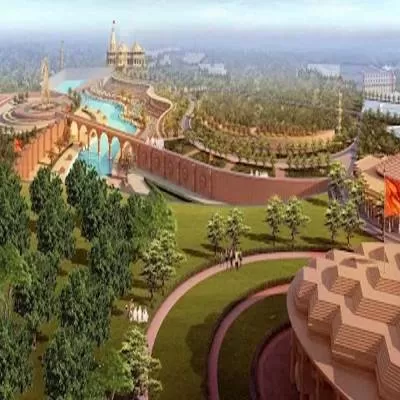
The Ayodhya Development Authority (ADA) and Saifee Burhani Upliftment Trust (SBUT) have jointly clinched the top spot in the Smart Infrastructure category at the 5th Smart Urban Innovation Awards hosted by FICCI. This recognition was part of the FICCI Conference on Business-Friendly Cities.

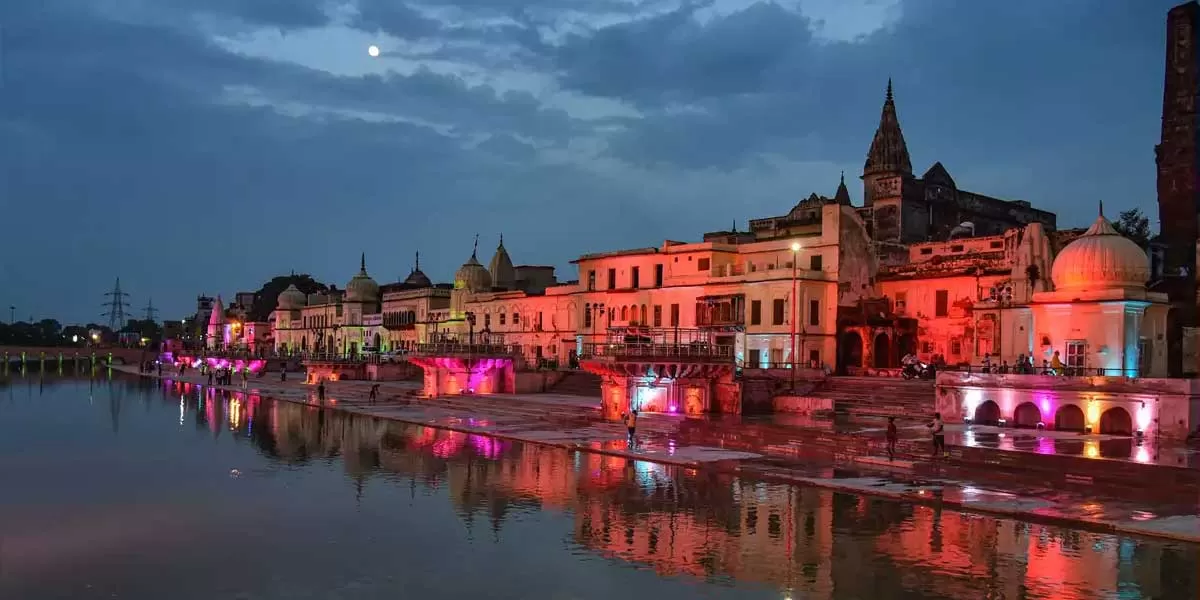
ADA was honoured for its city beautification and tourist facility project in Ayodhya City. SBUT received accolades for its redevelopment efforts in Bhendi Bazaar, Mumbai. The awards highlight contributions by industry players collaborating with cities to enhance livability, economic sustainability, and disaster resilience.

Jagan Shah, CEO of Infravision Foundation, praised the Smart Cities Mission for promoting local sustainability. JVS Ramakrishna of L&T Technology Services emphasised a holistic approach in creating sustainable urban spaces, involving public-private sector collaboration. SK Pathak of FICCI underscored the need for business-friendly cities to attract investment and talent, citing Ahmedabad and Surat as examples.

The evaluation for these awards considered both qualitative and quantitative aspects, focusing on project progressiveness and scalability. This recognition reaffirms the importance of urban governance and innovative solutions in developing future-ready cities.

The Ayodhya Development Authority (ADA) and Saifee Burhani Upliftment Trust (SBUT) have jointly clinched the top spot in the Smart Infrastructure category at the 5th Smart Urban Innovation Awards hosted by FICCI. This recognition was part of the FICCI Conference on Business-Friendly Cities. ADA was honoured for its city beautification and tourist facility project in Ayodhya City. SBUT received accolades for its redevelopment efforts in Bhendi Bazaar, Mumbai. The awards highlight contributions by industry players collaborating with cities to enhance livability, economic sustainability, and disaster resilience. Jagan Shah, CEO of Infravision Foundation, praised the Smart Cities Mission for promoting local sustainability. JVS Ramakrishna of L&T Technology Services emphasised a holistic approach in creating sustainable urban spaces, involving public-private sector collaboration. SK Pathak of FICCI underscored the need for business-friendly cities to attract investment and talent, citing Ahmedabad and Surat as examples. The evaluation for these awards considered both qualitative and quantitative aspects, focusing on project progressiveness and scalability. This recognition reaffirms the importance of urban governance and innovative solutions in developing future-ready cities.

Related Stories

Gold Stories

Next Story
Infrastructure Urban

When the Clause Bars Damages

In large-scale infrastructure and construction projects, delays are often an inevitable reality. To shield themselves from financial liabilities arising out of project prolongations, employers – particularly government entities and public-sector undertakings (PSUs) – frequently incorporate standard ‘No Damage for Delay’ or ‘No Liability’ clauses. These clauses aim to restrict the contractor's remedy solely to an extension of time (EOT), barring any monetary claims for extra overheads, idling costs or lost profits.Origin and relevanceUnderstanding the nature, enforceability and judi..

Next Story
Infrastructure Urban

We must become equally good at making cities liveable

India’s cities are growing rapidly but the focus must now shift from building more to creating better places to live. Suresh Babu, Organising Secretary, National Convention of Architectural Engineers, discusses the need for integrated, inclusive and people-centric urban development, and the role of technology and architectural engineering in shaping future cities.What is the central idea behind the convention?India aspires to become a developed nation by 2047 and cities will be central to that transformation. But development cannot be measured only by taller buildings, wider roads or larger ..

Next Story
Infrastructure Urban

Insurance is not a cost; it is protection for the balance sheet

As infrastructure projects grow larger and more complex, their risk profiles are evolving beyond physical damage. Underinsurance, business interruption, supply-chain disruptions, climate volatility, surety and transactional exposures can all have significant financial consequences. Mohan Agrawal, Director and Business Lead - Construction, Infra & Warehousing, EDME Insurance Brokers, discusses these emerging risks and the gaps in conventional insurance practices in a conversation with KAVITA PARAB, CW. He explains why infrastructure players need to view insurance not merely as a cost, but a..

Advertisement

Subscribe to Our Newsletter

Get daily newsletters around different themes from Construction world.

STAY CONNECTED

Advertisement

SPECIAL OFFER
QR Code