


Bengaluru–Mysuru Trains To Run At 130 kmph Soon
ECONOMY & POLICY

Bengaluru–Mysuru Trains To Run At 130 kmph Soon

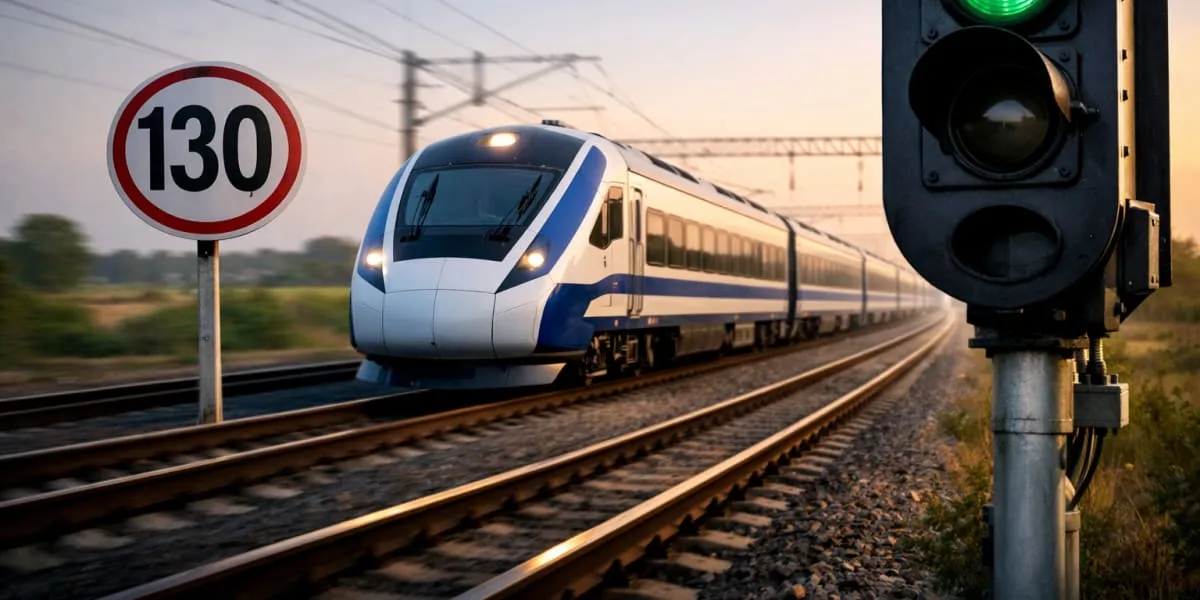
Trains on the Bengaluru–Mysuru corridor will soon run at up to 130 kmph, a move expected to reduce overall travel time between the two cities. Trial runs have been completed and have confirmed the operational feasibility of the higher speed after earlier services had a maximum permitted speed of 110 kmph. The speed upgrade is intended to improve rail connectivity and support increased efficiency on the route.

Union Minister of State for Railways V Somanna carried out a window trailing inspection of the KSR Bengaluru–Mandya–Mysuru sections and reviewed progress of infrastructure works. He examined key operational and safety aspects on the Bengaluru–Mysuru section to ensure readiness for the revised speed regime. Officials involved in the trials provided technical assessments and completed requisite checks before decisions on regular operations are finalised.

The minister said that Karnataka has been sanctioned a record budgetary outlay for railway development of Rs 77,480 mn in 2026–27, compared with Rs 75,640 mn in 2025–26. He noted that railway works worth Rs 529,500 mn are currently progressing at various stages in the state. The allocations and ongoing projects are expected to support enhancements in track, signalling and passenger amenities that will facilitate safer higher speed operations.

Railway authorities will finalise timetables and operational protocols following regulatory approvals and completion of remaining technical validations. Once regular services commence at the higher speed, commuters may benefit from shorter journey times and more reliable scheduling between the two cities. Officials indicated that work will continue to ensure safety standards are maintained as services are scaled up on the corridor. The change is also expected to bolster regional economic links and support passenger convenience.

Trains on the Bengaluru–Mysuru corridor will soon run at up to 130 kmph, a move expected to reduce overall travel time between the two cities. Trial runs have been completed and have confirmed the operational feasibility of the higher speed after earlier services had a maximum permitted speed of 110 kmph. The speed upgrade is intended to improve rail connectivity and support increased efficiency on the route. Union Minister of State for Railways V Somanna carried out a window trailing inspection of the KSR Bengaluru–Mandya–Mysuru sections and reviewed progress of infrastructure works. He examined key operational and safety aspects on the Bengaluru–Mysuru section to ensure readiness for the revised speed regime. Officials involved in the trials provided technical assessments and completed requisite checks before decisions on regular operations are finalised. The minister said that Karnataka has been sanctioned a record budgetary outlay for railway development of Rs 77,480 mn in 2026–27, compared with Rs 75,640 mn in 2025–26. He noted that railway works worth Rs 529,500 mn are currently progressing at various stages in the state. The allocations and ongoing projects are expected to support enhancements in track, signalling and passenger amenities that will facilitate safer higher speed operations. Railway authorities will finalise timetables and operational protocols following regulatory approvals and completion of remaining technical validations. Once regular services commence at the higher speed, commuters may benefit from shorter journey times and more reliable scheduling between the two cities. Officials indicated that work will continue to ensure safety standards are maintained as services are scaled up on the corridor. The change is also expected to bolster regional economic links and support passenger convenience.

Next Story
Technology

AI-Enabled Workflows Lift Profitability and Productivity

Organisations modernising frontline workflows with artificial intelligence, automation and real-time data are reporting stronger financial performance, higher productivity and improved employee engagement, according to a global study by Zebra Technologies and Oxford Economics.The research covered 1,000 senior leaders across retail, manufacturing, transportation and logistics in the US, Mexico, the UK, Germany, India, Japan, Australia and New Zealand.In transportation and logistics, 54 per cent of companies that improved picking and packing operations reported faster operational performance, wh..

Next Story
Real Estate

India Leads Global AI Readiness but Implementation Lags

Indian companies lead global averages across all eight artificial intelligence readiness indicators tracked by JLL, but only 19 per cent have started making changes to their workplaces, according to the JLL 2026 Future of Work Survey.The study found that 77 per cent of Indian business leaders expect AI to change their office requirements, creating a 58-percentage-point gap between awareness and implementation. The survey covered more than 2,200 CEOs, CFOs and real estate leaders across 21 countries during the first quarter of 2026.Despite concerns over automation, 58 per cent of Indian leaders..

Next Story
Equipment

Three WOLFF Cranes Build Riyadh Cable-Stayed Bridges

Three WOLFF 180 B luffing jib cranes are supporting the construction of two cable-stayed bridges alongside the existing Wadi Laban Bridge in Riyadh, Saudi Arabia. The project is being developed for the Royal Commission for Riyadh City and executed by the ICRC joint venture comprising IC Ictas and Al Rashid Trading & Contracting Company.The cranes are handling lifting operations including formwork, reinforcement, concrete placement, work platforms, surveying equipment and other construction materials. Each crane is fitted with a 40 m jib, reaches a hook height of 157 m and offers a maximum ..

Advertisement

Subscribe to Our Newsletter

Get daily newsletters around different themes from Construction world.

STAY CONNECTED

Advertisement

Advertisement

Advertisement