


India-UAE Trade Crosses $100 Billion as Ties Deepen
ECONOMY & POLICY

India-UAE Trade Crosses $100 Billion as Ties Deepen

India and the United Arab Emirates are strengthening their economic partnership, with bilateral trade crossing $100 billion in FY2024-25. The milestone was achieved five years ahead of the target set under the Comprehensive Economic Partnership Agreement (CEPA) signed in 2022.

The two countries have set a new target of increasing bilateral trade to $200 billion by 2032. The agreement to raise the target was reached during UAE President Sheikh Mohamed bin Zayed Al Nahyan’s visit to India earlier in 2026.

While energy has traditionally been a major pillar of India-UAE economic relations, trade has diversified considerably. Non-oil trade between the two countries increased nearly 20% to reach $65 billion, spanning engineering goods, gems and jewellery, food and agricultural products, chemicals, textiles, pharmaceuticals and services.

India’s exports to the UAE crossed $36.63 billion, making the country India’s second-largest export destination. Major exports include refined petroleum products, gold and diamond jewellery, engineering goods, garments, pharmaceuticals and processed food. UAE exports to India remain led by crude oil, gold and petrochemicals.

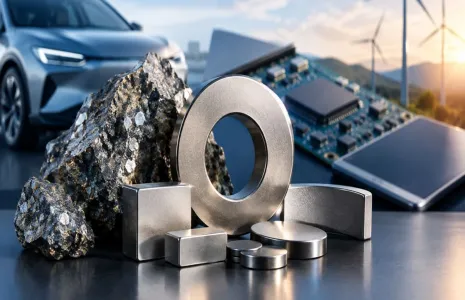
Economic cooperation is also expanding into emerging and high-value sectors such as semiconductors, artificial intelligence, renewable energy, fintech, healthcare, critical minerals and civil nuclear energy. Indian companies have established operations across the UAE in sectors including manufacturing, construction, hospitality, healthcare, retail and education.

The partnership is also extending to opportunities in third-country markets. UAE-India Business Council Chairman Faizal Kottikollon highlighted potential collaboration across African growth corridors in infrastructure, healthcare, logistics, digital ecosystems, sustainability and human development.

Further bilateral engagement is expected to focus on strengthening cooperation across trade, investment, energy security, technology, culture and people-to-people relations.

India and the United Arab Emirates are strengthening their economic partnership, with bilateral trade crossing $100 billion in FY2024-25. The milestone was achieved five years ahead of the target set under the Comprehensive Economic Partnership Agreement (CEPA) signed in 2022.The two countries have set a new target of increasing bilateral trade to $200 billion by 2032. The agreement to raise the target was reached during UAE President Sheikh Mohamed bin Zayed Al Nahyan’s visit to India earlier in 2026.While energy has traditionally been a major pillar of India-UAE economic relations, trade has diversified considerably. Non-oil trade between the two countries increased nearly 20% to reach $65 billion, spanning engineering goods, gems and jewellery, food and agricultural products, chemicals, textiles, pharmaceuticals and services.India’s exports to the UAE crossed $36.63 billion, making the country India’s second-largest export destination. Major exports include refined petroleum products, gold and diamond jewellery, engineering goods, garments, pharmaceuticals and processed food. UAE exports to India remain led by crude oil, gold and petrochemicals.Economic cooperation is also expanding into emerging and high-value sectors such as semiconductors, artificial intelligence, renewable energy, fintech, healthcare, critical minerals and civil nuclear energy. Indian companies have established operations across the UAE in sectors including manufacturing, construction, hospitality, healthcare, retail and education.The partnership is also extending to opportunities in third-country markets. UAE-India Business Council Chairman Faizal Kottikollon highlighted potential collaboration across African growth corridors in infrastructure, healthcare, logistics, digital ecosystems, sustainability and human development.Further bilateral engagement is expected to focus on strengthening cooperation across trade, investment, energy security, technology, culture and people-to-people relations.

Next Story
Real Estate

Dilip Buildcon Q1 FY27 Revenue at Rs 23.78 billion

Dilip Buildcon Limited reported consolidated revenue from operations of Rs 2,378 crore in Q1 FY27, along with EBITDA of Rs 429 crore and profit after tax of Rs 128 crore.Consolidated EBITDA margin stood at 18.1%, improving from 17.1% in Q4 FY26. On a standalone basis, revenue from operations was Rs 1,930 crore, EBITDA stood at Rs 199 crore and PAT was Rs 39 crore, with an EBITDA margin of 10.3%.The company’s order book stood at Rs 27,691 crore as of 30 June 2026, compared with Rs 28,830 crore as of 31 March 2026. Roads and highways accounted for 17.1% of the order book, irrigation and water ..

Next Story
Technology

ideaForge Q1 FY27 Revenue at Rs 680.6 million; EBITDA Turns Positive

ideaForge Technology Limited reported revenue from operations of Rs 68.6 crore in Q1 FY27, while executing more than 20% of its opening order book for the financial year. The company also reported positive EBITDA during the quarter.ideaForge entered FY27 with an order book of over Rs 300 crore and is targeting delivery of the opening order book by Q3, in line with customer timelines. The company said global supply chain disruptions and component availability continue to pose challenges.During the quarter, ideaForge completed a Rs 500 crore Qualified Institutional Placement (QIP), with particip..

Next Story
Infrastructure Energy

Websol Energy Q1 FY27 Revenue Rises 70% to Rs 3.73 billion

Websol Energy System Limited reported revenue from operations of Rs 372.60 crore in Q1 FY27, up 70% from Rs 218.75 crore in Q1 FY26.EBITDA increased 21% year-on-year to Rs 125.58 crore from Rs 103.48 crore, while profit after tax rose 16% to Rs 77.79 crore from Rs 67.18 crore. EBITDA margin stood at 34%, compared with 47% in the corresponding quarter last year, while PAT margin declined to 21% from 30%.Solar cell production increased to 259 MW during the quarter from 126 MW a year earlier, with capacity utilisation at 92%. Module production rose to 103 MW from 50 MW, while module capacity util..

Advertisement

Subscribe to Our Newsletter

Get daily newsletters around different themes from Construction world.

STAY CONNECTED

Advertisement

Advertisement

Advertisement