BHASHINI, Survey of India Sign MoU for Toponym Data Digitisation
ECONOMY & POLICY

BHASHINI, Survey of India Sign MoU for Toponym Data Digitisation

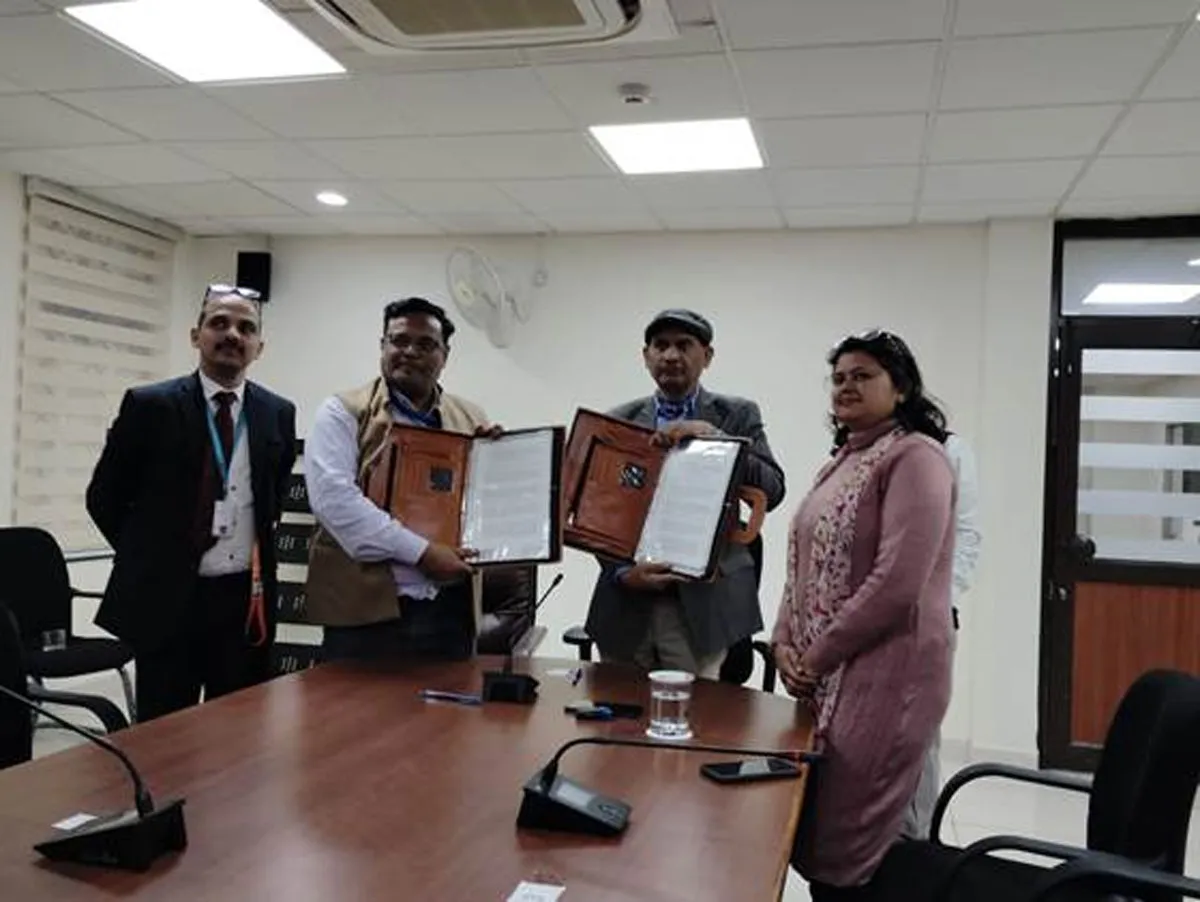
The Digital India BHASHINI Division (Digital India BHASHINI Division), under the Ministry of Electronics and Information Technology, has recently signed a Memorandum of Understanding with the Survey of India to support the digitisation, transcription and standardisation of geographical place names using AI-based speech and language technologies.

The collaboration aims to create accurate, multilingual and standardised toponymic datasets aligned with the National Geospatial Policy, 2022. As the national nodal agency for geographical names, the Survey of India undertakes extensive field surveys to capture place names in local vernaculars for integration into national mapping systems.

Under the MoU, BHASHINI’s speech-to-text and language processing capabilities will be used to convert large volumes of audio recordings into structured digital text, enabling the creation of a validated Toponymy Database covering more than 16 lakh locations across the country.

The initiative will support the development of the National Geographical Name Information System by processing field-collected audio data into local scripts, Devanagari, Roman and other formats, ensuring consistency across maps, digital platforms and governance systems. Automated speech recognition, language normalisation and validation workflows are expected to significantly improve the speed and accuracy of toponym data processing.

The collaboration will also strengthen audio documentation of place names, preserving correct pronunciation and regional linguistic variations, while aligning standardisation with the Survey of India Toponymy Manual and Bureau of Indian Standards codes. The initiative reinforces the role of language AI in India’s geospatial ecosystem, supporting governance, infrastructure planning, disaster management and citizen services.

The Digital India BHASHINI Division (Digital India BHASHINI Division), under the Ministry of Electronics and Information Technology, has recently signed a Memorandum of Understanding with the Survey of India to support the digitisation, transcription and standardisation of geographical place names using AI-based speech and language technologies. The collaboration aims to create accurate, multilingual and standardised toponymic datasets aligned with the National Geospatial Policy, 2022. As the national nodal agency for geographical names, the Survey of India undertakes extensive field surveys to capture place names in local vernaculars for integration into national mapping systems. Under the MoU, BHASHINI’s speech-to-text and language processing capabilities will be used to convert large volumes of audio recordings into structured digital text, enabling the creation of a validated Toponymy Database covering more than 16 lakh locations across the country. The initiative will support the development of the National Geographical Name Information System by processing field-collected audio data into local scripts, Devanagari, Roman and other formats, ensuring consistency across maps, digital platforms and governance systems. Automated speech recognition, language normalisation and validation workflows are expected to significantly improve the speed and accuracy of toponym data processing. The collaboration will also strengthen audio documentation of place names, preserving correct pronunciation and regional linguistic variations, while aligning standardisation with the Survey of India Toponymy Manual and Bureau of Indian Standards codes. The initiative reinforces the role of language AI in India’s geospatial ecosystem, supporting governance, infrastructure planning, disaster management and citizen services.

Next Story
Infrastructure Urban

Panasonic Showcases Connected Display Solutions

Panasonic Life Solutions India showcased its integrated display, projection, broadcast and communication technologies at Panasonic Tech Summit 2026 in New Delhi. Hosted through its System Solutions Division, the two-day event highlighted connected technology solutions for education, healthcare, retail, transportation, corporate offices and entertainment.The summit, themed ‘Turning Technology into Value’, featured experience-led zones covering QSR, retail, transit, corporate offices, healthcare, education, security, projection, home theatre and professional displays. Panasonic also introduc..

Next Story
Infrastructure Transport

Kapsch to Deliver India’s First C-ITS Project

"Kapsch TrafficCom will deliver India’s first Cooperative Intelligent Transport Systems project on a key expressway near New Delhi. The project will be implemented with Superwave Communication And Infrasolution Limited to demonstrate how connected mobility can improve road safety and traffic efficiency.The pilot will use real-time connectivity and AI-enabled situational awareness to support road users, especially in high-risk areas such as temporary work zones. Drivers will receive alerts on roadworks, maintenance vehicles, hazardous locations, traffic queues and temporary virtual signage di..

Next Story
Infrastructure Urban

Eurobond Net Profit Rises 44 Per Cent

Euro Panel Products, the parent company of Eurobond, reported a 44.13 per cent year-on-year rise in net profit for FY25–26. The company’s revenue from operations grew 18.91 per cent to Rs 503.20 crore, compared to Rs 423.18 crore in the previous financial year.The company’s full-year EBITDA stood at Rs 56.67 crore, marking a 31.82 per cent increase. Profit after tax rose to Rs 26.56 crore, while net worth increased 20.15 per cent to Rs 160.07 crore. Earnings per share for the year stood at Rs 10.84.Divyam Rajesh Shah, Whole Time Director and CFO, Euro Panel Products, said the company’s..

Advertisement

Subscribe to Our Newsletter

Get daily newsletters around different themes from Construction world.

STAY CONNECTED

Advertisement

Advertisement

Advertisement

-->