BHAVINI Conclave Aims To Scale Up Fast Breeder Programme
ECONOMY & POLICY

BHAVINI Conclave Aims To Scale Up Fast Breeder Programme

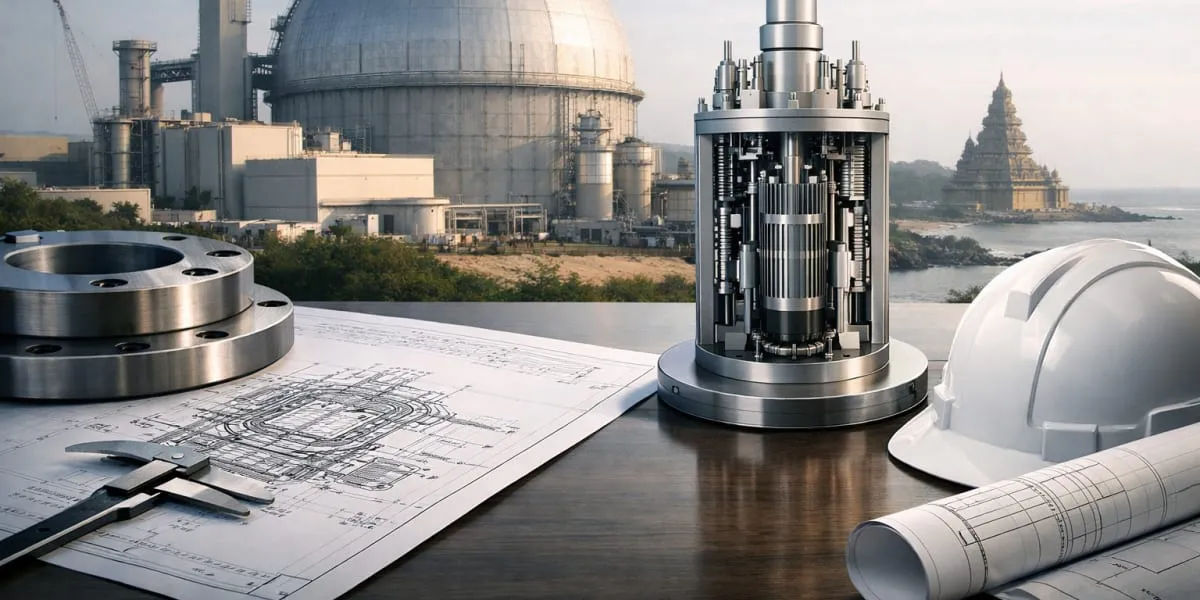
In Mahabalipuram, Bharatiya Nabhikiya Vidyut Nigam Limited (BHAVINI) convened manufacturers, engineering firms and technology partners at an industry conclave aimed at preparing the ground for the next phase of the Fast Breeder Reactor programme. The meeting sought to widen the domestic supplier base and to align industrial capacity with the technical and safety demands of advanced nuclear projects.

BHAVINI is a public sector company under the Department of Atomic Energy and the conclave brought together representatives from public and private organisations involved in reactor component manufacture, quality assurance and project engineering. Delegates examined the supply chain requirements for larger reactor fleets and discussed pathways to scale up fabrication and testing infrastructure within the country.

BHAVINI chairman and managing director P A Suresh Babu emphasised that progress to date had been secured by close coordination between nuclear institutions and domestic suppliers, paired with consistent quality and safety standards. He advised that sustaining that model would be essential as the programme transitions from prototype delivery to serial construction and long term operation.

The conclave followed the Prototype Fast Breeder Reactor (PFBR) achieving criticality, a milestone that underlines the technical maturity reached by India in fast reactor technology. Participants identified key bottlenecks such as limited manufacturing capacity for specialised components, the need to expand supplier qualification programmes and the importance of strengthening inspection and testing facilities to uphold safety margins.

Officials from BHAVINI and the Indira Gandhi Centre for Atomic Research (IGCAR) outlined a roadmap for future reactors and reviewed the development trajectory and key milestones of the prototype. The discussion stressed the need for structured vendor development, workforce training and sustained engagement across government agencies and industry to ensure timely delivery of complex projects that span several decades.

"Join industry leaders at RAHSTA Expo, India's premier platform for roads, highways and traffic infrastructure. Register now to explore innovations, network with experts and shape the future of mobility."

In Mahabalipuram, Bharatiya Nabhikiya Vidyut Nigam Limited (BHAVINI) convened manufacturers, engineering firms and technology partners at an industry conclave aimed at preparing the ground for the next phase of the Fast Breeder Reactor programme. The meeting sought to widen the domestic supplier base and to align industrial capacity with the technical and safety demands of advanced nuclear projects. BHAVINI is a public sector company under the Department of Atomic Energy and the conclave brought together representatives from public and private organisations involved in reactor component manufacture, quality assurance and project engineering. Delegates examined the supply chain requirements for larger reactor fleets and discussed pathways to scale up fabrication and testing infrastructure within the country. BHAVINI chairman and managing director P A Suresh Babu emphasised that progress to date had been secured by close coordination between nuclear institutions and domestic suppliers, paired with consistent quality and safety standards. He advised that sustaining that model would be essential as the programme transitions from prototype delivery to serial construction and long term operation. The conclave followed the Prototype Fast Breeder Reactor (PFBR) achieving criticality, a milestone that underlines the technical maturity reached by India in fast reactor technology. Participants identified key bottlenecks such as limited manufacturing capacity for specialised components, the need to expand supplier qualification programmes and the importance of strengthening inspection and testing facilities to uphold safety margins. Officials from BHAVINI and the Indira Gandhi Centre for Atomic Research (IGCAR) outlined a roadmap for future reactors and reviewed the development trajectory and key milestones of the prototype. The discussion stressed the need for structured vendor development, workforce training and sustained engagement across government agencies and industry to ensure timely delivery of complex projects that span several decades.

Next Story
Infrastructure Energy

Centre Prioritising Energy Security With Coal Gasification

Union minister for Coal and Mines G Kishan Reddy said the Centre is prioritising energy security through a strategic shift to coal gasification and has announced incentives totalling Rs 460 billion (bn) to support the effort. He said more than 35 companies will start coal gasification activities in India within two months and that the government is encouraging firms that bring technology to close the domestic technology gap. The minister described the initiative as aimed at reducing import dependence and developing indigenous capacity. India has the fifth-largest coal reserve in the world, and..

Next Story
Infrastructure Urban

BHEL and Coal India Invest Rs 250 bn in Odisha Gasification

Bharat Heavy Electricals (BHEL) and Coal India (CIL) are jointly investing Rs 250 billion in a coal gasification project in Odisha, with the Prime Minister laying the foundation stone in Jharsuguda. Union Coal and Mines Minister G Kishan Reddy described the initiative as a transformative shift in coal utilisation that will open industrial avenues for the state. The project moves coal beyond conventional power generation to industrial feedstocks. Coal gasification will convert coal into synthesis gas, a versatile feedstock for chemicals, fertilisers and synthetic fuels, and the technology is ex..

Next Story
Infrastructure Energy

BCCL Hands Over Dugdha Coal Washery To JSW Steel

Bharat Coking Coal has handed over the Dugdha Coal Washery to JSW Steel, marking the first coal washery asset monetisation under the Ministry of Coal's asset monetisation programme. The handover took place in the presence of senior officials from Bharat Coking Coal Ltd, JSW Steel and JSW Energy. The washery has a capacity of two million tonnes per annum (mn t per annum), and its transfer is intended to introduce private sector practices into coal beneficiation operations. The monetisation is aimed at modernising coal sector assets, improving operational efficiency and enhancing resource utilis..

Advertisement

Subscribe to Our Newsletter

Get daily newsletters around different themes from Construction world.

STAY CONNECTED

Advertisement

Advertisement

Advertisement