Budget Positions Maritime Sector as Pillar of Viksit Bharat
ECONOMY & POLICY

Budget Positions Maritime Sector as Pillar of Viksit Bharat

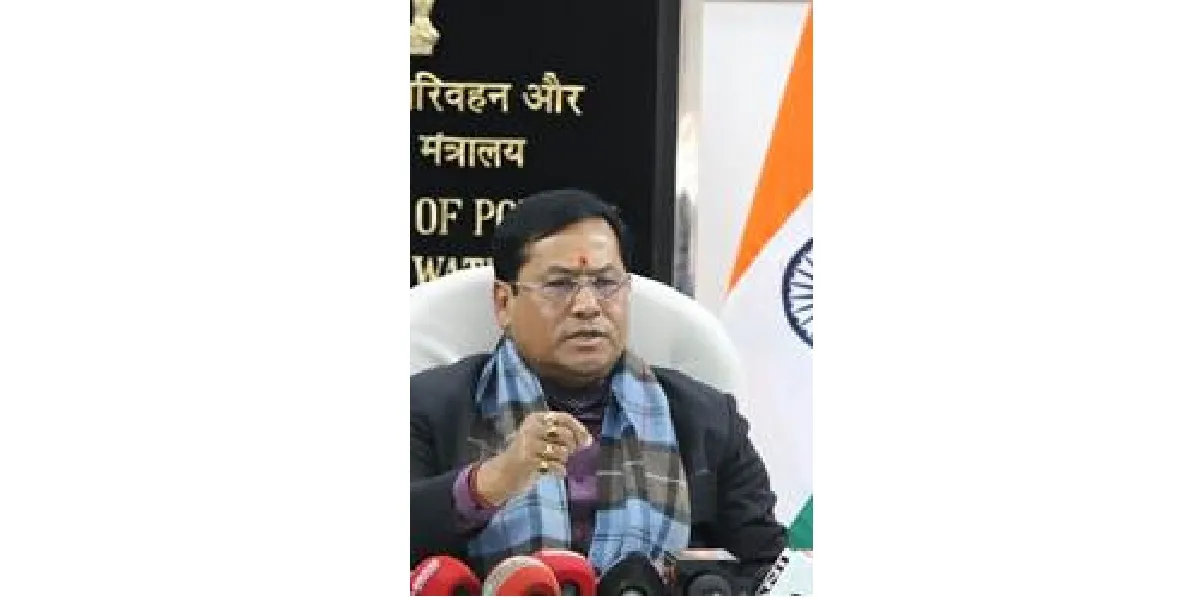
Union Minister of Ports, Shipping and Waterways Sarbananda Sonowal recently said the Union Budget has given a powerful thrust to India’s economic transformation by accelerating reforms and positioning the maritime sector as a key driver of the vision of Viksit Bharat. He noted that the Budget reflects the government’s commitment to the three Kartavyas—accelerating economic growth, building capacity and ensuring inclusive development under ‘Sabka Saath, Sabka Vikas’. Sonowal said the maritime sector has been clearly recognised as a strategic enabler of trade competitiveness, logistics efficiency and long-term economic resilience. He thanked Union Finance Minister Nirmala Sitharaman for presenting her ninth consecutive Union Budget, calling it a sign of policy continuity and reform stability. A major highlight is the Container Manufacturing Assistance Scheme with an outlay of Rs 100 billion over five years to build a globally competitive container manufacturing ecosystem. India aims to develop domestic capacity of about one million TEUs annually over the next decade, creating a potential market of nearly Rs 1.07 lakh crore, generating around 3,000 direct and over 50,000 indirect jobs, while reducing dependence on imported containers. The Budget also provides fresh momentum to inland waterways, with 20 new National Waterways to be operationalised over the next five years. Cargo movement on inland waterways has grown nearly 700 per cent since 2013–14, while the operational length has expanded to over 5,155 km. Focused development of National Waterway-5 on the Mahanadi system in Odisha is expected to unlock eastern India’s industrial and mineral potential, with cargo potential of up to 20 million tonnes by 2047 and investment of about Rs 130 billion. Further announcements include Regional Centres of Excellence for inland waterways training, a Coastal Cargo Promotion Scheme to raise the share of waterways and coastal shipping to 12 per cent by 2047, improved port connectivity through new freight corridors, support for seaplane manufacturing, and incentives to promote Indian ship ownership. Sonowal said the Budget firmly positions shipping, waterways, shipbuilding and container manufacturing as strategic enablers of India’s logistics and trade competitiveness, laying a strong foundation for the country’s next phase of growth.

Union Minister of Ports, Shipping and Waterways Sarbananda Sonowal recently said the Union Budget has given a powerful thrust to India’s economic transformation by accelerating reforms and positioning the maritime sector as a key driver of the vision of Viksit Bharat. He noted that the Budget reflects the government’s commitment to the three Kartavyas—accelerating economic growth, building capacity and ensuring inclusive development under ‘Sabka Saath, Sabka Vikas’. Sonowal said the maritime sector has been clearly recognised as a strategic enabler of trade competitiveness, logistics efficiency and long-term economic resilience. He thanked Union Finance Minister Nirmala Sitharaman for presenting her ninth consecutive Union Budget, calling it a sign of policy continuity and reform stability. A major highlight is the Container Manufacturing Assistance Scheme with an outlay of Rs 100 billion over five years to build a globally competitive container manufacturing ecosystem. India aims to develop domestic capacity of about one million TEUs annually over the next decade, creating a potential market of nearly Rs 1.07 lakh crore, generating around 3,000 direct and over 50,000 indirect jobs, while reducing dependence on imported containers. The Budget also provides fresh momentum to inland waterways, with 20 new National Waterways to be operationalised over the next five years. Cargo movement on inland waterways has grown nearly 700 per cent since 2013–14, while the operational length has expanded to over 5,155 km. Focused development of National Waterway-5 on the Mahanadi system in Odisha is expected to unlock eastern India’s industrial and mineral potential, with cargo potential of up to 20 million tonnes by 2047 and investment of about Rs 130 billion. Further announcements include Regional Centres of Excellence for inland waterways training, a Coastal Cargo Promotion Scheme to raise the share of waterways and coastal shipping to 12 per cent by 2047, improved port connectivity through new freight corridors, support for seaplane manufacturing, and incentives to promote Indian ship ownership. Sonowal said the Budget firmly positions shipping, waterways, shipbuilding and container manufacturing as strategic enablers of India’s logistics and trade competitiveness, laying a strong foundation for the country’s next phase of growth.

Next Story
Infrastructure Energy

Exide Launches AGMi AGM Batteries for Premium Cars

Exide Industries Limited has recently announced the launch of Exide AGMi, an advanced Absorbent Glass Mat (AGM) battery range for the Indian automotive aftermarket, addressing the increasing power requirements of modern, technology-driven passenger vehicles. The Exide AGMi range features spill-proof AGM-VRLA technology, offering enhanced safety, higher cranking power, up to three times longer cycle life compared to conventional batteries, and superior vibration resistance. The portfolio is available in DIN 50, DIN 60, DIN 70, DIN 80 and DIN 95 variants, covering applications from mass-market ..

Next Story
Infrastructure Transport

Blue Dart Q3 FY26 Profit at Rs 700 million on Steady Demand

Blue Dart Express Ltd, South Asia’s express air and integrated transportation and distribution major, recently announced its financial results for the quarter ended December 31, 2025. The company reported a profit after tax of Rs 700 million for the quarter, while revenue from operations stood at Rs 16.16 billion. Performance during the period was supported by stable domestic demand and disciplined cost management across operations. Commenting on the results, Balfour Manuel, Managing Director, said the quarter reflected resilient domestic demand, with growing contributions from Tier 2 and ..

Next Story
Real Estate

HIL Commences Toll Operations at Kaza Fee Plaza on NH-16

Highway Infrastructure Limited (HIL), an integrated infrastructure development and management company, has recently commenced toll operations at the Kaza Fee Plaza on the Chilakaluripet–Vijayawada section of National Highway-16 in Andhra Pradesh, effective 23 January 2026. The project spans from Km 355.0 to Km 437.5 on NH-16, covering an aggregate length of 82.5 km. NH-16 is a critical north–south corridor connecting major economic centres across southern and eastern India and forms a vital part of the national logistics and passenger transport network. This marks HIL’s first toll oper..

Advertisement

Subscribe to Our Newsletter

Get daily newsletters around different themes from Construction world.

STAY CONNECTED

Advertisement

Advertisement

Advertisement

Advertisement

Open In App