CAQM Inspects Industrial Units in Naraina Cantonment
ECONOMY & POLICY

CAQM Inspects Industrial Units in Naraina Cantonment

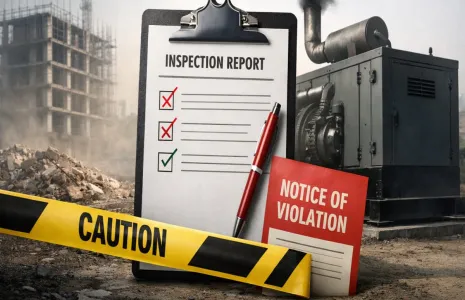
Following public complaints, the Commission for Air Quality Management recently conducted a special joint inspection of industrial units in the Cantonment Board area of Naraina, Delhi. The inspection was carried out by flying squads of CAQM along with the Delhi Pollution Control Committee and the Delhi Cantonment Board to verify compliance with environmental norms and land-use regulations.

A total of 21 industrial units operating in the area were inspected. Of these, 19 units were found to fall under the category of household industries as per the Master Plan for Delhi 2021, but were operating without the mandatory No Objection Certificate. The remaining two units were not permissible under the household industry category.

As per DPCC’s consent policy and directions of the Hon’ble Supreme Court, household industries operating in residential areas must obtain an NOC from the High Powered Committee chaired by the Commissioner of Industries, Government of NCT of Delhi. None of the inspected units were able to produce documentary proof of having secured the required approval.

Based on the findings, CAQM has advised the Delhi Cantonment Board to take necessary action to ensure that industrial units in the Naraina Cantonment area operate only after obtaining all statutory clearances, including the mandatory NOC. The Commission reiterated its commitment to strict enforcement and coordinated action to curb illegal industrial activity and reduce air pollution in the region.

Following public complaints, the Commission for Air Quality Management recently conducted a special joint inspection of industrial units in the Cantonment Board area of Naraina, Delhi. The inspection was carried out by flying squads of CAQM along with the Delhi Pollution Control Committee and the Delhi Cantonment Board to verify compliance with environmental norms and land-use regulations. A total of 21 industrial units operating in the area were inspected. Of these, 19 units were found to fall under the category of household industries as per the Master Plan for Delhi 2021, but were operating without the mandatory No Objection Certificate. The remaining two units were not permissible under the household industry category. As per DPCC’s consent policy and directions of the Hon’ble Supreme Court, household industries operating in residential areas must obtain an NOC from the High Powered Committee chaired by the Commissioner of Industries, Government of NCT of Delhi. None of the inspected units were able to produce documentary proof of having secured the required approval. Based on the findings, CAQM has advised the Delhi Cantonment Board to take necessary action to ensure that industrial units in the Naraina Cantonment area operate only after obtaining all statutory clearances, including the mandatory NOC. The Commission reiterated its commitment to strict enforcement and coordinated action to curb illegal industrial activity and reduce air pollution in the region.

Next Story
Infrastructure Urban

Public Capex Push In Budget To Boost Tyre Industry: ATMA

The Indian tyre industry is expected to benefit from the government’s renewed emphasis on infrastructure development outlined in the Union Budget 2026–27, according to the Automotive Tyre Manufacturers Association (ATMA).ATMA said the tyre sector is closely linked to the performance of the transport and infrastructure ecosystem, and the sharp rise in public capital expenditure to Rs 1.2 trillion is a significant positive for sustained long-term demand growth.The association noted that the enhanced capex allocation reflects the government’s continued focus on building future-ready infrast..

Next Story
Infrastructure Transport

Underground Rail Line Planned In Siliguri ‘Chicken’s Neck’

Indian Railways is planning to construct underground railway tracks along a critical 40 km stretch of the Siliguri Corridor, popularly known as the Chicken’s Neck, to strengthen connectivity between the North East and the rest of India while enhancing security preparedness. According to the Indian Railways, the underground section is strategically significant due to the corridor’s narrow geography and proximity to international borders. Chetan Kumar Srivastava, General Manager of the Northeast Frontier Railway, said the proposed underground alignment is extremely important from a security..

Next Story
Infrastructure Urban

Agriculture Infrastructure Fund Boosts Post-Harvest Assets

The Agriculture Infrastructure Fund (AIF), a Central Sector Scheme of the Government of India, continues to strengthen post-harvest management infrastructure by enabling access to medium- and long-term debt financing through interest-subvented loans. The scheme focuses on improving agri-logistics, reducing post-harvest losses, promoting modern storage, processing and value-addition facilities, and enhancing farm-gate infrastructure to support efficient agricultural supply chains. Under AIF, banks and financial institutions provide loans with an interest subvention of three per cent per annum,..

Advertisement

Subscribe to Our Newsletter

Get daily newsletters around different themes from Construction world.

STAY CONNECTED

Advertisement

Advertisement

Advertisement

Advertisement

Open In App