+
CAQM Reviews Rajasthan NCR Air Pollution Action Plans
ECONOMY & POLICY

CAQM Reviews Rajasthan NCR Air Pollution Action Plans

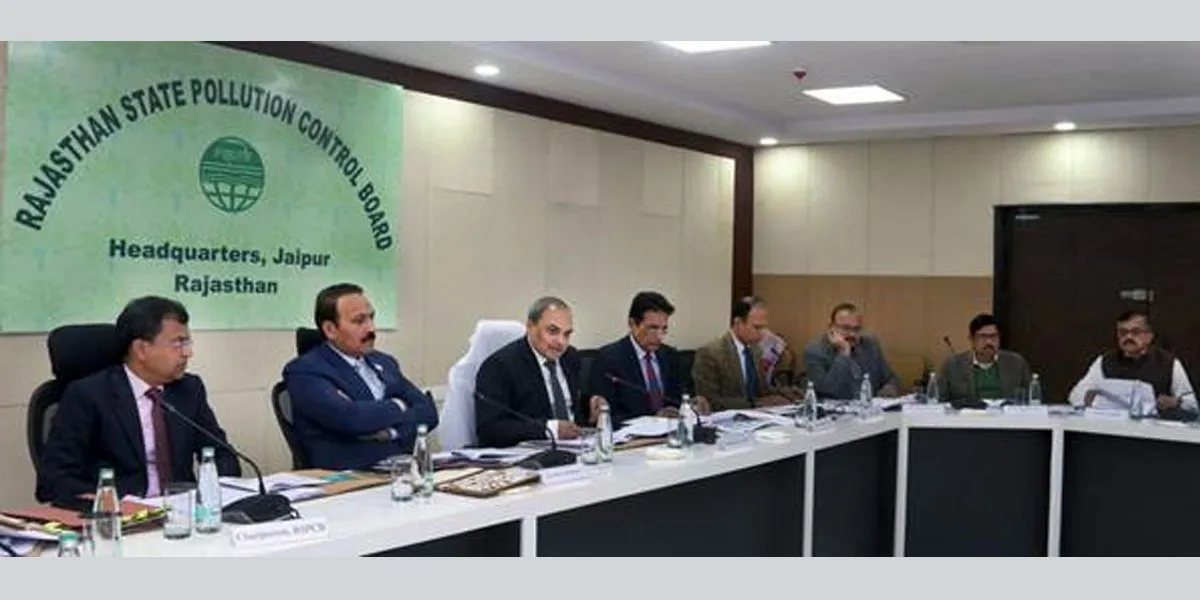
A high-level review meeting with the Government of Rajasthan was held in Jaipur on January 27, 2026, under the chairmanship of Commission for Air Quality Management chairperson Rajesh Verma, to assess measures aimed at reducing air pollution in Rajasthan’s NCR districts, including Alwar, Bharatpur and Bhiwadi.

During the meeting, presentations were made on the City Annual Action Plans 2026 for Bhiwadi, Alwar and Bharatpur, as well as the State Annual Action Plan 2026 of Rajasthan. These plans covered key pollution sources such as vehicular emissions, construction and demolition activities, road and open area dust, municipal solid waste management and industrial emissions.

While reviewing the city-level plans, CAQM directed the concerned authorities to submit revised City Action Plans within one week. The revised plans are required to be forward-looking and include comprehensive road coverage with clear financial implications, paving of pedestrian pathways, strengthening of road infrastructure, adequate deployment of mechanical road sweeping machines, development of safe cycling tracks and enhancement of the air quality monitoring network. This includes the installation of an additional Continuous Ambient Air Quality Monitoring Station in Bharatpur. Cities were also instructed to frame clear strategies for reducing PM2.5 levels, with annual reduction targets of not less than 10 per cent, bridge identified gaps within two years, reassess municipal solid waste processing capacity in line with current generation levels and strengthen information, education and communication activities for relevant stakeholders.

The State Annual Action Plan was also reviewed in detail, with the Commission directing that the revised plan should explicitly aim for an annual air pollution reduction of at least 10 per cent. Emphasis was placed on promoting lithium-ion batteries in place of lead-acid batteries for e-rickshaws, accelerating the transition of two-wheelers and three-wheelers to electric vehicles, installing Automatic Number Plate Recognition cameras at fuel stations, strengthening electric vehicle charging infrastructure and implementing Integrated Traffic Management Systems. The plan is also expected to identify and address traffic congestion points, expand construction and demolition waste processing facilities and secondary collection centres across all NCR urban local bodies, prioritise redevelopment of urban and industrial roads with financial assessments, complete greening of pathways and central verges within one year, and establish state-level and ward-level task forces along with Integrated Command and Control Centres in Bhiwadi, Alwar, Bharatpur and at the state headquarters.

The Rajasthan State Pollution Control Board presented the status of installation of Online Continuous Emission Monitoring Systems and air pollution control devices in industrial units. CAQM directed that remaining installations be completed expeditiously and warned that industries failing to place orders for OCEMS before January 31, 2026, would face action in line with directions issued by the Central Pollution Control Board.

Special focus was placed on reducing vehicular pollution through improved traffic management, deployment of ITMS with automated challan systems, installation of ANPR cameras at traffic junctions, identification and decongestion of traffic bottlenecks, augmentation of parking facilities and phased removal of diesel-operated autorickshaws from NCR areas. Faster adoption of cleaner mobility solutions by motor vehicle aggregators, delivery service providers and e-commerce companies was also emphasised.

CAQM directed periodic reviews of compliance by all stakeholder departments and agencies and stressed the need for time-bound implementation of action plans to achieve sustained air quality improvement across Rajasthan’s NCR regions.

A high-level review meeting with the Government of Rajasthan was held in Jaipur on January 27, 2026, under the chairmanship of Commission for Air Quality Management chairperson Rajesh Verma, to assess measures aimed at reducing air pollution in Rajasthan’s NCR districts, including Alwar, Bharatpur and Bhiwadi. During the meeting, presentations were made on the City Annual Action Plans 2026 for Bhiwadi, Alwar and Bharatpur, as well as the State Annual Action Plan 2026 of Rajasthan. These plans covered key pollution sources such as vehicular emissions, construction and demolition activities, road and open area dust, municipal solid waste management and industrial emissions. While reviewing the city-level plans, CAQM directed the concerned authorities to submit revised City Action Plans within one week. The revised plans are required to be forward-looking and include comprehensive road coverage with clear financial implications, paving of pedestrian pathways, strengthening of road infrastructure, adequate deployment of mechanical road sweeping machines, development of safe cycling tracks and enhancement of the air quality monitoring network. This includes the installation of an additional Continuous Ambient Air Quality Monitoring Station in Bharatpur. Cities were also instructed to frame clear strategies for reducing PM2.5 levels, with annual reduction targets of not less than 10 per cent, bridge identified gaps within two years, reassess municipal solid waste processing capacity in line with current generation levels and strengthen information, education and communication activities for relevant stakeholders. The State Annual Action Plan was also reviewed in detail, with the Commission directing that the revised plan should explicitly aim for an annual air pollution reduction of at least 10 per cent. Emphasis was placed on promoting lithium-ion batteries in place of lead-acid batteries for e-rickshaws, accelerating the transition of two-wheelers and three-wheelers to electric vehicles, installing Automatic Number Plate Recognition cameras at fuel stations, strengthening electric vehicle charging infrastructure and implementing Integrated Traffic Management Systems. The plan is also expected to identify and address traffic congestion points, expand construction and demolition waste processing facilities and secondary collection centres across all NCR urban local bodies, prioritise redevelopment of urban and industrial roads with financial assessments, complete greening of pathways and central verges within one year, and establish state-level and ward-level task forces along with Integrated Command and Control Centres in Bhiwadi, Alwar, Bharatpur and at the state headquarters. The Rajasthan State Pollution Control Board presented the status of installation of Online Continuous Emission Monitoring Systems and air pollution control devices in industrial units. CAQM directed that remaining installations be completed expeditiously and warned that industries failing to place orders for OCEMS before January 31, 2026, would face action in line with directions issued by the Central Pollution Control Board. Special focus was placed on reducing vehicular pollution through improved traffic management, deployment of ITMS with automated challan systems, installation of ANPR cameras at traffic junctions, identification and decongestion of traffic bottlenecks, augmentation of parking facilities and phased removal of diesel-operated autorickshaws from NCR areas. Faster adoption of cleaner mobility solutions by motor vehicle aggregators, delivery service providers and e-commerce companies was also emphasised. CAQM directed periodic reviews of compliance by all stakeholder departments and agencies and stressed the need for time-bound implementation of action plans to achieve sustained air quality improvement across Rajasthan’s NCR regions.

Next Story
Infrastructure Transport

Lucknow Metro East-West Corridor Consultancy Contract Awarded

The Uttar Pradesh Metro Rail Corporation has awarded the first construction-related consultancy contract for the Lucknow Metro East West Corridor to a joint venture of AYESA Ingenieria Arquitectura SAU and AYESA India Pvt Ltd. The firm was declared the lowest bidder for the Detailed Design Consultant contract for Lucknow Metro Line-2 under Phase 1B and the contract was recommended following the financial bid. The contract is valued at Rs 159.0 million (mn), covering design services for the corridor. Lucknow Metro Line-2 envisages the construction of an 11.165 kilometre corridor connecting Cha..

Next Story
Infrastructure Urban

Div Com Kashmir Urges Fast Tracking Of Jhelum Water Transport Project

The Divisional Commissioner of Kashmir has called for the fast-tracking of the Jhelum water transport project, urging district administrations and relevant agencies to accelerate planning and clearances. In a meeting convened at the divisional headquarters, the commissioner instructed officials from irrigation, public health engineering and municipal departments to prioritise the project and coordinate survey and design work. The directive emphasised removal of administrative bottlenecks and close monitoring to ensure timely mobilisation of resources and contractors. Officials were told to in..

Next Story
Infrastructure Urban

Interarch Reports Strong Q3 And Nine Month Results

Interarch Building Solutions Limited reported unaudited results for the third quarter and nine months ended 31 December 2025, recording strong revenue growth driven by execution and a robust order book. Net revenue for the third quarter rose by 43.7 per cent to Rs 5.225 billion (bn), compared with Rs 3.636 bn a year earlier, reflecting heightened demand in pre-engineered building projects. The company’s total order book as at 31 January 2026 stood at Rs 16.85 bn, supporting near-term visibility. EBITDA excluding other income for the quarter increased by 43.2 per cent to Rs 503 million (mn),..

Advertisement

Subscribe to Our Newsletter

Get daily newsletters around different themes from Construction world.

STAY CONNECTED

Advertisement

Advertisement

Advertisement

Open In App