
CAQM tightens air pollution controls
ECONOMY & POLICY

CAQM tightens air pollution controls

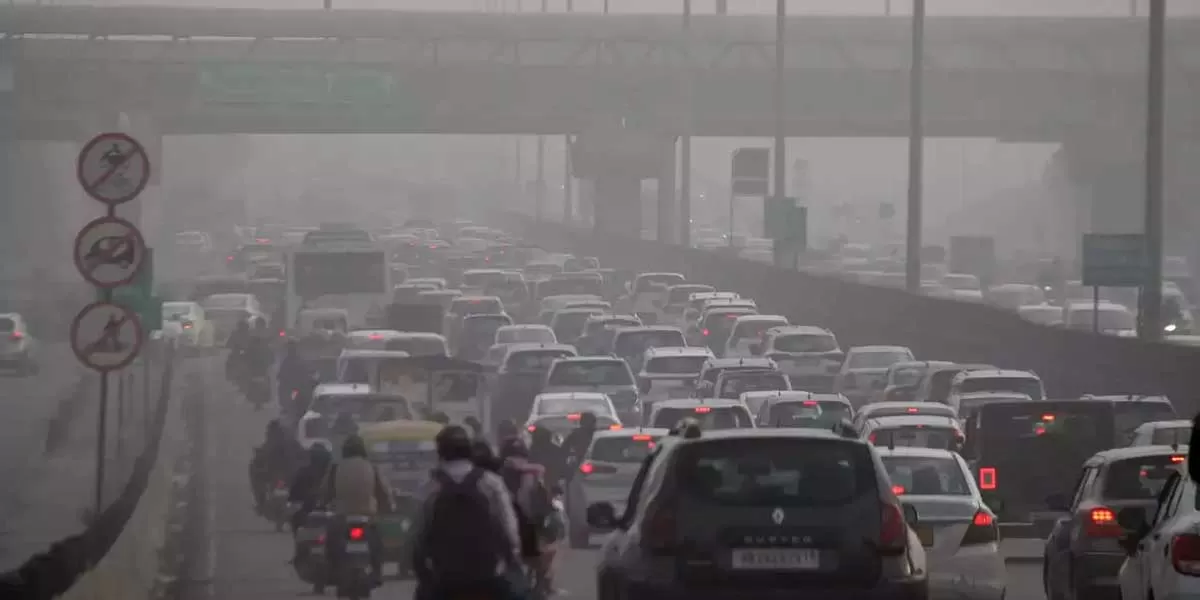
The Commission for Air Quality Management (CAQM) in NCR and Adjoining Areas has intensified measures to control air pollution under the Graded Response Action Plan (GRAP) currently in force across the National Capital Region (NCR).

The Sub-Committee on Safeguarding & Enforcement held a meeting to monitor and review enforcement actions taken by NCR state governments and the Government of National Capital Territory of Delhi (GNCTD) in coordination with Punjab.

The meeting focused on various aspects, including the monitoring of paddy stubble burning, implementation of transport sector guidelines, and the enforcement of PUC norms. The Commission reviewed actions on liquidating end-of-life vehicles as per RVSF Rules, 2021, and ensuring the capacity utilization of scrapping facilities. The meeting also assessed compliance with guidelines for intercity buses operating in the NCR region and m igration plans for clean intercity bus services from neighboring states.

The CAQM reiterated the importance of enforcing GRAP Stage-II measures, including the use of anti-smog guns, intensified mechanized sweeping, and restricting diesel generator usage. It directed NCR states and GNCTD to enhance enforcement actions, including inspections and penalties for violations, to prevent further deterioration in air quality.

The meeting emphasized compliance with the Supreme Court's orders on the prohibition of firecrackers, noting that the festival season coincides with peak paddy harvesting. The Commission instructed agencies to deploy nodal officers for hotspot monitoring and enhance the installation of anti-smog guns on high-rise buildings.

The Commission further stressed the need for regular review and effective action across sectors under GRAP to prevent the escalation of pollution levels. NCR state governments committed to coordinating their efforts and ensuring compliance with air quality measures as outlined in the plan.

The Commission for Air Quality Management (CAQM) in NCR and Adjoining Areas has intensified measures to control air pollution under the Graded Response Action Plan (GRAP) currently in force across the National Capital Region (NCR). The Sub-Committee on Safeguarding & Enforcement held a meeting to monitor and review enforcement actions taken by NCR state governments and the Government of National Capital Territory of Delhi (GNCTD) in coordination with Punjab. The meeting focused on various aspects, including the monitoring of paddy stubble burning, implementation of transport sector guidelines, and the enforcement of PUC norms. The Commission reviewed actions on liquidating end-of-life vehicles as per RVSF Rules, 2021, and ensuring the capacity utilization of scrapping facilities. The meeting also assessed compliance with guidelines for intercity buses operating in the NCR region and m igration plans for clean intercity bus services from neighboring states. The CAQM reiterated the importance of enforcing GRAP Stage-II measures, including the use of anti-smog guns, intensified mechanized sweeping, and restricting diesel generator usage. It directed NCR states and GNCTD to enhance enforcement actions, including inspections and penalties for violations, to prevent further deterioration in air quality. The meeting emphasized compliance with the Supreme Court's orders on the prohibition of firecrackers, noting that the festival season coincides with peak paddy harvesting. The Commission instructed agencies to deploy nodal officers for hotspot monitoring and enhance the installation of anti-smog guns on high-rise buildings. The Commission further stressed the need for regular review and effective action across sectors under GRAP to prevent the escalation of pollution levels. NCR state governments committed to coordinating their efforts and ensuring compliance with air quality measures as outlined in the plan.

Related Stories

Gold Stories

Next Story
Resources

Schindler named among Forbes’ World’s Best Employers 2026

Schindler has been named among Forbes’ World’s Best Employers 2026, a global ranking recognising companies for their workplace environments.Compiled by Forbes in partnership with Statista, the ranking is based on independent employee feedback, including whether employees would recommend their organisation to friends and family.The company said the recognition reflected its focus on creating a workplace where employees can develop their expertise and build careers. ..

Next Story
Infrastructure Urban

India needs an export-execution mindset: Vishesh Jain

Interview with Vishesh Jain, Founder & CEO, EximpleWhat gaps in India’s global trade ecosystem led you to build Eximple, and what problem did you see businesses struggling with most?Eximple came out of a problem that all three founders had seen from different choke points in the trade ecosystem. India has millions of MSMEs and manufacturers, and many of them can make products that are genuinely competitive on quality. Yet only a small fraction is able to build meaningful international businesses. In our experience, the gap is usually not manufacturing capability; it is the ability to exe..

Next Story
Building Material

Nuvoco reports 13.5% revenue growth in Q2 FY27

Nuvoco Vistas Corp. Ltd. reported consolidated revenue of Rs 27.9 billion for Q2 FY27, up 13.5% year on year. Cement sales volume rose 9% to 4.7 million tonnes (MMT), while EBITDA increased 11% to Rs 4.11 billion.The company said it began its cement operations in 2014 with a 2.3 MMT per annum (MMTPA) operation at Nimbol. It now aims to reach 35 MMTPA of cement capacity by FY28, nearly 15 times its initial capacity. Its portfolio spans cement, ready-mix concrete and modern building materials.On sustainability and cost efficiency, Nuvoco partnered with CleanMax for a 46.4 MW wind-solar hybrid re..

Advertisement

Subscribe to Our Newsletter

Get daily newsletters around different themes from Construction world.

STAY CONNECTED

Advertisement

SPECIAL OFFER
QR Code