Centre Highlights Decade of Connectivity Gains in Northeast
ECONOMY & POLICY

Centre Highlights Decade of Connectivity Gains in Northeast

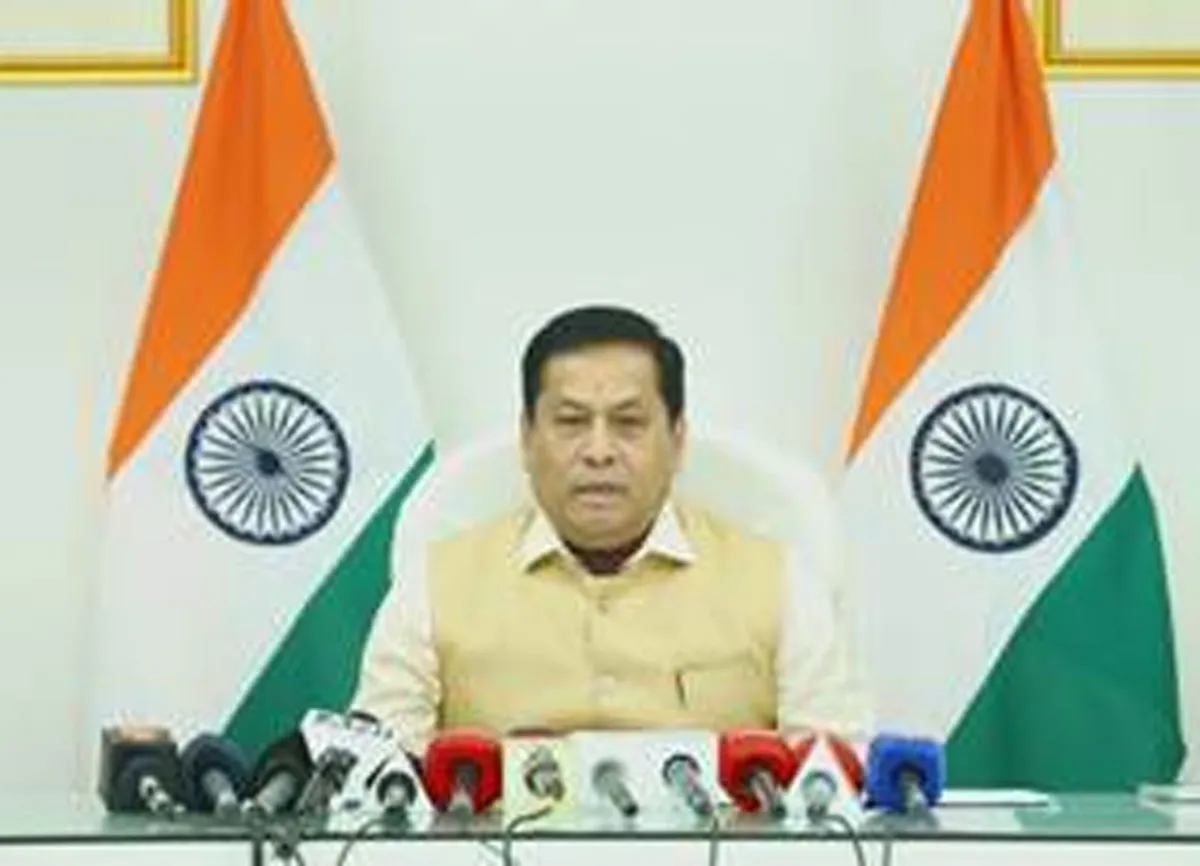
The Union Minister for Ports, Shipping and Waterways Sarbananda Sonowal has said that the past decade has marked a major turning point for the Northeast, describing the Prime Minister as the architect of a “new and resurgent” region. He noted that the Northeast, once marked by decades of underinvestment, has now become a key driver of national growth, connectivity and cultural revival.

Sonowal said the region has moved from the margins of policymaking into the mainstream of national priorities, supported by extensive infrastructure expansion, economic reforms and sustained peace-building measures. He highlighted the completion of major gauge conversion works, connecting Arunachal Pradesh, Tripura, Manipur and Mizoram to the broad-gauge network for the first time. Key achievements include the Bogibeel rail-cum-road bridge and the Bhairabi–Sairang link commissioned in June 2025. Capital connectivity rail projects for Nagaland, Manipur, Sikkim and Meghalaya are also progressing.

More than 11,000 km of national and strategic highways have been taken up over the past decade, along with improved road access to Kohima, Itanagar and Gangtok. Air connectivity has expanded from nine airports in 2014 to 19 today, supported by greenfield airports at Pakyong and Hollongi and upgraded terminals at Tezu, Rupsi and Agartala. Heliports and water aerodromes have further extended access to remote areas.

Sonowal said investment has surged, citing India’s first bamboo-based ethanol plant at Numaligarh, the Rs 22,594 crore Numaligarh Refinery expansion and the Rs 27,000 crore semiconductor assembly and test facility at Jagiroad. He added that the Northeast now leads India’s organic value chain, supported by deregulation of the bamboo sector and strengthened farmer-producer organisations.

Peace accords with Bodo, Karbi, Bru and other groups, along with a 75 per cent reduction in areas under AFSPA since 2014, have contributed to greater regional stability. Sonowal said the region is also witnessing a cultural revival, with national recognition for figures such as Bhupen Hazarika and the UNESCO inscription of Assam’s Maidams.

Aligned with the Act East Policy, the Northeast is emerging as a logistics and cultural gateway to Southeast Asia through improved border infrastructure and multimodal transport links. Sonowal said this transformation reflects the Prime Minister’s sustained engagement with the region, describing the progress as part of a broader resurgence across the country.

The Union Minister for Ports, Shipping and Waterways Sarbananda Sonowal has said that the past decade has marked a major turning point for the Northeast, describing the Prime Minister as the architect of a “new and resurgent” region. He noted that the Northeast, once marked by decades of underinvestment, has now become a key driver of national growth, connectivity and cultural revival. Sonowal said the region has moved from the margins of policymaking into the mainstream of national priorities, supported by extensive infrastructure expansion, economic reforms and sustained peace-building measures. He highlighted the completion of major gauge conversion works, connecting Arunachal Pradesh, Tripura, Manipur and Mizoram to the broad-gauge network for the first time. Key achievements include the Bogibeel rail-cum-road bridge and the Bhairabi–Sairang link commissioned in June 2025. Capital connectivity rail projects for Nagaland, Manipur, Sikkim and Meghalaya are also progressing. More than 11,000 km of national and strategic highways have been taken up over the past decade, along with improved road access to Kohima, Itanagar and Gangtok. Air connectivity has expanded from nine airports in 2014 to 19 today, supported by greenfield airports at Pakyong and Hollongi and upgraded terminals at Tezu, Rupsi and Agartala. Heliports and water aerodromes have further extended access to remote areas. Sonowal said investment has surged, citing India’s first bamboo-based ethanol plant at Numaligarh, the Rs 22,594 crore Numaligarh Refinery expansion and the Rs 27,000 crore semiconductor assembly and test facility at Jagiroad. He added that the Northeast now leads India’s organic value chain, supported by deregulation of the bamboo sector and strengthened farmer-producer organisations. Peace accords with Bodo, Karbi, Bru and other groups, along with a 75 per cent reduction in areas under AFSPA since 2014, have contributed to greater regional stability. Sonowal said the region is also witnessing a cultural revival, with national recognition for figures such as Bhupen Hazarika and the UNESCO inscription of Assam’s Maidams. Aligned with the Act East Policy, the Northeast is emerging as a logistics and cultural gateway to Southeast Asia through improved border infrastructure and multimodal transport links. Sonowal said this transformation reflects the Prime Minister’s sustained engagement with the region, describing the progress as part of a broader resurgence across the country.

Next Story
Technology

AI-Enabled Workflows Lift Profitability and Productivity

Organisations modernising frontline workflows with artificial intelligence, automation and real-time data are reporting stronger financial performance, higher productivity and improved employee engagement, according to a global study by Zebra Technologies and Oxford Economics.The research covered 1,000 senior leaders across retail, manufacturing, transportation and logistics in the US, Mexico, the UK, Germany, India, Japan, Australia and New Zealand.In transportation and logistics, 54 per cent of companies that improved picking and packing operations reported faster operational performance, wh..

Next Story
Real Estate

India Leads Global AI Readiness but Implementation Lags

Indian companies lead global averages across all eight artificial intelligence readiness indicators tracked by JLL, but only 19 per cent have started making changes to their workplaces, according to the JLL 2026 Future of Work Survey.The study found that 77 per cent of Indian business leaders expect AI to change their office requirements, creating a 58-percentage-point gap between awareness and implementation. The survey covered more than 2,200 CEOs, CFOs and real estate leaders across 21 countries during the first quarter of 2026.Despite concerns over automation, 58 per cent of Indian leaders..

Next Story
Equipment

Three WOLFF Cranes Build Riyadh Cable-Stayed Bridges

Three WOLFF 180 B luffing jib cranes are supporting the construction of two cable-stayed bridges alongside the existing Wadi Laban Bridge in Riyadh, Saudi Arabia. The project is being developed for the Royal Commission for Riyadh City and executed by the ICRC joint venture comprising IC Ictas and Al Rashid Trading & Contracting Company.The cranes are handling lifting operations including formwork, reinforcement, concrete placement, work platforms, surveying equipment and other construction materials. Each crane is fitted with a 40 m jib, reaches a hook height of 157 m and offers a maximum ..

Advertisement

Subscribe to Our Newsletter

Get daily newsletters around different themes from Construction world.

STAY CONNECTED

Advertisement

Advertisement

Advertisement