Centre Rolls Out Rs 72.95 Billion MSME Export Finance Push
ECONOMY & POLICY

Centre Rolls Out Rs 72.95 Billion MSME Export Finance Push

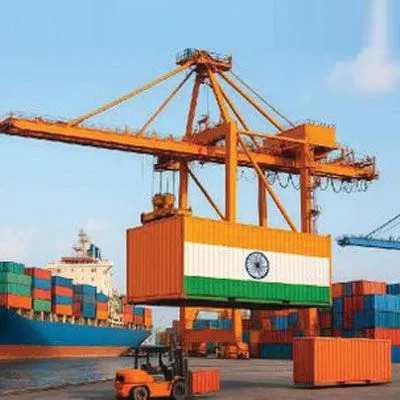
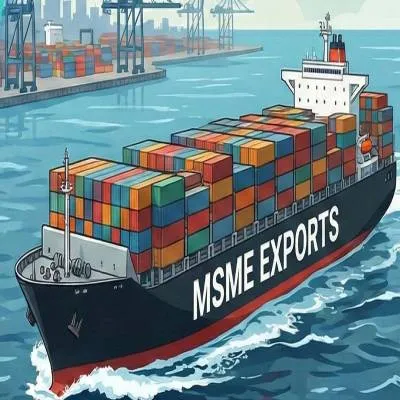
The central government has launched export finance support schemes worth Rs 72.95 billion to improve access to trade credit for micro, small and medium exporters over the six-year period from FY26 to FY31, officials said. The measures form part of the Export Promotion Mission approved by the Union Cabinet in November 2025.

A key pillar of the initiative is the Interest Subvention for Pre- and Post-Shipment Rupee Export Credit scheme, with an outlay of about Rs 51.81 billion over six years. The scheme is designed to help MSME exporters access rupee-denominated working capital at rates below prevailing market interest levels. An initial provision will also be used to clear arrears of around Rs 8.3 billion.

Under the scheme, a base interest subvention of 2.75 per cent has been announced, with additional incentives proposed for exports to under-represented or emerging markets, subject to operational readiness. The annual benefit has been capped at Rs 5 million per exporter, and the scheme will cover around 75 per cent of India’s tariff lines. Operational guidelines will be issued by the Reserve Bank of India and the Directorate General of Foreign Trade.

The government has also unveiled a collateral support scheme for export credit with an outlay of Rs 21.14 billion. The scheme aims to provide credit guarantee support for export-linked working capital loans to MSMEs, addressing collateral constraints and encouraging banks to increase lending.

Under this framework, exporters can access collateral guarantees of up to Rs 100 million per firm. Guarantee coverage will extend up to 85 per cent for micro and small exporters and up to 65 per cent for medium enterprises. Detailed guidelines will be notified by the Credit Guarantee Fund Trust for Micro and Small Enterprises, beginning with a pilot phase before wider rollout.

The export finance schemes represent the second major component of the government’s broader export strategy. They follow the launch of the Rs 45.31 billion Market Access Support scheme on 31 December 2025, which focuses on helping exporters enter new international markets and diversify product offerings.

Together, the measures are intended to address persistent trade finance challenges faced by MSME exporters, particularly amid ongoing global economic uncertainty.

The central government has launched export finance support schemes worth Rs 72.95 billion to improve access to trade credit for micro, small and medium exporters over the six-year period from FY26 to FY31, officials said. The measures form part of the Export Promotion Mission approved by the Union Cabinet in November 2025. A key pillar of the initiative is the Interest Subvention for Pre- and Post-Shipment Rupee Export Credit scheme, with an outlay of about Rs 51.81 billion over six years. The scheme is designed to help MSME exporters access rupee-denominated working capital at rates below prevailing market interest levels. An initial provision will also be used to clear arrears of around Rs 8.3 billion. Under the scheme, a base interest subvention of 2.75 per cent has been announced, with additional incentives proposed for exports to under-represented or emerging markets, subject to operational readiness. The annual benefit has been capped at Rs 5 million per exporter, and the scheme will cover around 75 per cent of India’s tariff lines. Operational guidelines will be issued by the Reserve Bank of India and the Directorate General of Foreign Trade. The government has also unveiled a collateral support scheme for export credit with an outlay of Rs 21.14 billion. The scheme aims to provide credit guarantee support for export-linked working capital loans to MSMEs, addressing collateral constraints and encouraging banks to increase lending. Under this framework, exporters can access collateral guarantees of up to Rs 100 million per firm. Guarantee coverage will extend up to 85 per cent for micro and small exporters and up to 65 per cent for medium enterprises. Detailed guidelines will be notified by the Credit Guarantee Fund Trust for Micro and Small Enterprises, beginning with a pilot phase before wider rollout. The export finance schemes represent the second major component of the government’s broader export strategy. They follow the launch of the Rs 45.31 billion Market Access Support scheme on 31 December 2025, which focuses on helping exporters enter new international markets and diversify product offerings. Together, the measures are intended to address persistent trade finance challenges faced by MSME exporters, particularly amid ongoing global economic uncertainty.

Related Stories

Gold Stories

Next Story
Infrastructure Urban

KONE Opens India's First Digital Experience Centre in Pune

KONE, a global elevator and escalator manufacturer, has inaugurated its first Digital Experience Centre (DEC) in India, located in Pune. The facility aims to showcase how artificial intelligence (AI), connectivity and data-driven technologies can enhance customer experiences and improve building operations.The centre was inaugurated by Jussi Herlin, Executive Vice Chair, KONE Corporation; Philippe Delorme, President and CEO, KONE; and Nandan Nilekani, Co-founder and Chairman of the Board, Infosys.Designed as an interactive customer environment, the facility demonstrates digital solutions cover..

Next Story
Infrastructure Urban

CII GreenCo Launches Circularity Guidelines for Indian Industry

The Confederation of Indian Industry (CII) GreenCo Council has launched the CII GreenCo Circularity Guidelines – Pilot Version at the 17th CII GreenCo Waste & Resource Management Summit 2026 in Chennai. The initiative aims to strengthen resource efficiency, waste reduction and circular economy practices across Indian manufacturing and process industries.The guidelines introduce a structured framework with circularity indices covering raw materials, consumables, packaging and other resource inputs. These indicators will help industries assess existing practices, identify opportunities to ..

Next Story
Infrastructure Energy

Global Electronics Association Launches IPC-1783-CO2E Standard

The Global Electronics Association has introduced IPC-1783-CO2E, a new international standard aimed at improving consistency, transparency and comparability in product carbon footprint reporting across the electronics manufacturing industry.The standard, titled International Standard for Data Collection and Reporting of CO2 Equivalent (CO2e) Emissions for the Electronics Manufacturing Supply Chain, provides industry-specific guidance for collecting, estimating and reporting carbon emissions data.With increasing regulatory requirements and customer expectations, electronics manufacturers face c..

Advertisement

Subscribe to Our Newsletter

Get daily newsletters around different themes from Construction world.

STAY CONNECTED

Advertisement

SPECIAL OFFER
QR Code