



+
CESL Concludes Tender For 10,900 Electric Buses
ECONOMY & POLICY

CESL Concludes Tender For 10,900 Electric Buses

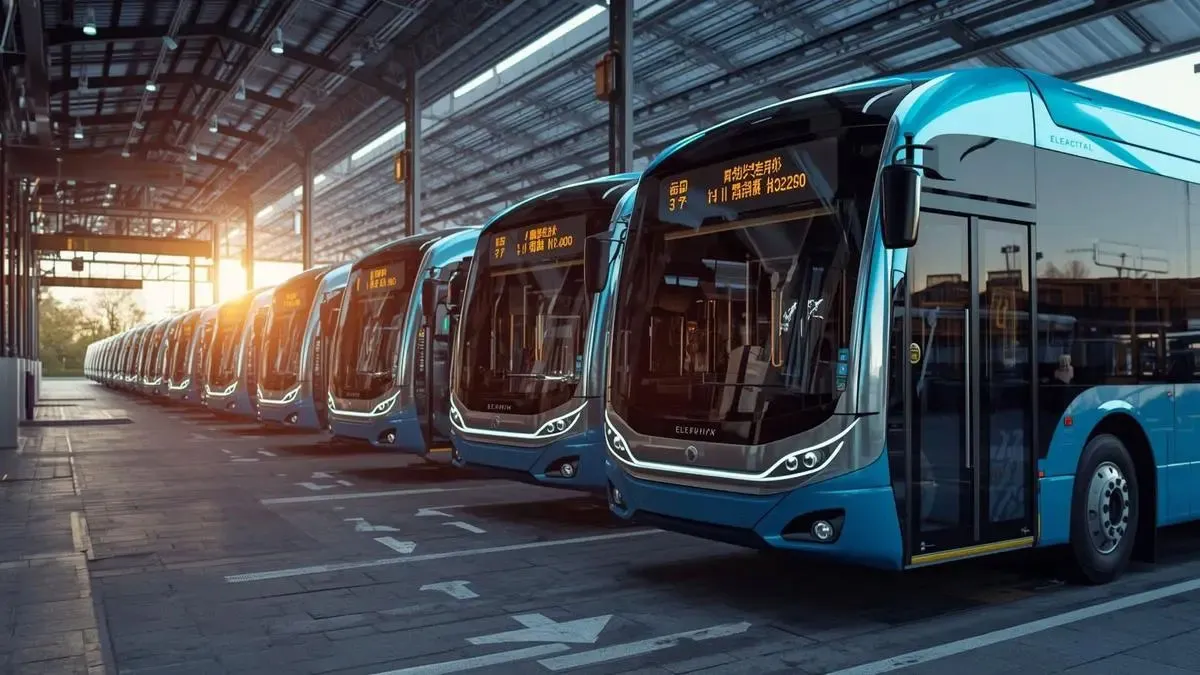
State-owned Convergence Energy Services Limited (CESL) on Wednesday said it has successfully concluded the tendering process for the procurement of 10,900 electric buses under the PM E-Drive Scheme, marking one of the largest such acquisitions in India’s public transport sector.

The mega tender witnessed strong industry participation, with 16 bidders taking part, reflecting rising interest from electric bus manufacturers and operators. CESL, a wholly owned subsidiary of Energy Efficiency Services Limited (EESL) and the Government of India’s nominated agency for aggregation and procurement of electric buses, said the competitive response highlights the growing maturity of India’s electric mobility ecosystem.

Financial bids of 14 technically qualified bidders were opened, with discovered rates described as attractive and lower than initial estimates. These rates will be shared with participating cities, following which the respective city transport undertakings will issue letters of award and enter into concession agreements directly with the selected operators.

The procurement has been carried out under CESL’s aggregation-based gross cost contract (GCC) model, covering multiple cities and Union Territories, including Delhi, Bengaluru, Hyderabad, Ahmedabad and Surat. Under the indicative city-wise allocation, Bengaluru is expected to receive around 4,500 buses, Delhi about 2,800 buses and Hyderabad approximately 2,000 buses, while Ahmedabad and Surat together are planned to induct around 1,600 buses under the programme.

Under the GCC framework, private operators will be responsible for the ownership, operation and maintenance of the electric buses, as well as the development of charging infrastructure and energy management systems at depots provided by city authorities. City transport agencies will, in turn, pay a fixed per-kilometre fee, ensuring affordability and long-term financial sustainability.

The deployment of 10,900 electric buses is expected to significantly reduce carbon emissions and urban air pollution, while improving the quality, reliability and scale of public transport services across major Indian cities. CESL said the milestone reinforces its role as a key enabler of India’s clean mobility transition through transparent procurement, competitive aggregation and large-scale implementation of electric public transport solutions.

State-owned Convergence Energy Services Limited (CESL) on Wednesday said it has successfully concluded the tendering process for the procurement of 10,900 electric buses under the PM E-Drive Scheme, marking one of the largest such acquisitions in India’s public transport sector. The mega tender witnessed strong industry participation, with 16 bidders taking part, reflecting rising interest from electric bus manufacturers and operators. CESL, a wholly owned subsidiary of Energy Efficiency Services Limited (EESL) and the Government of India’s nominated agency for aggregation and procurement of electric buses, said the competitive response highlights the growing maturity of India’s electric mobility ecosystem. Financial bids of 14 technically qualified bidders were opened, with discovered rates described as attractive and lower than initial estimates. These rates will be shared with participating cities, following which the respective city transport undertakings will issue letters of award and enter into concession agreements directly with the selected operators. The procurement has been carried out under CESL’s aggregation-based gross cost contract (GCC) model, covering multiple cities and Union Territories, including Delhi, Bengaluru, Hyderabad, Ahmedabad and Surat. Under the indicative city-wise allocation, Bengaluru is expected to receive around 4,500 buses, Delhi about 2,800 buses and Hyderabad approximately 2,000 buses, while Ahmedabad and Surat together are planned to induct around 1,600 buses under the programme. Under the GCC framework, private operators will be responsible for the ownership, operation and maintenance of the electric buses, as well as the development of charging infrastructure and energy management systems at depots provided by city authorities. City transport agencies will, in turn, pay a fixed per-kilometre fee, ensuring affordability and long-term financial sustainability. The deployment of 10,900 electric buses is expected to significantly reduce carbon emissions and urban air pollution, while improving the quality, reliability and scale of public transport services across major Indian cities. CESL said the milestone reinforces its role as a key enabler of India’s clean mobility transition through transparent procurement, competitive aggregation and large-scale implementation of electric public transport solutions.

Next Story
Infrastructure Transport

Second Mountain Tunnel Breakthrough in Palghar Advances High Speed Rail

The Mumbai-Ahmedabad high speed rail (MAHSR) project reached a milestone with the breakthrough of a mountain tunnel in Palghar, Maharashtra. Mountain tunnel MT-six measures 454 metres long and 14.4 metres wide and will accommodate up and down tracks. The breakthrough follows MT-five near Saphale on second January 2026 and the MT-six excavation was completed from both ends using the New Austrian Tunnelling Method. The ministry reported that the tunnelling was completed within 12 months. The New Austrian Tunnelling Method is favoured for its flexibility in complex geology and irregular tunnel s..

Next Story
Infrastructure Transport

Modi Government Pushes Atmanirbhar Container Drive With BCSL MoU

The Union Government advanced a plan to create an integrated, domestically anchored container ecosystem with the signing of a Memorandum of Understanding to establish the Bharat Container Shipping Line (BCSL). The MoU was signed by key agencies including the Shipping Corporation of India and Container Corporation of India alongside major port authorities and Sagarmala Finance Corporation Limited under the Ministry of Ports, Shipping and Waterways, in the presence of senior ministers. The initiative aligns with the Container Manufacturing Assistance Scheme announced in the Union Budget 2026–2..

Next Story
Infrastructure Urban

Ministry Reports Gains In Mobility For Marginalised Communities

The Ministry of Social Justice and Empowerment is implementing skill development, education and rehabilitation schemes to promote socio-economic mobility and sustainable livelihoods for marginalised and disadvantaged communities across the country. Programmes target Scheduled Castes, Other Backward Classes, Economically Weaker Sections, De-notified Tribes and Safai Karamcharis through specialised implementing corporations and empanelled training institutes. Pradhan Mantri Dakshata Aur Kushalta Sampann Hitgrahi Yojana, or PM-DAKSH, provided skill training and placement support through the Nati..

Advertisement

Subscribe to Our Newsletter

Get daily newsletters around different themes from Construction world.

STAY CONNECTED

Advertisement

Advertisement

Advertisement

Open In App














