Chandigarh Plans to Integrate Urban Infrastructure With Tourism
ECONOMY & POLICY

Chandigarh Plans to Integrate Urban Infrastructure With Tourism

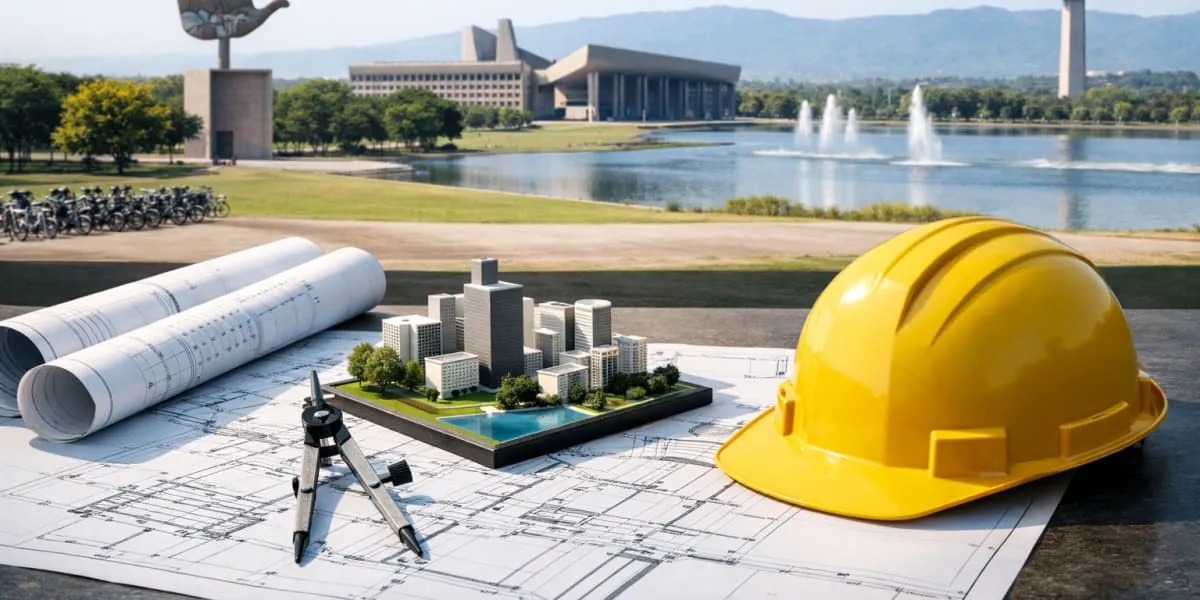
The Union Territory Administration (UT Administration) has decided to integrate the city's urban infrastructure with tourism development to make Chandigarh a more prominent tourist hub. The decision emerged during a review of ongoing and proposed projects attended by officials of the Tourism Department, Chandigarh Industrial and Tourism Development Corporation (CITCO), the Culture Department and other concerned agencies. Union Territory Tourism Secretary Syed Abid Rasheed Shah, who recently joined from Jammu and Kashmir, directed officials to develop models that link the city's well-planned urban framework and modern infrastructure network with tourism promotion so as to further strengthen the city's unique identity.

Detailed discussions covered the revitalisation of Sector 17, upgrading of public amenities, installation of smart signage, improved parking management and the expansion of cultural activities to draw visitors throughout the year. Officials reviewed plans to strengthen visitor facilities at key attractions including the Capitol Complex, the Government Museum, Sukhna Lake and the Rock Garden and considered measures to improve accessibility, wayfinding and crowd management. Emphasis was placed on green and sustainable development based projects and urban beautification initiatives intended to enhance the city's appeal to domestic and international visitors.

The Sector 17 plaza has already undergone a visible transformation through a series of revitalisation projects that included the creation of a floor fountain, an amphitheatre, ambient lighting and projector mapping. These interventions were designed to preserve the precinct's heritage while integrating modern amenities and aesthetics and to respond to evolving visitor expectations. The Administration signalled an intent to develop Sector 17 as a thriving hub for cultural events, art exhibitions and entertainment that can support local artists, vendors and cultural organisations.

Officials have been asked to prepare detailed models and implementation plans with clear timelines and resource estimates. Collaboration with CITCO and other agencies will be prioritised for efficient delivery.

The Union Territory Administration (UT Administration) has decided to integrate the city's urban infrastructure with tourism development to make Chandigarh a more prominent tourist hub. The decision emerged during a review of ongoing and proposed projects attended by officials of the Tourism Department, Chandigarh Industrial and Tourism Development Corporation (CITCO), the Culture Department and other concerned agencies. Union Territory Tourism Secretary Syed Abid Rasheed Shah, who recently joined from Jammu and Kashmir, directed officials to develop models that link the city's well-planned urban framework and modern infrastructure network with tourism promotion so as to further strengthen the city's unique identity. Detailed discussions covered the revitalisation of Sector 17, upgrading of public amenities, installation of smart signage, improved parking management and the expansion of cultural activities to draw visitors throughout the year. Officials reviewed plans to strengthen visitor facilities at key attractions including the Capitol Complex, the Government Museum, Sukhna Lake and the Rock Garden and considered measures to improve accessibility, wayfinding and crowd management. Emphasis was placed on green and sustainable development based projects and urban beautification initiatives intended to enhance the city's appeal to domestic and international visitors. The Sector 17 plaza has already undergone a visible transformation through a series of revitalisation projects that included the creation of a floor fountain, an amphitheatre, ambient lighting and projector mapping. These interventions were designed to preserve the precinct's heritage while integrating modern amenities and aesthetics and to respond to evolving visitor expectations. The Administration signalled an intent to develop Sector 17 as a thriving hub for cultural events, art exhibitions and entertainment that can support local artists, vendors and cultural organisations. Officials have been asked to prepare detailed models and implementation plans with clear timelines and resource estimates. Collaboration with CITCO and other agencies will be prioritised for efficient delivery.

Next Story
Real Estate

AI: The New Recruit

From getting ideas to evaluating designs, presenting concepts to clients and tracking projects, artificial intelligence (AI) is helping architects work better and faster.“AI allows architects to spend more time doing what only they can do: think critically, synthesise complexity and design with intent,” says Dikshu C Kukreja, Managing Principal, CP Kukreja Architects. “Every minute reclaimed from repetitive processes can be invested in creativity, contextual understanding, interdisciplinary collaboration and innovation – the qualities that define meaningful architecture.”To read the ..

Next Story
Real Estate

Redevelopment 2.0

In 2017, Mumbai identified 160,000 ageing buildings due for structural audit. Close to half of these were in the Western Suburbs. Redeveloping the oldest and structurally weakest of these would help unlock new housing, much needed given the city’s growing population density and constant developed area of 437.7 sq km. At 30,600 people per sq km in 2024, Mumbai’s density was almost thrice that of Gurugram, and 60 per cent higher than Bengaluru’s.Essentially, Mumbai’s realty market has demand. It has capital. It has realty development potential.Fast forward to 2026. Mumbai has 1,094 regis..

Next Story
Technology

Cost intelligence will become a strategic contributor to project success

As India's construction industry accelerates its digital transformation, integrated platforms, AI and connected data are becoming essential to improving cost certainty, project efficiency and sustainability. Ravi Kumar, Sales Director – India, RIB Software India, shares how digital workflows are reshaping project planning, commercial management and decision-making across the construction value chain.India's construction sector is embracing digital technologies at an unprecedented pace. From your perspective, what are the biggest shifts driving this transformation and how is RIB Software enab..

Advertisement

Subscribe to Our Newsletter

Get daily newsletters around different themes from Construction world.

STAY CONNECTED

Advertisement

Advertisement

Advertisement