Chandigarh Solid Waste Management Found Satisfactory by Panel
WATER & WASTE

Chandigarh Solid Waste Management Found Satisfactory by Panel

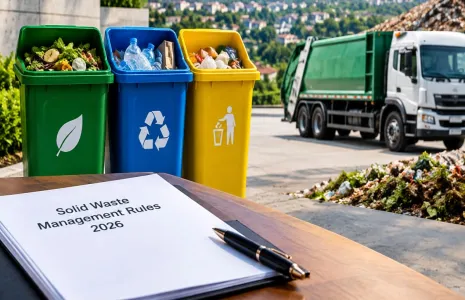
A site inspection committee constituted by the district collector reported satisfaction with the city’s solid waste management (SWM) infrastructure after an inspection on Saturday. The panel, formed following directions of the Supreme Court, examined operations across municipal sites and found major facilities functioning efficiently. The assessment noted compliance with the Solid Waste Management Rules, 2026, and that scientific treatment and disposal processes were in place. The committee identified the Chandigarh Municipal Corporation (MC) as having oversight of waste processing activities.

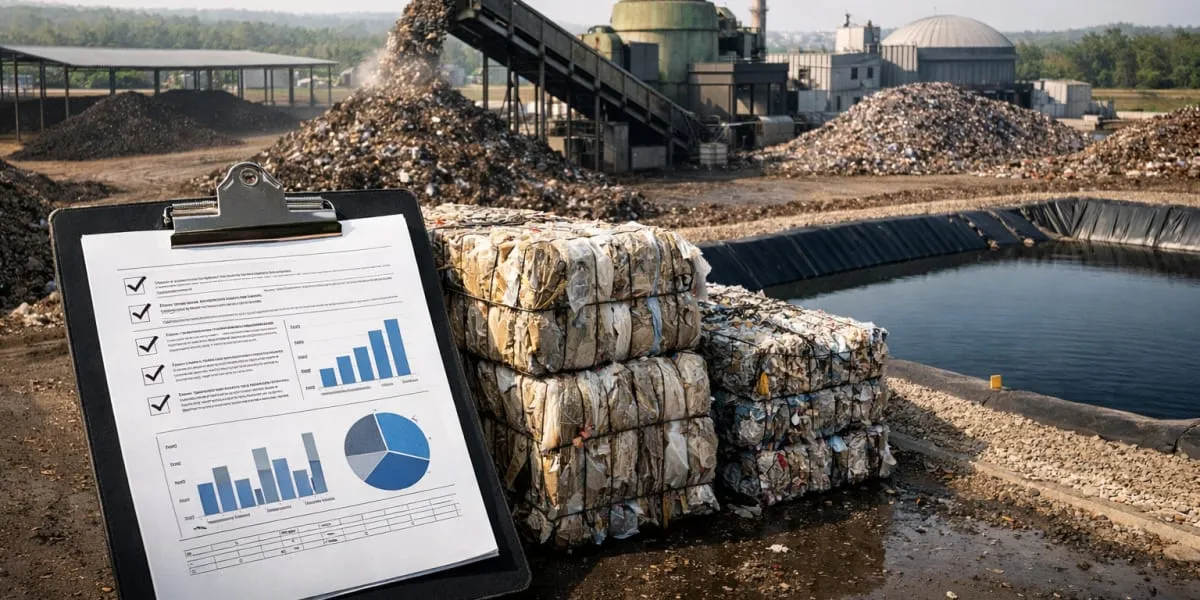
Inspectors reviewed material recovery facilities (MRFs), dry and wet waste processing plants, the horticulture waste processing plant, the bio-methanation plant, the construction and demolition waste plant, the sanitary landfill and the Dadumajra legacy site. The panel observed that equipment and infrastructure were adequate for scientific processing and for segregation of four streams at source. Waste collection and transportation through covered vehicles was reported as satisfactory and consistent across collection zones. The committee also recorded the operational status of key processing lines and transfer mechanisms.

The committee highlighted progress in bio-remediation at the Dadumajra legacy site where decades-old accumulated material has undergone scientific treatment to reduce environmental risk. It concluded that principal facilities were operating in accordance with regulatory standards and that the framework for municipal waste handling was robust. The assessment recommended continued monitoring and regular maintenance to preserve performance and to address capacity constraints. The panel urged that reporting and maintenance schedules be sustained to ensure long-term efficiency.

The inspection formed part of follow-up measures after the Supreme Court’s directions and is intended to reinforce accountability and transparency in waste management operations. The committee signalled that sustained attention to operations and infrastructure would be necessary as waste streams evolve and as the city expands collection coverage. The MC was advised to continue investing in upkeep and to maintain the four-stream segregation system to support scientific processing and safe disposal. Continued oversight will be essential to consolidate the gains reported by the committee.

A site inspection committee constituted by the district collector reported satisfaction with the city’s solid waste management (SWM) infrastructure after an inspection on Saturday. The panel, formed following directions of the Supreme Court, examined operations across municipal sites and found major facilities functioning efficiently. The assessment noted compliance with the Solid Waste Management Rules, 2026, and that scientific treatment and disposal processes were in place. The committee identified the Chandigarh Municipal Corporation (MC) as having oversight of waste processing activities. Inspectors reviewed material recovery facilities (MRFs), dry and wet waste processing plants, the horticulture waste processing plant, the bio-methanation plant, the construction and demolition waste plant, the sanitary landfill and the Dadumajra legacy site. The panel observed that equipment and infrastructure were adequate for scientific processing and for segregation of four streams at source. Waste collection and transportation through covered vehicles was reported as satisfactory and consistent across collection zones. The committee also recorded the operational status of key processing lines and transfer mechanisms. The committee highlighted progress in bio-remediation at the Dadumajra legacy site where decades-old accumulated material has undergone scientific treatment to reduce environmental risk. It concluded that principal facilities were operating in accordance with regulatory standards and that the framework for municipal waste handling was robust. The assessment recommended continued monitoring and regular maintenance to preserve performance and to address capacity constraints. The panel urged that reporting and maintenance schedules be sustained to ensure long-term efficiency. The inspection formed part of follow-up measures after the Supreme Court’s directions and is intended to reinforce accountability and transparency in waste management operations. The committee signalled that sustained attention to operations and infrastructure would be necessary as waste streams evolve and as the city expands collection coverage. The MC was advised to continue investing in upkeep and to maintain the four-stream segregation system to support scientific processing and safe disposal. Continued oversight will be essential to consolidate the gains reported by the committee.

Next Story
Infrastructure Urban

Centre Clears Power Distribution Upgrade for Uttar Pradesh

The Central Government has approved power distribution projects worth Rs 407.39 billion for Uttar Pradesh under the Revamped Distribution Sector Scheme (RDSS). The investment will be used to modernise the state's electricity distribution infrastructure and strengthen network capacity across urban and rural areas. The package targets one of the country's largest distribution networks as the state experiences rapid urbanisation and rising electricity consumption. Planned interventions include the strengthening of distribution lines, modernisation of substations, replacement of ageing electrical ..

Next Story
Infrastructure Energy

India Data Centres To Consume 191 TWh By 2040 Driving Renewables

A Wood Mackenzie report says India's operational data centre capacity is projected to increase more than fivefold to 12 gigawatt (GW) by 2030 from 2.2 GW in 2025 as artificial intelligence (AI) and cloud computing drive demand. It projects electricity consumption to rise from 10 terawatt-hour (TWh) in 2025 to 191 TWh by 2040. The study forecasts a compound annual growth rate of around 40 per cent and notes AI-dedicated capacity will surge nearly 24-fold from 275 megawatt (MW) in 2025 to 6,546 MW by 2030. The report places India's digital economy at Rs 32 trillion (tn) in 2025 and says it contr..

Next Story
Infrastructure Transport

Hydrogen Train Completes 1,200 Kilometres Of Trials

India's first hydrogen train was flagged off between Jind and Sonipat on July 17 and has travelled over 1,200 kilometres in trials, saving diesel consumption of more than 3,200 litres, a Railway Ministry press release said. The deployment marks the introduction of a zero-emission fuel cell train into route testing and represents a milestone in domestic rail innovation. The train generates electricity onboard through a chemical reaction between hydrogen and oxygen, producing electricity to propel the vehicle while emitting only water vapour as a by-product. There is no smoke and no tailpipe car..

Advertisement

Subscribe to Our Newsletter

Get daily newsletters around different themes from Construction world.

STAY CONNECTED

Advertisement

Advertisement

Advertisement