Chhattisgarh Expands Industry Beyond Mining And Steel
ECONOMY & POLICY

Chhattisgarh Expands Industry Beyond Mining And Steel

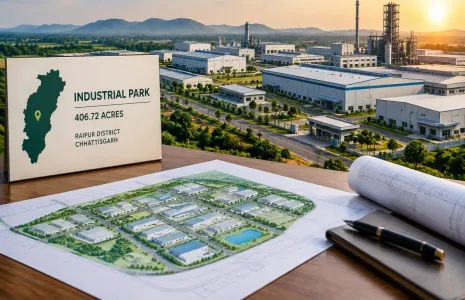
Chhattisgarh has moved to broaden its industrial base beyond mining and steel, seeking to convert investor trust into a durable industrial edge. The state has emphasised speed, predictability and operational freedom in its investment framework and has focused outreach on electronics, semiconductors, logistics, pharmaceuticals, textiles, food processing and advanced manufacturing. Over the past 18 months the strategy has yielded substantial results, with the state securing Rs eight trillion (tn) in new investment proposals.

The government has implemented Jan Vishwas 2.0 as a centrepiece of its reforms, rationalising and decriminalising 279 minor provisions across sectors to reduce compliance burdens. Officials framed the approach as trust based governance intended to facilitate enterprise rather than intimidate it, and said the changes improved clarity and reduced friction for investors. The reform was presented as a key driver of the recent investment uptick.

Land and procedural reforms were highlighted as practical enablers. The state enabled automatic land mutation immediately upon registration to bypass departmental silos and introduced an online fee based mechanism to streamline industrial land diversion with guaranteed approvals within 15 days. Industry secretary level officials said these measures shortened timelines and increased predictability, supporting faster project mobilisation.

Senior officials linked the reforms to changing investor perceptions and cited corporate commitments as evidence. Polymatech Electronics chose the state for a Rs 100 bn semiconductor manufacturing special economic zone, with company executives noting that proactive facilitation and a strong ease of doing business environment eased decision making. Another private investor pointed to the administration's responsiveness and speed of resolution as factors in its choice.

Officials said the state will continue to pursue sectoral diversification and improve institutional processes to convert proposals into operational projects. The government intends to leverage these reforms to position Chhattisgarh as a competitive destination for high technology manufacturing and advanced value chains, while maintaining focus on transparent procedures and timely approvals to sustain investor confidence.

Chhattisgarh has moved to broaden its industrial base beyond mining and steel, seeking to convert investor trust into a durable industrial edge. The state has emphasised speed, predictability and operational freedom in its investment framework and has focused outreach on electronics, semiconductors, logistics, pharmaceuticals, textiles, food processing and advanced manufacturing. Over the past 18 months the strategy has yielded substantial results, with the state securing Rs eight trillion (tn) in new investment proposals. The government has implemented Jan Vishwas 2.0 as a centrepiece of its reforms, rationalising and decriminalising 279 minor provisions across sectors to reduce compliance burdens. Officials framed the approach as trust based governance intended to facilitate enterprise rather than intimidate it, and said the changes improved clarity and reduced friction for investors. The reform was presented as a key driver of the recent investment uptick. Land and procedural reforms were highlighted as practical enablers. The state enabled automatic land mutation immediately upon registration to bypass departmental silos and introduced an online fee based mechanism to streamline industrial land diversion with guaranteed approvals within 15 days. Industry secretary level officials said these measures shortened timelines and increased predictability, supporting faster project mobilisation. Senior officials linked the reforms to changing investor perceptions and cited corporate commitments as evidence. Polymatech Electronics chose the state for a Rs 100 bn semiconductor manufacturing special economic zone, with company executives noting that proactive facilitation and a strong ease of doing business environment eased decision making. Another private investor pointed to the administration's responsiveness and speed of resolution as factors in its choice. Officials said the state will continue to pursue sectoral diversification and improve institutional processes to convert proposals into operational projects. The government intends to leverage these reforms to position Chhattisgarh as a competitive destination for high technology manufacturing and advanced value chains, while maintaining focus on transparent procedures and timely approvals to sustain investor confidence.

Related Stories

Gold Stories

Next Story
Infrastructure Urban

KONE Opens India's First Digital Experience Centre in Pune

KONE, a global elevator and escalator manufacturer, has inaugurated its first Digital Experience Centre (DEC) in India, located in Pune. The facility aims to showcase how artificial intelligence (AI), connectivity and data-driven technologies can enhance customer experiences and improve building operations.The centre was inaugurated by Jussi Herlin, Executive Vice Chair, KONE Corporation; Philippe Delorme, President and CEO, KONE; and Nandan Nilekani, Co-founder and Chairman of the Board, Infosys.Designed as an interactive customer environment, the facility demonstrates digital solutions cover..

Next Story
Infrastructure Urban

CII GreenCo Launches Circularity Guidelines for Indian Industry

The Confederation of Indian Industry (CII) GreenCo Council has launched the CII GreenCo Circularity Guidelines – Pilot Version at the 17th CII GreenCo Waste & Resource Management Summit 2026 in Chennai. The initiative aims to strengthen resource efficiency, waste reduction and circular economy practices across Indian manufacturing and process industries.The guidelines introduce a structured framework with circularity indices covering raw materials, consumables, packaging and other resource inputs. These indicators will help industries assess existing practices, identify opportunities to ..

Next Story
Infrastructure Energy

Global Electronics Association Launches IPC-1783-CO2E Standard

The Global Electronics Association has introduced IPC-1783-CO2E, a new international standard aimed at improving consistency, transparency and comparability in product carbon footprint reporting across the electronics manufacturing industry.The standard, titled International Standard for Data Collection and Reporting of CO2 Equivalent (CO2e) Emissions for the Electronics Manufacturing Supply Chain, provides industry-specific guidance for collecting, estimating and reporting carbon emissions data.With increasing regulatory requirements and customer expectations, electronics manufacturers face c..

Advertisement

Subscribe to Our Newsletter

Get daily newsletters around different themes from Construction world.

STAY CONNECTED

Advertisement

SPECIAL OFFER
QR Code