+
Hydrogen Train Completes 1,200 Kilometres Of Trials
RAILWAYS & METRO RAIL

Hydrogen Train Completes 1,200 Kilometres Of Trials

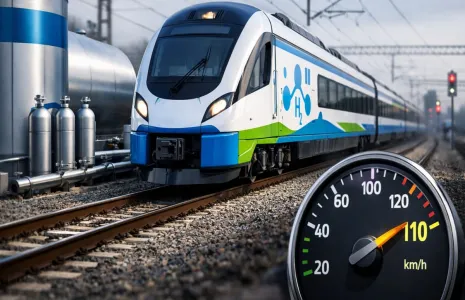
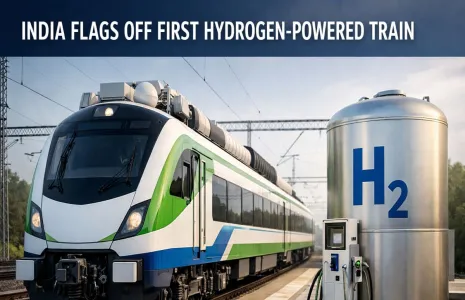
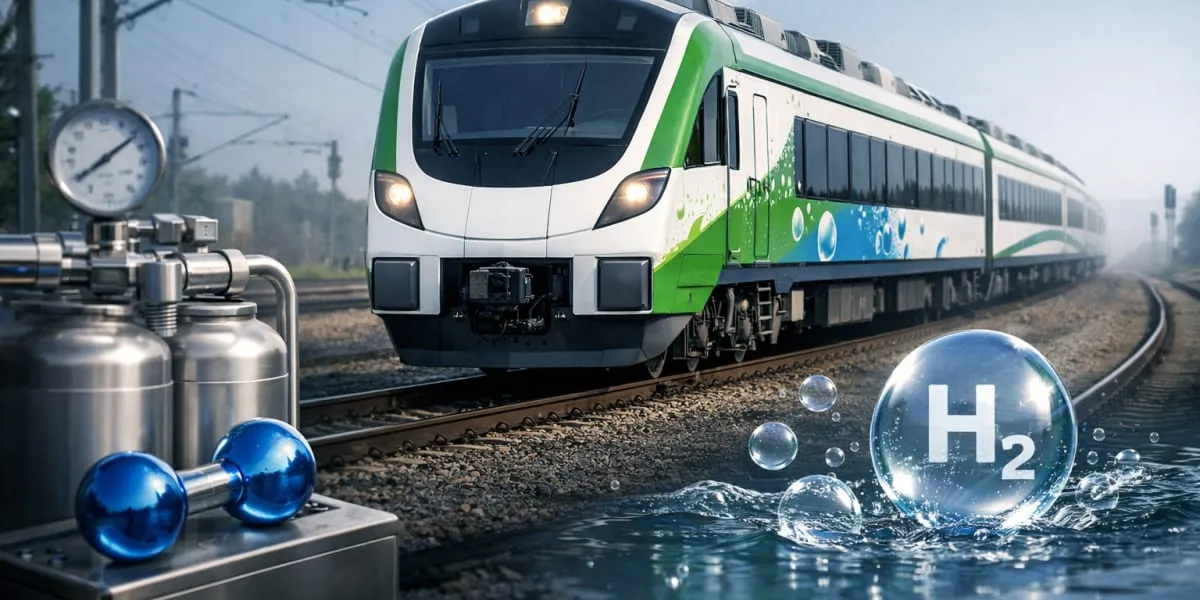
India's first hydrogen train was flagged off between Jind and Sonipat on July 17 and has travelled over 1,200 kilometres in trials, saving diesel consumption of more than 3,200 litres, a Railway Ministry press release said. The deployment marks the introduction of a zero-emission fuel cell train into route testing and represents a milestone in domestic rail innovation.

The train generates electricity onboard through a chemical reaction between hydrogen and oxygen, producing electricity to propel the vehicle while emitting only water vapour as a by-product. There is no smoke and no tailpipe carbon emissions, making it the cleanest form of rail propulsion currently available. The configuration reduces reliance on fossil fuels and supports decarbonisation objectives for rail transport.

The project is an indigenous effort led by Indian Railways and consists of a ten-coach formation with two Hydrogen Driving Power Cars delivering 2,400 kilowatt (kW) total power, supported by lithium iron phosphate batteries and hydrogen cylinders. The batteries act as energy buffers to smooth power delivery and provide redundancy during peak demand or transient conditions. Green hydrogen is stored at pressures up to 500 bar and dispensed at 350 bar, with a total storage facility of about 3,000 kg at Jind, creating the Railways' first dedicated hydrogen storage facility.

Multiple independent safety systems detect leaks, heat, flames and smoke and are backed by automatic shut-off mechanisms, continuous ventilation and mandatory international validations, according to the release. Following successful operation on the Jind–Sonipat route, trials on the Delhi route will begin soon and authorities said the programme establishes an indigenous hydrogen rail ecosystem and advances India's commitment to sustainable, zero-emission mobility. The Prime Minister flagged the train off on July 17 as part of the Atmanirbhar Bharat initiative and the Railways Minister described the launch as a landmark achievement for Indian engineering and indigenous propulsion technology.

India's first hydrogen train was flagged off between Jind and Sonipat on July 17 and has travelled over 1,200 kilometres in trials, saving diesel consumption of more than 3,200 litres, a Railway Ministry press release said. The deployment marks the introduction of a zero-emission fuel cell train into route testing and represents a milestone in domestic rail innovation. The train generates electricity onboard through a chemical reaction between hydrogen and oxygen, producing electricity to propel the vehicle while emitting only water vapour as a by-product. There is no smoke and no tailpipe carbon emissions, making it the cleanest form of rail propulsion currently available. The configuration reduces reliance on fossil fuels and supports decarbonisation objectives for rail transport. The project is an indigenous effort led by Indian Railways and consists of a ten-coach formation with two Hydrogen Driving Power Cars delivering 2,400 kilowatt (kW) total power, supported by lithium iron phosphate batteries and hydrogen cylinders. The batteries act as energy buffers to smooth power delivery and provide redundancy during peak demand or transient conditions. Green hydrogen is stored at pressures up to 500 bar and dispensed at 350 bar, with a total storage facility of about 3,000 kg at Jind, creating the Railways' first dedicated hydrogen storage facility. Multiple independent safety systems detect leaks, heat, flames and smoke and are backed by automatic shut-off mechanisms, continuous ventilation and mandatory international validations, according to the release. Following successful operation on the Jind–Sonipat route, trials on the Delhi route will begin soon and authorities said the programme establishes an indigenous hydrogen rail ecosystem and advances India's commitment to sustainable, zero-emission mobility. The Prime Minister flagged the train off on July 17 as part of the Atmanirbhar Bharat initiative and the Railways Minister described the launch as a landmark achievement for Indian engineering and indigenous propulsion technology.

Related Stories

Gold Stories

Next Story
Real Estate

The Energy-Smart Buildings

Passive design is an integral part of energy-efficient architecture. Sophisticated building systems also contribute to this end. But what role do materials play in enhancing a building’s energy-efficiency?“Material selection is one of the earliest opportunities to influence how a building performs,” says Tejbeer Singh, Principal Architect & Founder, Expressionist by Tejbeer Singh. “The objective is not simply to select materials that look appropriate but to understand how they behave within the climate and construction system.”To read the full article Click Here ..

Next Story
Infrastructure Transport

When the Lowest Bid Comes at a Cost

India's infrastructure sector is building at a scale few markets can match. New highways, expressways, metros, bridges and complex engineering projects are transforming the country's landscape. Yet, behind this rapid expansion is a growing concern within the contracting community: Can infrastructure be delivered sustainably when competition pushes prices below commercially viable levels?For Praveen Sethia, Founder & Director, Infra Advisors, who moderated the discussion, the question goes beyond the contractor's commercial interests. Contractors may be one of the two parties to a contract,..

Next Story
Real Estate

Ultra-Luxury Projects Reshape Gurugram’s Housing Market

Gurugram’s luxury housing market has expanded beyond its traditional prime locations, with corridors such as Dwarka Expressway and Golf Course Extension Road emerging as key centres for premium residential development. Larger homes, integrated developments and amenity-led communities are attracting demand from end-users and investors.A 2025 report by Sotheby’s International Realty in collaboration with CRE Matrix identified Gurugram as India’s fastest-growing ultra-luxury housing market. The city overtook Mumbai in total sales value for homes priced above Rs 10 crore, recording nearly Rs..

Advertisement

Subscribe to Our Newsletter

Get daily newsletters around different themes from Construction world.

STAY CONNECTED

Advertisement

SPECIAL OFFER
QR Code