Kolkata Biratnagar Rail Cargo To Ease Nepal India Trade
RAILWAYS & METRO RAIL

Kolkata Biratnagar Rail Cargo To Ease Nepal India Trade

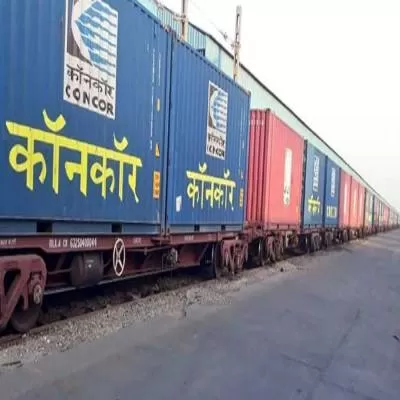
The Government of Nepal's Ministry of Foreign Affairs said the first-ever rail cargo service from Kolkata to Biratnagar will ease business between Nepal and India. It said the service began from the first of Shrawan 2083 and was launched officially on July 17, marking a milestone in Nepal's transit and trade logistics by extending direct rail access beyond Birgunj for the first time. The ministry made the remarks at a regular fortnightly press briefing in Kathmandu and identified the route as operating under the Nepal-India Transit Treaty.

The ministry explained that under the treaty goods imported from third countries may be transported through Indian territory to Nepal's border and that the new route will allow such consignments to reach Biratnagar Integrated Check Post (ICP) and Nautanwa. It indicated that the rail link is expected to reduce trade costs, provide safer and more reliable transportation and shorten import times. The ministry said delay charges, container detention charges and additional road transportation burdens borne by Nepali importers are likely to be reduced, which should lower overall trade transit costs and bolster competitiveness of Nepali industrialists.

The ministry recalled that on November four last year India's Central Board of Indirect Taxes and Customs (CBIC) amended the Electronic Cargo Tracking System regulations to expand rail cargo movement from the ports of Kolkata, Haldia and Visakhapatnam. It added that Nepal approved a letter of exchange amending the transit treaty protocol in 2023 to allow import of all types of goods, both containerised and bulk, by rail to the Biratnagar ICP and to Nautanwa. Previously, only four commodities could be transported by rail from third countries and movements had been restricted to Birgunj.

The ministry cited Department of Customs data showing Nepal exported goods worth Rs 224.68 billion (bn) to India in the previous fiscal year while imports from India totalled Rs 1.07 trillion (tn), creating a trade deficit of Rs 846.51 bn. It noted that Kolkata remains Nepal's nearest seaport and that India continues to provide transit facilities for almost all of Nepal's third-country trade. The ministry emphasised that Nepal's overseas trade is primarily routed through the ports of Kolkata, Haldia and Visakhapatnam and that trade with Bhutan and Bangladesh also passes through Indian territory.

The Government of Nepal's Ministry of Foreign Affairs said the first-ever rail cargo service from Kolkata to Biratnagar will ease business between Nepal and India. It said the service began from the first of Shrawan 2083 and was launched officially on July 17, marking a milestone in Nepal's transit and trade logistics by extending direct rail access beyond Birgunj for the first time. The ministry made the remarks at a regular fortnightly press briefing in Kathmandu and identified the route as operating under the Nepal-India Transit Treaty. The ministry explained that under the treaty goods imported from third countries may be transported through Indian territory to Nepal's border and that the new route will allow such consignments to reach Biratnagar Integrated Check Post (ICP) and Nautanwa. It indicated that the rail link is expected to reduce trade costs, provide safer and more reliable transportation and shorten import times. The ministry said delay charges, container detention charges and additional road transportation burdens borne by Nepali importers are likely to be reduced, which should lower overall trade transit costs and bolster competitiveness of Nepali industrialists. The ministry recalled that on November four last year India's Central Board of Indirect Taxes and Customs (CBIC) amended the Electronic Cargo Tracking System regulations to expand rail cargo movement from the ports of Kolkata, Haldia and Visakhapatnam. It added that Nepal approved a letter of exchange amending the transit treaty protocol in 2023 to allow import of all types of goods, both containerised and bulk, by rail to the Biratnagar ICP and to Nautanwa. Previously, only four commodities could be transported by rail from third countries and movements had been restricted to Birgunj. The ministry cited Department of Customs data showing Nepal exported goods worth Rs 224.68 billion (bn) to India in the previous fiscal year while imports from India totalled Rs 1.07 trillion (tn), creating a trade deficit of Rs 846.51 bn. It noted that Kolkata remains Nepal's nearest seaport and that India continues to provide transit facilities for almost all of Nepal's third-country trade. The ministry emphasised that Nepal's overseas trade is primarily routed through the ports of Kolkata, Haldia and Visakhapatnam and that trade with Bhutan and Bangladesh also passes through Indian territory.

Next Story
Infrastructure Urban

Centre Clears Power Distribution Upgrade for Uttar Pradesh

The Central Government has approved power distribution projects worth Rs 407.39 billion for Uttar Pradesh under the Revamped Distribution Sector Scheme (RDSS). The investment will be used to modernise the state's electricity distribution infrastructure and strengthen network capacity across urban and rural areas. The package targets one of the country's largest distribution networks as the state experiences rapid urbanisation and rising electricity consumption. Planned interventions include the strengthening of distribution lines, modernisation of substations, replacement of ageing electrical ..

Next Story
Infrastructure Energy

India Data Centres To Consume 191 TWh By 2040 Driving Renewables

A Wood Mackenzie report says India's operational data centre capacity is projected to increase more than fivefold to 12 gigawatt (GW) by 2030 from 2.2 GW in 2025 as artificial intelligence (AI) and cloud computing drive demand. It projects electricity consumption to rise from 10 terawatt-hour (TWh) in 2025 to 191 TWh by 2040. The study forecasts a compound annual growth rate of around 40 per cent and notes AI-dedicated capacity will surge nearly 24-fold from 275 megawatt (MW) in 2025 to 6,546 MW by 2030. The report places India's digital economy at Rs 32 trillion (tn) in 2025 and says it contr..

Next Story
Infrastructure Transport

Hydrogen Train Completes 1,200 Kilometres Of Trials

India's first hydrogen train was flagged off between Jind and Sonipat on July 17 and has travelled over 1,200 kilometres in trials, saving diesel consumption of more than 3,200 litres, a Railway Ministry press release said. The deployment marks the introduction of a zero-emission fuel cell train into route testing and represents a milestone in domestic rail innovation. The train generates electricity onboard through a chemical reaction between hydrogen and oxygen, producing electricity to propel the vehicle while emitting only water vapour as a by-product. There is no smoke and no tailpipe car..

Advertisement

Subscribe to Our Newsletter

Get daily newsletters around different themes from Construction world.

STAY CONNECTED

Advertisement

Advertisement

Advertisement