Cyient Foundation Launches AI & Future Skills Centre In Nagaland
ECONOMY & POLICY

Cyient Foundation Launches AI & Future Skills Centre In Nagaland

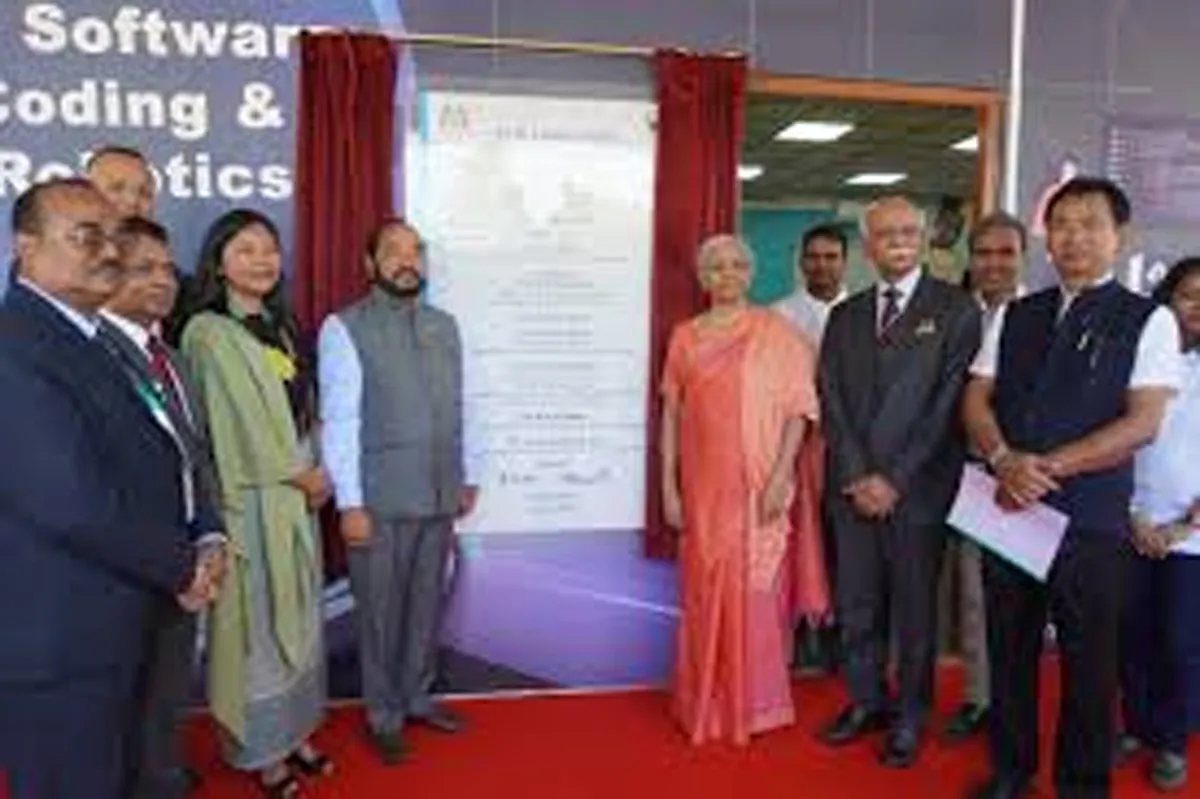
Cyient Foundation, the CSR arm of Cyient, in partnership with the SIDBI Swavalamban Foundation, has announced the launch of an AI and Future Skills Centre of Excellence (CoE) at the Nagaland Tool Room and Training Centre (NTTC) in Dimapur. The initiative aims to accelerate AI-enabled skilling and improve employability for young people in India’s North-East by equipping them with future-ready digital and technological capabilities.

The Centre of Excellence was inaugurated by Smt Nirmala Sitharaman, Union Minister of Finance and Corporate Affairs, in the presence of Shri Y. Patton, Deputy Chief Minister of Nagaland, and Dr BVR Mohan Reddy, Founder Chairman of Cyient Limited. The launch marks an important step towards democratising access to technology and advancing inclusive growth in the region.

As the Programme Management and Implementation Partner, Cyient Foundation conceptualised, designed, and delivered the project. The CoE will offer AI-integrated training programmes across domains such as handloom and handicrafts, AI, software coding, and robotics. These programmes are intended to bridge employability gaps, promote entrepreneurship, and strengthen digital inclusion.

The initiative is supported through a CSR partnership with the SIDBI Swavalamban Foundation, which has contributed funding for infrastructure development, AI simulation laboratories, and digital classrooms at NTTC.

Dr BVR Mohan Reddy said India’s future depends on empowering youth with strong digital and technical capabilities. He noted that the CoE reflects Cyient Foundation’s mission to bridge the digital divide, foster opportunities in emerging industries, and ensure that young people across India can contribute meaningfully to the nation’s innovation narrative. He also highlighted ongoing collaboration with NITI Aayog on integrating AI and emerging technologies into skilling initiatives in developing states.

Mr Sudatta Mandal, Deputy Managing Director of SIDBI, said the partnership demonstrates a shared commitment to building a digitally skilled and self-reliant India. He emphasised that the CoE in Nagaland will serve as a scalable model for technology-led livelihood creation.

The Centre is expected to train 200–240 youth annually, with around 75 per cent of trainees projected to secure employment or start their own ventures within three months of completing their course. The programme includes faculty training, AI-based curriculum integration, and market-linkage support to ensure long-term impact.

This initiative aligns closely with national programmes such as Digital India, Skill India, and Viksit Bharat 2047, contributing to India’s efforts to equip its workforce with advanced technological skills while strengthening regional economic resilience.

The project also reflects Cyient Foundation’s wider mission of “Empowering Tomorrow Together”. The Foundation has digitised more than 120 government schools, reached over 35,000 students through digital literacy programmes, and currently supports more than 21,000 children via its Adopt-a-School initiative. Beyond education, the Foundation has championed women’s empowerment and rural development, training over 2,000 rural women annually for sustainable livelihoods

Cyient Foundation, the CSR arm of Cyient, in partnership with the SIDBI Swavalamban Foundation, has announced the launch of an AI and Future Skills Centre of Excellence (CoE) at the Nagaland Tool Room and Training Centre (NTTC) in Dimapur. The initiative aims to accelerate AI-enabled skilling and improve employability for young people in India’s North-East by equipping them with future-ready digital and technological capabilities. The Centre of Excellence was inaugurated by Smt Nirmala Sitharaman, Union Minister of Finance and Corporate Affairs, in the presence of Shri Y. Patton, Deputy Chief Minister of Nagaland, and Dr BVR Mohan Reddy, Founder Chairman of Cyient Limited. The launch marks an important step towards democratising access to technology and advancing inclusive growth in the region. As the Programme Management and Implementation Partner, Cyient Foundation conceptualised, designed, and delivered the project. The CoE will offer AI-integrated training programmes across domains such as handloom and handicrafts, AI, software coding, and robotics. These programmes are intended to bridge employability gaps, promote entrepreneurship, and strengthen digital inclusion. The initiative is supported through a CSR partnership with the SIDBI Swavalamban Foundation, which has contributed funding for infrastructure development, AI simulation laboratories, and digital classrooms at NTTC. Dr BVR Mohan Reddy said India’s future depends on empowering youth with strong digital and technical capabilities. He noted that the CoE reflects Cyient Foundation’s mission to bridge the digital divide, foster opportunities in emerging industries, and ensure that young people across India can contribute meaningfully to the nation’s innovation narrative. He also highlighted ongoing collaboration with NITI Aayog on integrating AI and emerging technologies into skilling initiatives in developing states. Mr Sudatta Mandal, Deputy Managing Director of SIDBI, said the partnership demonstrates a shared commitment to building a digitally skilled and self-reliant India. He emphasised that the CoE in Nagaland will serve as a scalable model for technology-led livelihood creation. The Centre is expected to train 200–240 youth annually, with around 75 per cent of trainees projected to secure employment or start their own ventures within three months of completing their course. The programme includes faculty training, AI-based curriculum integration, and market-linkage support to ensure long-term impact. This initiative aligns closely with national programmes such as Digital India, Skill India, and Viksit Bharat 2047, contributing to India’s efforts to equip its workforce with advanced technological skills while strengthening regional economic resilience. The project also reflects Cyient Foundation’s wider mission of “Empowering Tomorrow Together”. The Foundation has digitised more than 120 government schools, reached over 35,000 students through digital literacy programmes, and currently supports more than 21,000 children via its Adopt-a-School initiative. Beyond education, the Foundation has championed women’s empowerment and rural development, training over 2,000 rural women annually for sustainable livelihoods

Next Story
Infrastructure Transport

Pune To Build Nine Km Link Road Between Highways

The Pune Municipal Corporation (PMC) has decided to appoint an expert to plan the development of a nine km long, 60 metre wide road from Khadi Machine chowk to Wadki chowk as an extension to the Katraj-Kondhwa road to link the Mumbai-Satara and Pune-Solapur national highways. The scheme is intended to divert heavy vehicle traffic away from the city and improve access between the two arterial routes. The project has been prioritised by the PMC and forms part of a larger set of schemes in which 19 roads have been identified for development at a combined cost of Rs 9.82 billion (bn) to address c..

Next Story
Infrastructure Transport

Barabanki Bahraich Six Lane Highway Approved in Uttar Pradesh

The Uttar Pradesh government has approved construction of a new six-lane highway linking Barabanki and Bahraich as part of National Highway 927, and the cabinet has cleared the project. The alignment will pass through Mustafabad and Kaiserganj and extend for about 101.5 km, creating a key corridor for local and long-distance movement. The National Highways Authority of India will oversee the work and has signalled the scheme is intended to strengthen regional connectivity and cross-border access to Nepal. The project carries an estimated total cost of Rs 69,690 million, equivalent to Rs 69.69..

Next Story
Infrastructure Transport

Toll At Kharegaon Likely As Highway Upgrade Nears Completion

A section of the highway at Kharegaon has undergone an upgrade and is approaching completion, and authorities have indicated plans for a toll to be introduced once works finish. The project has focused on strengthening the carriageway, improving drainage and upgrading intersections to enhance safety and capacity. Officials have said the toll will be used to recover construction costs and fund ongoing maintenance. The upgrade included resurfacing of the pavement, widening of certain stretches and installation of modern signage and lighting to reduce accident risk. Contractors completed most ma..

Advertisement

Subscribe to Our Newsletter

Get daily newsletters around different themes from Construction world.

STAY CONNECTED

Advertisement

Advertisement

Advertisement