



+
Delhi Moves To Create Unified Transport Authority
ECONOMY & POLICY

Delhi Moves To Create Unified Transport Authority

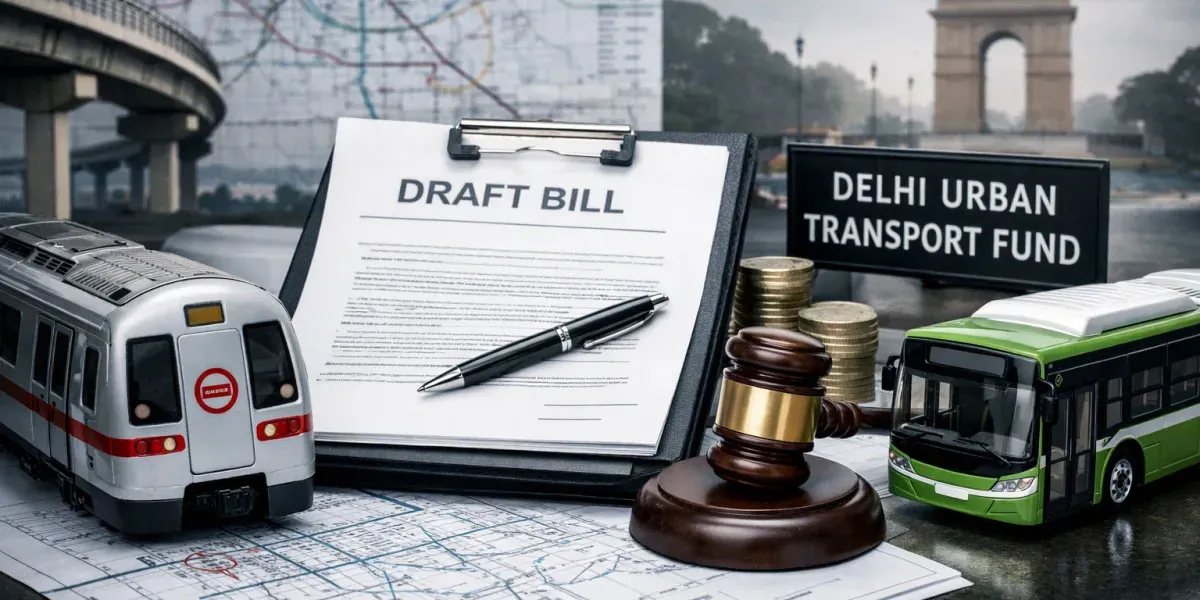
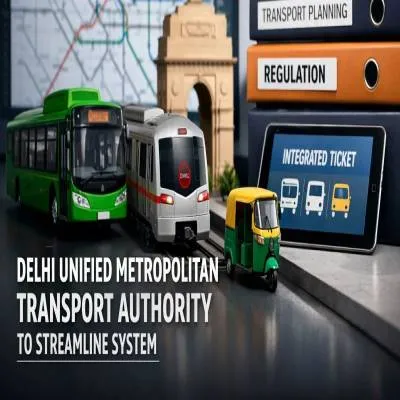
The Delhi government has initiated drafting of a law to establish the Delhi Unified Metropolitan Transport Authority and a dedicated Delhi Urban Transport Fund to unify the Capital's transport governance. A high-level task force chaired by the Chief Secretary has been constituted to prepare the draft Bill promptly and it includes senior officials from key departments and representatives of major agencies such as the Delhi Metro Rail Corporation and the Delhi Transport Corporation. The Chief Minister has proposed co-opting urban transport experts to incorporate global best practices.

Officials said the move responds to longstanding fragmentation, overlapping jurisdictions and weak coordination among existing agencies that have hampered planning and service delivery. The authority is expected to integrate all modes including metro, buses, regional rail and feeder services within a unified planning framework to enable coordinated operations and citizen-centric mobility solutions. The government views the measure as central to a long-term strategy to reduce traffic congestion and air pollution by strengthening public transport and improving last-mile connectivity, thereby encouraging modal shift away from private vehicles.

The proposal aligns with the National Urban Transport Policy 2006, which recommends unified metropolitan transport authorities for all million-plus cities to facilitate integrated planning, unified ticketing and coordinated implementation of projects. Once established, DUMTA would be tasked with overseeing implementation of a comprehensive mobility plan prepared by the Unified Traffic and Transportation Infrastructure (Planning & Engineering) Centre. The authority is also expected to prepare a transport investment programme, manage the Delhi Urban Transport Fund and coordinate interventions among agencies across the Delhi National Capital Region. Promoting multimodal integration and rational fare structures will form part of its mandate.

The task force will finalise the authority's structure, conduct stakeholder consultations and assist in enacting the Bill. Officials said drafting will be pursued at the earliest to enable timely implementation. The reforms are intended to improve coordination, streamline investment and enhance last-mile connectivity.

The Delhi government has initiated drafting of a law to establish the Delhi Unified Metropolitan Transport Authority and a dedicated Delhi Urban Transport Fund to unify the Capital's transport governance. A high-level task force chaired by the Chief Secretary has been constituted to prepare the draft Bill promptly and it includes senior officials from key departments and representatives of major agencies such as the Delhi Metro Rail Corporation and the Delhi Transport Corporation. The Chief Minister has proposed co-opting urban transport experts to incorporate global best practices. Officials said the move responds to longstanding fragmentation, overlapping jurisdictions and weak coordination among existing agencies that have hampered planning and service delivery. The authority is expected to integrate all modes including metro, buses, regional rail and feeder services within a unified planning framework to enable coordinated operations and citizen-centric mobility solutions. The government views the measure as central to a long-term strategy to reduce traffic congestion and air pollution by strengthening public transport and improving last-mile connectivity, thereby encouraging modal shift away from private vehicles. The proposal aligns with the National Urban Transport Policy 2006, which recommends unified metropolitan transport authorities for all million-plus cities to facilitate integrated planning, unified ticketing and coordinated implementation of projects. Once established, DUMTA would be tasked with overseeing implementation of a comprehensive mobility plan prepared by the Unified Traffic and Transportation Infrastructure (Planning & Engineering) Centre. The authority is also expected to prepare a transport investment programme, manage the Delhi Urban Transport Fund and coordinate interventions among agencies across the Delhi National Capital Region. Promoting multimodal integration and rational fare structures will form part of its mandate. The task force will finalise the authority's structure, conduct stakeholder consultations and assist in enacting the Bill. Officials said drafting will be pursued at the earliest to enable timely implementation. The reforms are intended to improve coordination, streamline investment and enhance last-mile connectivity.

Next Story
Infrastructure Urban

Implementation Status of Jal Jeevan Mission

Since August 2019 the Government has implemented Jal Jeevan Mission to provide assured potable water through household tap connections in rural India. At the start of the mission only 32.3 million (mn) rural households, representing 16.7 per cent, were reported to have tap water connections. States and union territories have reported that 125.8 mn additional rural households have since been provided with tap connections. As a result, of about 193.6 mn rural households roughly 158.2 mn, or 81.71 per cent, are reported to have tap water supply at home.\n\nThe State, district and village level st..

Next Story
Infrastructure Urban

Jal Jeevan Mission Reaches Eighty One Per Cent Rural Coverage

The Government reported substantial progress under the Jal Jeevan Mission, launched in August 2019 to provide tap water to every rural household. At launch only 32.3 million (mn) rural households had tap connections and states and Union territories reported provision of 125.8 mn additional households by March 2026. Consequently, out of about 193.6 mn rural households around 158.2 mn, or 81.71 per cent, are reported to have tap water at home. The Finance Minister announced extension of the mission until 2028 in the 2025-26 budget speech. The Swachh Bharat Mission Grameen, launched in October 20..

Next Story
Infrastructure Urban

Empowering Local Governance for Sustainable Rural Water Supply

The Ministry of Jal Shakti has aligned the Jal Jeevan Mission (JJM) with the 73rd Amendment to strengthen village level planning and community ownership of water supply. Gram Panchayats, village water and sanitation committees and Pani Samitis are to plan, implement, manage and maintain piped water systems, with gram sabha processes formalising handover and oversight. Implementation support agencies including non government organisations, community based organisations and self help groups have been empanelled to train local committees and promote women participation. Under JJM, the department ..

Advertisement

Subscribe to Our Newsletter

Get daily newsletters around different themes from Construction world.

STAY CONNECTED

Advertisement

Advertisement

Advertisement














