+
Hindustan Zinc Partners Virginia Tech to Boost Silver Recovery
ECONOMY & POLICY

Hindustan Zinc Partners Virginia Tech to Boost Silver Recovery

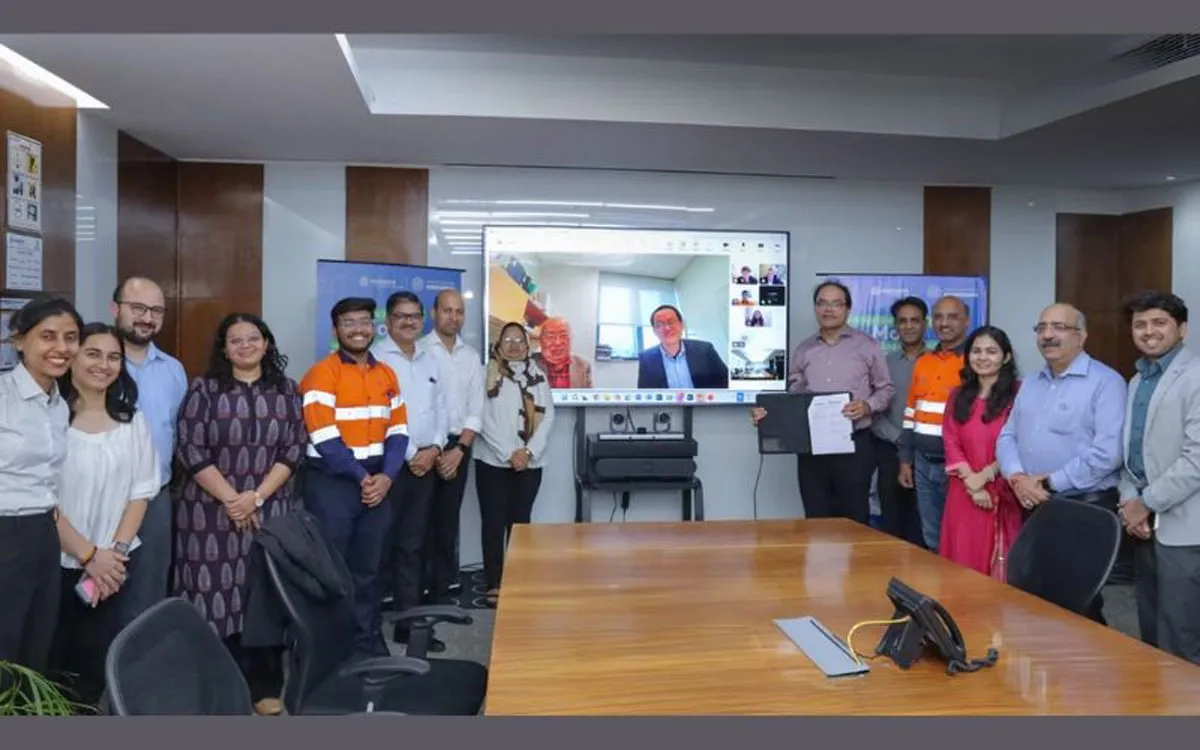
Hindustan Zinc Limited recently signed a Memorandum of Understanding (MoU) with Virginia Tech to advance research aimed at improving silver recovery across its lead–zinc (Pb–Zn) concentrators. The collaboration will focus on refining flotation techniques and optimising reagent usage to improve concentrate quality and operational efficiency at processing plants.
Virginia Tech, based in Blacksburg, Virginia, is globally recognised for its expertise in mining engineering, mineral processing and applied metallurgical research. Through this partnership, Hindustan Zinc will leverage global research insights to strengthen process understanding and enhance performance across its concentrator operations.
The study will examine key metallurgical parameters influencing flotation selectivity and metal recovery, with particular focus on reagent–mineral–water interactions that play a critical role in process stability and concentrate quality.
Arun Misra, CEO, Hindustan Zinc, said the collaboration represents a step toward strengthening the company’s knowledge ecosystem and advancing innovation in mining operations.
The project will also define optimised operating approaches and reagent regimes to support greater process stability, improved concentrate quality and more consistent plant performance. It will include laboratory testing, diagnostics and technical evaluations to support implementation across operations.
The partnership will additionally support knowledge transfer through workshops, training programmes and technical exchanges for Hindustan Zinc’s teams.
Hindustan Zinc has previously collaborated with institutions such as IITs, CSIR laboratories and JNCASR on initiatives related to mineral processing, critical metals research and zinc-based battery technologies, reinforcing its focus on building technology-driven mining capabilities.

Hindustan Zinc Limited recently signed a Memorandum of Understanding (MoU) with Virginia Tech to advance research aimed at improving silver recovery across its lead–zinc (Pb–Zn) concentrators. The collaboration will focus on refining flotation techniques and optimising reagent usage to improve concentrate quality and operational efficiency at processing plants.Virginia Tech, based in Blacksburg, Virginia, is globally recognised for its expertise in mining engineering, mineral processing and applied metallurgical research. Through this partnership, Hindustan Zinc will leverage global research insights to strengthen process understanding and enhance performance across its concentrator operations.The study will examine key metallurgical parameters influencing flotation selectivity and metal recovery, with particular focus on reagent–mineral–water interactions that play a critical role in process stability and concentrate quality.Arun Misra, CEO, Hindustan Zinc, said the collaboration represents a step toward strengthening the company’s knowledge ecosystem and advancing innovation in mining operations.The project will also define optimised operating approaches and reagent regimes to support greater process stability, improved concentrate quality and more consistent plant performance. It will include laboratory testing, diagnostics and technical evaluations to support implementation across operations.The partnership will additionally support knowledge transfer through workshops, training programmes and technical exchanges for Hindustan Zinc’s teams.Hindustan Zinc has previously collaborated with institutions such as IITs, CSIR laboratories and JNCASR on initiatives related to mineral processing, critical metals research and zinc-based battery technologies, reinforcing its focus on building technology-driven mining capabilities.

Related Stories

Gold Stories

Next Story
Infrastructure Urban

Assam Gets Approval For 350,000 PMAY Homes

Assam Chief Minister Himanta Biswa Sarma met Union Agriculture Minister Shivraj Singh Chouhan in New Delhi, where the minister handed an approval document for 310,000 new homes under the Pradhan Mantri Awas Yojana. The chief minister subsequently posted on X expressing gratitude and noting that the minister had formally handed approval for 380,000 homes as well. The release and the social media post contained varying figures, with broader references to 350,000 homes reported in some summaries. The approvals carry central assistance equivalent to Rs 50 billion (bn), corresponding to the five th..

Next Story
Infrastructure Urban

KPIGreen Achieves Highest Energised Capacity of 630+ MW DC

KPI Green Energy energised more than 630 MW DC of capacity in the June to August quarter, marking the highest quarterly addition in the company's history. The capacity was brought online across its Independent Power Producer (IPP) and Engineering, Procurement and Construction (EPC) businesses. The company said the achievement reflected the scale, speed and consistency of its project execution engine. The firm described the quarter as a material operational milestone since its founding. The milestone covers a diversified mix of IPP assets and projects executed under the EPC vertical, spanning u..

Next Story
Infrastructure Energy

Adani Energy Solutions Wins Rs 47 bn Maharashtra Transmission Project

Adani Energy Solutions has won a transmission contract in Maharashtra valued at Rs 47 billion (Rs 47 bn) to evacuate 4,500 megawatt (MW) of renewable and storage power. The company informed exchanges that the project will facilitate pumped storage potential near Satara and strengthen the inter-regional corridor between the Western and Southern grids. The award follows a competitive bidding process and will support renewable energy evacuation to major load centres in the state. The scope includes establishment of a 765/400 kV substation at Satara, construction of a Kolhapur-Satara 765 kV double..

Advertisement

Subscribe to Our Newsletter

Get daily newsletters around different themes from Construction world.

STAY CONNECTED

Advertisement

SPECIAL OFFER
QR Code