+
Delhi To Launch Electric Double-Decker Tourist Buses
ECONOMY & POLICY

Delhi To Launch Electric Double-Decker Tourist Buses

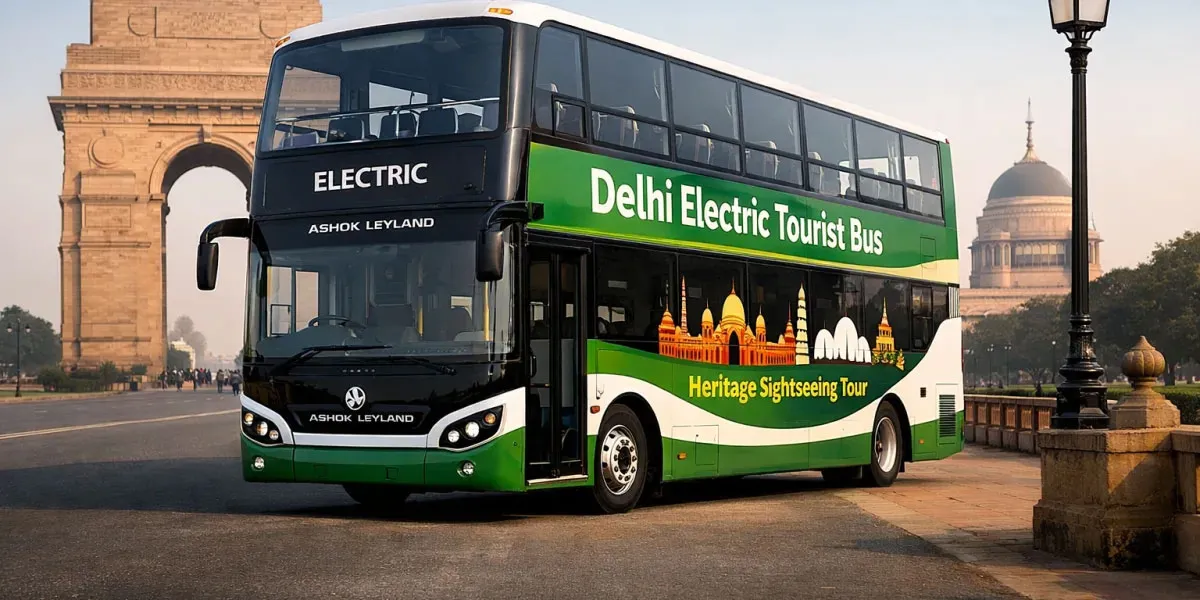
Delhi is set to introduce electric double-decker tourist buses on a dedicated heritage sightseeing circuit later this month, marking the return of the iconic vehicles to the capital's roads after more than three decades. The service is scheduled to commence around 20 February to coincide with the government's first anniversary in office. The service will feature two electric double-decker buses manufactured by Ashok Leyland as part of a corporate social responsibility initiative and handed to the tourism department by the transport department.

The route will cover a string of national landmarks, including Pradhanmantri Sangrahalaya, the National War Memorial, Bharat Mandapam, the New Parliament building, Kartavya Path and Dilli Haat. Tours are designed to showcase the cultural and historical importance of the precincts within Lutyens' Delhi. Organisers expect the circuit to appeal to domestic and international visitors seeking a consolidated heritage experience.

Evening tours will be prioritised, with buses expected to begin operations after six pm once regular museum hours conclude, allowing travellers to view illuminated monuments. Vehicles will offer an air-conditioned lower deck and an open-top upper deck configured for sightseeing and photography while seated. Each bus will feature an on-board guide who will provide continuous commentary on the sites en route.

The buses measure 9.8 metres in length and 4.75 metres in height and provide seating for more than 63 passengers. Fare levels have been set to remain accessible, with tickets priced at Rs 500 for adults and Rs 300 for children aged six to 12 years. The initiative is being promoted as part of wider efforts to boost tourism footfall while encouraging low-emission urban travel.

Officials noted that double-decker buses were a familiar feature of the city until they were phased out by the public transport corporation in 1989 owing to an ageing fleet. The Chief Minister had signalled the government's intention to develop a dedicated tourist circuit for national monuments in the latest budget speech. Authorities expect the new service to complement existing offerings and to deliver an enhanced visitor experience that aligns with sustainability objectives.

Delhi is set to introduce electric double-decker tourist buses on a dedicated heritage sightseeing circuit later this month, marking the return of the iconic vehicles to the capital's roads after more than three decades. The service is scheduled to commence around 20 February to coincide with the government's first anniversary in office. The service will feature two electric double-decker buses manufactured by Ashok Leyland as part of a corporate social responsibility initiative and handed to the tourism department by the transport department. The route will cover a string of national landmarks, including Pradhanmantri Sangrahalaya, the National War Memorial, Bharat Mandapam, the New Parliament building, Kartavya Path and Dilli Haat. Tours are designed to showcase the cultural and historical importance of the precincts within Lutyens' Delhi. Organisers expect the circuit to appeal to domestic and international visitors seeking a consolidated heritage experience. Evening tours will be prioritised, with buses expected to begin operations after six pm once regular museum hours conclude, allowing travellers to view illuminated monuments. Vehicles will offer an air-conditioned lower deck and an open-top upper deck configured for sightseeing and photography while seated. Each bus will feature an on-board guide who will provide continuous commentary on the sites en route. The buses measure 9.8 metres in length and 4.75 metres in height and provide seating for more than 63 passengers. Fare levels have been set to remain accessible, with tickets priced at Rs 500 for adults and Rs 300 for children aged six to 12 years. The initiative is being promoted as part of wider efforts to boost tourism footfall while encouraging low-emission urban travel. Officials noted that double-decker buses were a familiar feature of the city until they were phased out by the public transport corporation in 1989 owing to an ageing fleet. The Chief Minister had signalled the government's intention to develop a dedicated tourist circuit for national monuments in the latest budget speech. Authorities expect the new service to complement existing offerings and to deliver an enhanced visitor experience that aligns with sustainability objectives.

Next Story
Building Material

NITI Aayog Unveils Cement Decarbonisation Roadmap

NITI Aayog has released a sector-specific decarbonisation roadmap for cement as part of three green transition reports covering cement, aluminium and MSMEs. The report projects cement production rising to around 2,100 million tonnes by 2070 from 391 million tonnes in 2023, while targeting a reduction in carbon intensity to 0.09–0.13 tCO₂e per tonne. It recommends clinker substitution, refuse-derived fuels, CCUS adoption and carbon trading mechanisms to enable deep decarbonisation. ..

Next Story
Technology

Genesys Launches Advanced GeoRadar System

Genesys International Corporation has launched an advanced Ground Penetrating Radar (GPR) solution from IDS GeoRadar for underground utility mapping in India. The system uses patented Equalised Scrambling Technology (EST) and Wide/Multi-Array Antenna Technology to deliver high-resolution three-dimensional imaging of subsurface infrastructure. The technology enables the detection and mapping of buried assets such as water pipelines, sewer networks, telecom cables and power lines. By providing detailed subsurface insights, the system aims to help urban authorities and infrastructure developers ..

Next Story
Infrastructure Urban

Hindustan Zinc Partners Virginia Tech to Boost Silver Recovery

Hindustan Zinc Limited recently signed a Memorandum of Understanding (MoU) with Virginia Tech to advance research aimed at improving silver recovery across its lead–zinc (Pb–Zn) concentrators. The collaboration will focus on refining flotation techniques and optimising reagent usage to improve concentrate quality and operational efficiency at processing plants.Virginia Tech, based in Blacksburg, Virginia, is globally recognised for its expertise in mining engineering, mineral processing and applied metallurgical research. Through this partnership, Hindustan Zinc will leverage global resear..

Advertisement

Subscribe to Our Newsletter

Get daily newsletters around different themes from Construction world.

STAY CONNECTED

Advertisement

Advertisement

Advertisement

Open In App