




DERC Drafts Changes to Expand Net Metering Access
ECONOMY & POLICY

DERC Drafts Changes to Expand Net Metering Access

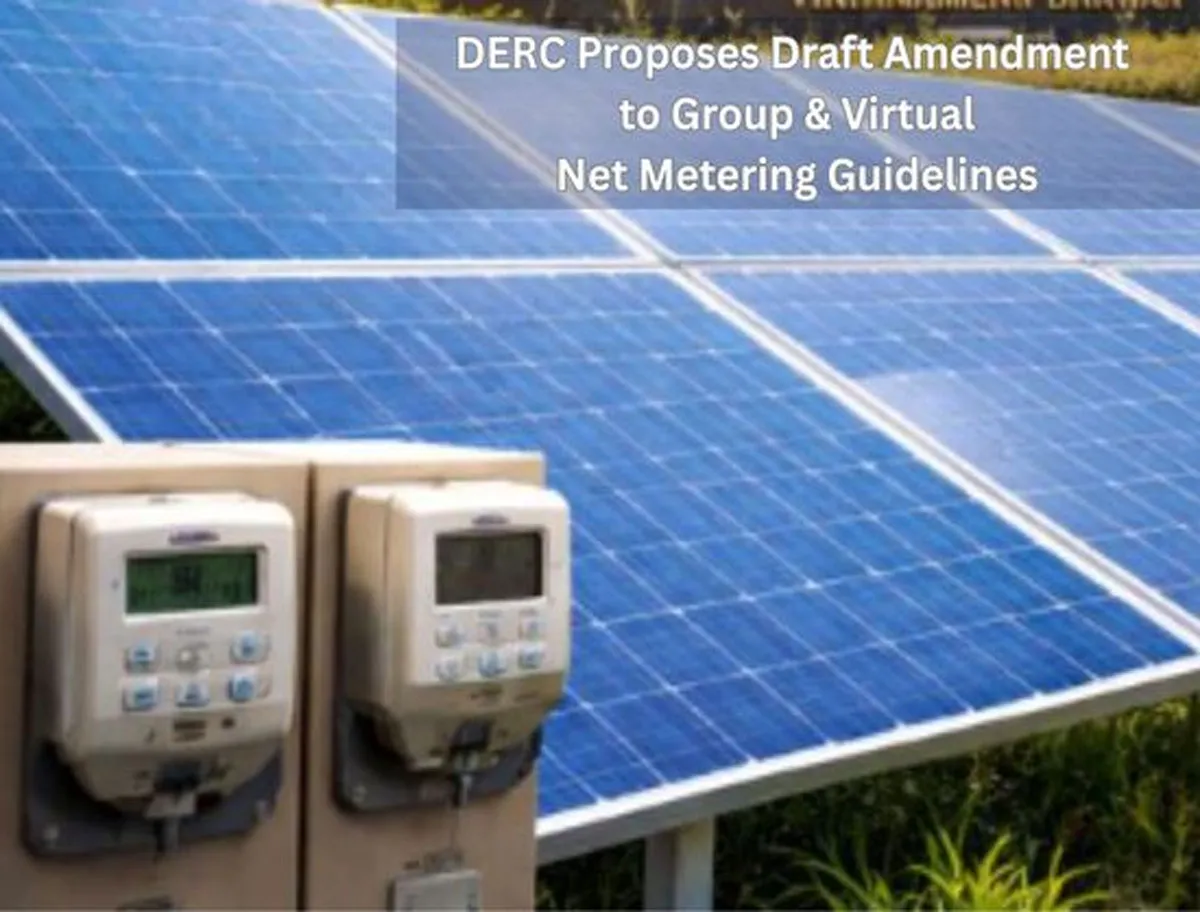
The Delhi Electricity Regulatory Commission (DERC) has released draft amendments to the Group Net Metering and Virtual Net Metering Guidelines, 2019, proposing a series of changes to widen access and reduce infrastructure barriers for renewable energy consumers across the National Capital Territory of Delhi.

Titled the DERC (Group Net Metering and Virtual Net Metering for Renewable Energy) (Seventh Amendment) Guidelines, 2025, the draft has been notified under the provisions of the Electricity Act, 2003, along with relevant DERC regulations and guidelines. The amendments will come into force from the date they are uploaded on the DERC website and will remain applicable until further revisions are issued.

One of the key proposals is the expansion of the Virtual Net Metering framework to cover all electricity consumers in Delhi, including those with single-point supply connections. This is expected to significantly broaden participation in renewable energy, particularly for consumers who are unable to install rooftop solar systems at their premises.

The draft guidelines also allow consumers participating under Virtual Net Metering arrangements to modify their electricity credit-sharing ratios or add new participating service connections up to twice in a financial year, subject to a two-month advance notice and the agreed procurement ratio.

DERC has further proposed a change in energy accounting under Virtual Net Metering, under which electricity generation credits will be treated as having occurred during the normal time block. This replaces the earlier provision that accounted for such generation during off-peak hours.

Another major amendment shifts responsibility for service line-cum-development works and network augmentation costs for Virtual and Group Net Metering projects to distribution licensees. These costs will be allowed as a pass-through in the Aggregate Revenue Requirement. However, the waiver will apply only to networks operating at 11 kV and below and will be capped at cumulative capacities of 110 MW for BRPL, 100 MW for TPDDL, 30 MW for BYPL and 10 MW for NDMC.

The draft also mandates distribution companies to submit quarterly progress reports on Net Metering, Group Net Metering and Virtual Net Metering projects to the Commission and the Energy Efficiency and Renewable Management division of the Government of NCT of Delhi.

The draft amendment has been opened for stakeholder consultation and is expected to play a significant role in accelerating the deployment of distributed renewable energy in the capital.

The Delhi Electricity Regulatory Commission (DERC) has released draft amendments to the Group Net Metering and Virtual Net Metering Guidelines, 2019, proposing a series of changes to widen access and reduce infrastructure barriers for renewable energy consumers across the National Capital Territory of Delhi. Titled the DERC (Group Net Metering and Virtual Net Metering for Renewable Energy) (Seventh Amendment) Guidelines, 2025, the draft has been notified under the provisions of the Electricity Act, 2003, along with relevant DERC regulations and guidelines. The amendments will come into force from the date they are uploaded on the DERC website and will remain applicable until further revisions are issued. One of the key proposals is the expansion of the Virtual Net Metering framework to cover all electricity consumers in Delhi, including those with single-point supply connections. This is expected to significantly broaden participation in renewable energy, particularly for consumers who are unable to install rooftop solar systems at their premises. The draft guidelines also allow consumers participating under Virtual Net Metering arrangements to modify their electricity credit-sharing ratios or add new participating service connections up to twice in a financial year, subject to a two-month advance notice and the agreed procurement ratio. DERC has further proposed a change in energy accounting under Virtual Net Metering, under which electricity generation credits will be treated as having occurred during the normal time block. This replaces the earlier provision that accounted for such generation during off-peak hours. Another major amendment shifts responsibility for service line-cum-development works and network augmentation costs for Virtual and Group Net Metering projects to distribution licensees. These costs will be allowed as a pass-through in the Aggregate Revenue Requirement. However, the waiver will apply only to networks operating at 11 kV and below and will be capped at cumulative capacities of 110 MW for BRPL, 100 MW for TPDDL, 30 MW for BYPL and 10 MW for NDMC. The draft also mandates distribution companies to submit quarterly progress reports on Net Metering, Group Net Metering and Virtual Net Metering projects to the Commission and the Energy Efficiency and Renewable Management division of the Government of NCT of Delhi. The draft amendment has been opened for stakeholder consultation and is expected to play a significant role in accelerating the deployment of distributed renewable energy in the capital.

Next Story
Infrastructure Transport

KPIL Secures Rs 7.19 Billion Metro Rail Order in Thane

Kalpataru Projects International (KPIL), along with its joint venture, has recently secured new orders and notifications of award worth approximately Rs 7.19 billion. The key contract includes an elevated metro rail project in Thane, Maharashtra, marking a significant addition to the company’s urban infrastructure portfolio.Commenting on the development, Manish Mohnot, MD & CEO, said the order strengthens KPIL’s presence in the expanding urban transportation EPC segment. He added that the company’s diversified order book, consistent order inflows and strong execution capabilities..

Next Story
Infrastructure Urban

IRFC Sanctions Rs 50 Billion Loan to MAHAGENCO

Indian Railway Finance Corporation (IRFC) has recently executed a Rupee Term Loan Agreement with Maharashtra State Power Generation Company Limited (MAHAGENCO) for a sanctioned amount of Rs 50 billion, of which Rs 30 billion has already been disbursed. A Navratna CPSE under the Ministry of Railways, IRFC has expanded its role beyond rail financing to support infrastructure projects linked to the railway ecosystem, including power generation, transmission, mining, logistics, ports and metro rail. The corporation continues to maintain a strong asset quality profile with a zero-NPA portfolio. M..

Next Story
Infrastructure Transport

AFCOM Inducts Third Aircraft, Boosting Cargo Capacity

AFCOM Holdings has recently inducted its third aircraft, marking a key milestone in the company’s fleet expansion and operational growth. The aircraft was welcomed with a water cannon salute on arrival at Chennai International Airport, underscoring its strategic importance to AFCOM’s expanding network. With Chennai as a key operational hub, the additional aircraft enhances AFCOM’s ability to cater to rising demand for air cargo services across domestic and international routes, including time-sensitive and specialised cargo segments. The induction strengthens operational capacity while ..

Advertisement

Subscribe to Our Newsletter

Get daily newsletters around different themes from Construction world.

STAY CONNECTED

Advertisement

Advertisement

Advertisement

Advertisement

Open In App














