




DGFT Hosts Strategic Trade Controls Conference 2026
ECONOMY & POLICY

DGFT Hosts Strategic Trade Controls Conference 2026

The Directorate General of Foreign Trade (DGFT), in collaboration with the Ministry of External Affairs (MEA), the Federation of Indian Export Organisations (FIEO) and other government and industry stakeholders, organised the National Conference on Strategic Trade Controls (NCSTC) 2026 in New Delhi.

The conference served as a national platform to deliberate on India’s Strategic Trade Control (STC) framework, particularly policies and procedures governing exports of dual-use and sensitive goods, technologies, software, materials and equipment regulated under the SCOMET regime. The event focused on strengthening awareness, compliance and coordination among government agencies, industry, academia, research institutions and international partners, while enabling legitimate high-technology trade and mitigating proliferation risks.

During the inaugural session, DGFT released the third edition of the Handbook on India’s Strategic Trade Control System. Prepared jointly with MEA’s Disarmament and International Security Affairs Division, the handbook offers comprehensive guidance on India’s export control policies, procedures and regulatory compliance requirements under SCOMET.

The session was attended by senior officials including Commerce Secretary Rajesh Agrawal, CBIC Chairman Vivek Chaturvedi, DGFT Director General Lav Agarwal, MEA Joint Secretary Muanpuii Saiawi, Defence Production Joint Secretary Amit Satija and Additional DGFT Rakesh Kumar.

NCSTC 2026 featured seven thematic sessions addressing India’s STC ecosystem and SCOMET policies, including licensing processes, enforcement mechanisms, compliance frameworks and supply chain security. Discussions covered the Authorised Economic Operator (AEO) programme and Intangible Technology Transfers (ITT), alongside sector-specific deliberations on electronics, semiconductors, chemicals, biotechnology, aerospace, space technologies and defence exports.

Special focus was placed on emerging and frontier technologies such as quantum-related items, advanced computing, semiconductor technologies, additive manufacturing, aerospace systems and cyber security, aligned with recent updates to India’s SCOMET List.

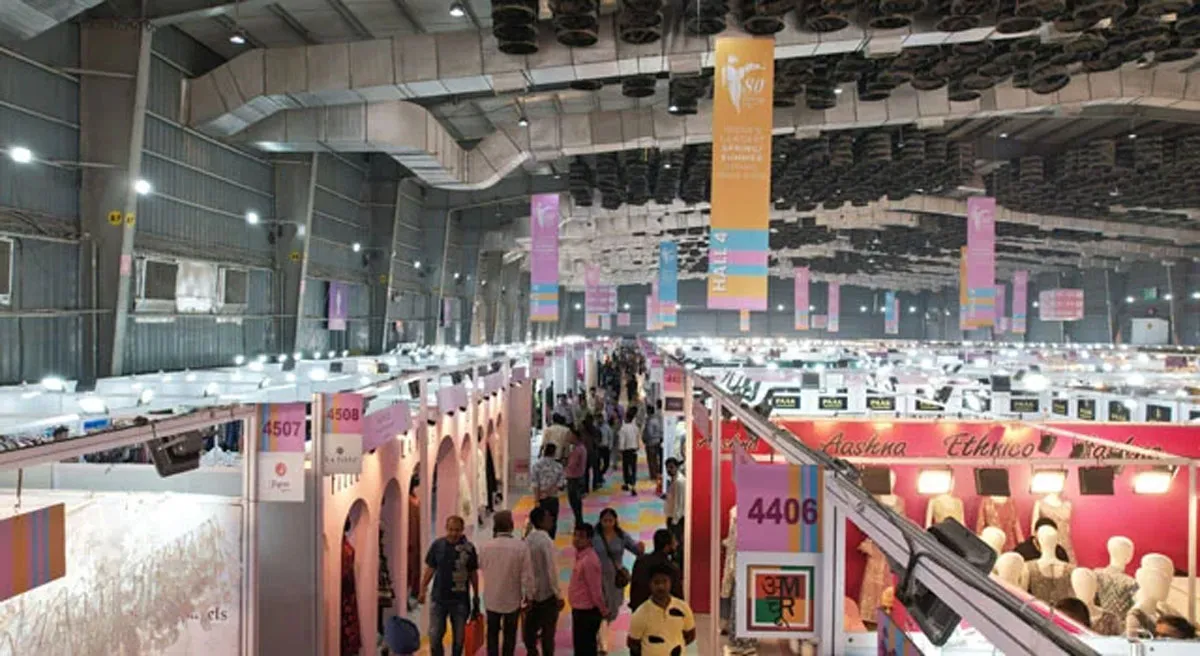
Industry-led technology display booths showcased secure supply chain practices, compliance solutions and advanced innovations, encouraging engagement between regulators, exporters, policymakers and technology developers.

The conference witnessed participation from more than 500 stakeholders from India and overseas, including government representatives, exporters, compliance professionals, research institutions and industry leaders.

NCSTC 2026 reinforced the importance of maintaining a robust and transparent strategic trade control framework that balances national security and non-proliferation priorities with the facilitation of legitimate trade in advanced technologies.

The Directorate General of Foreign Trade (DGFT), in collaboration with the Ministry of External Affairs (MEA), the Federation of Indian Export Organisations (FIEO) and other government and industry stakeholders, organised the National Conference on Strategic Trade Controls (NCSTC) 2026 in New Delhi. The conference served as a national platform to deliberate on India’s Strategic Trade Control (STC) framework, particularly policies and procedures governing exports of dual-use and sensitive goods, technologies, software, materials and equipment regulated under the SCOMET regime. The event focused on strengthening awareness, compliance and coordination among government agencies, industry, academia, research institutions and international partners, while enabling legitimate high-technology trade and mitigating proliferation risks. During the inaugural session, DGFT released the third edition of the Handbook on India’s Strategic Trade Control System. Prepared jointly with MEA’s Disarmament and International Security Affairs Division, the handbook offers comprehensive guidance on India’s export control policies, procedures and regulatory compliance requirements under SCOMET. The session was attended by senior officials including Commerce Secretary Rajesh Agrawal, CBIC Chairman Vivek Chaturvedi, DGFT Director General Lav Agarwal, MEA Joint Secretary Muanpuii Saiawi, Defence Production Joint Secretary Amit Satija and Additional DGFT Rakesh Kumar. NCSTC 2026 featured seven thematic sessions addressing India’s STC ecosystem and SCOMET policies, including licensing processes, enforcement mechanisms, compliance frameworks and supply chain security. Discussions covered the Authorised Economic Operator (AEO) programme and Intangible Technology Transfers (ITT), alongside sector-specific deliberations on electronics, semiconductors, chemicals, biotechnology, aerospace, space technologies and defence exports. Special focus was placed on emerging and frontier technologies such as quantum-related items, advanced computing, semiconductor technologies, additive manufacturing, aerospace systems and cyber security, aligned with recent updates to India’s SCOMET List. Industry-led technology display booths showcased secure supply chain practices, compliance solutions and advanced innovations, encouraging engagement between regulators, exporters, policymakers and technology developers. The conference witnessed participation from more than 500 stakeholders from India and overseas, including government representatives, exporters, compliance professionals, research institutions and industry leaders. NCSTC 2026 reinforced the importance of maintaining a robust and transparent strategic trade control framework that balances national security and non-proliferation priorities with the facilitation of legitimate trade in advanced technologies.

Next Story
Real Estate

Trident Realty Launches 125-Acre Integrated Township In Panipat

Trident Realty has announced the launch of Trident Parktown, a premium integrated township spread over approximately 125 acres in Sectors 19A and 40, Panipat. Marking the developer’s strategic entry into the city, the project involves a total planned investment of around Rs 12 billion.Phase 1 of Trident Parktown will offer over 400 residential plots, with sizes starting from 200 sq yds. The township is planned as a mixed-use development comprising residential plots, independent floors, group housing, and retail and commercial spaces, aimed at meeting the region’s evolving lifestyle and hou..

Next Story
Infrastructure Transport

Concord Wins NTPC Order For World’s Largest Hydrogen Locomotive

Concord Control Systems has secured an order from NTPC Limited to develop the world’s largest 3,100 HP hydrogen-fuelled locomotive propulsion system, marking a global first in high-horsepower hydrogen rail technology. The Rs 470 million order has been awarded to Concord’s wholly owned subsidiary, Advance Rail Controls  (ARCPL), in collaboration with Railway Engineering Works.The project will convert an existing diesel locomotive into a 3,100 HP hydrogen-powered engine, the highest-ever horsepower conversion globally. Until now, hydrogen rail systems internationally have been limited t..

Next Story
Real Estate

Signature Global Signs Rs 380 Cr Pact for Seismic Safety Tech

Signature Global has signed a Rs 3.8 billion memorandum of understanding with Indo-Italian joint venture CECO Hirun to implement advanced earthquake-resistance technology across its projects over the next 15 years. The initiative is aimed at strengthening structural safety and occupant comfort in high-rise developments, particularly in seismic-prone regions such as Delhi-NCR, which falls under Seismic Zone IV.As Indian cities continue to grow vertically, buildings are increasingly exposed to dynamic forces including seismic activity, strong winds and temperature variations. To address these ch..

Advertisement

Subscribe to Our Newsletter

Get daily newsletters around different themes from Construction world.

STAY CONNECTED

Advertisement

Advertisement

Advertisement

Advertisement

Open In App















